
The Rise of Organized Retail Crime at Big Box Stores
Source: Bloomberg
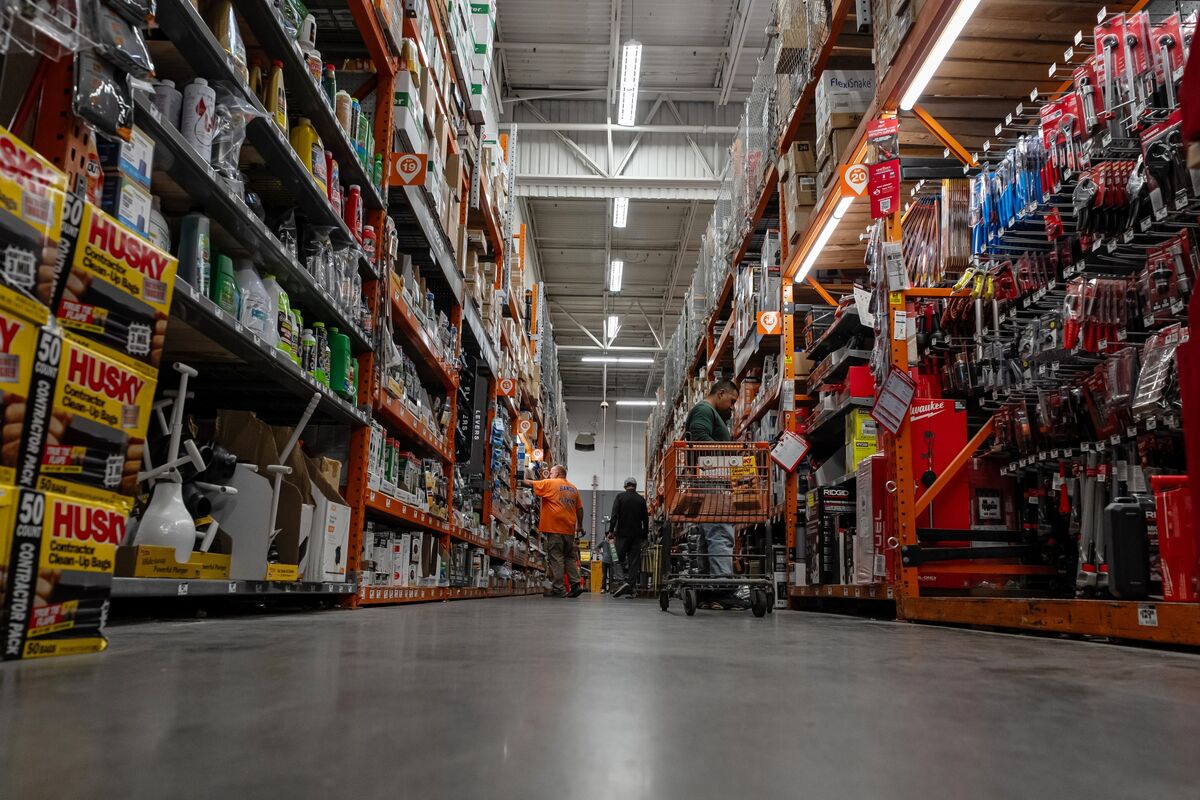
Home Depot VP of Asset Protection Scott Glenn says organized retail crime, rather than individual shoplifting, is a key driver of retail shrink, involving coordinated theft of large merchandise volumes for black-market resale. Retailers are increasingly locking merchandise behind barriers, sacrificing customer experience to reduce inventory losses. The article discusses the scale of theft and retailer countermeasures but provides no quantified financial impact or new company-specific guidance.
Analysis
The investable issue for HD is not the absolute shrink line but whether asset-protection spending becomes a recurring operating-cost ratchet. Home-improvement inventory is unusually exposed to organized theft because many SKUs are compact, high-value, and readily resold; incremental security, labor and friction at checkout can pressure both merchandise margin and conversion. The near-term read-through is more relevant for HD than for AAPL or SPOT, neither of which has a material direct earnings linkage.
Over the next 1-3 months, the key catalyst is management’s commentary on shrink versus prior plans in quarterly results. If HD absorbs shrink through higher price points, it risks widening the value gap versus Lowe’s (LOW), whose customer mix and SKU exposure may differ, while aggressive locking/controlled-access measures could disproportionately deter the DIY customer that drives higher-frequency transactions. This is a modest earnings-quality risk rather than a thesis-changing demand signal unless it coincides with weaker big-ticket transactions.
The contrarian view is that organized-crime visibility can create an exaggerated market narrative: for a retailer of HD’s scale, shrink remediation need only offset a small fraction of sales leakage to protect annual profit, and industry pressure may accelerate adoption of RFID, locked-cage automation and targeted fulfillment controls. A more durable beneficiary could be security and loss-prevention vendors rather than retailers; however, no named public pure-play has sufficient evidence here to justify a directional recommendation. Thesis is falsified if HD reports shrink below plan, stable gross margin, and no increase in asset-protection expense or customer-service friction.
Regulatory action against resale marketplaces and interstate fencing networks would be a 6-18 month upside optionality for large-format retailers, but enforcement is uneven and should not be capitalized into estimates before measurable recovery rates emerge. Watch HD’s gross-margin guide, inventory turnover, transaction count, and SG&A deleverage; a deterioration across all four would indicate the issue is becoming economically material rather than reputationally salient.
AllMind Terminal
AI-powered research, real-time alerts, and portfolio analytics for institutional investors.
Request TrialMarket Sentiment
Overall Sentiment
mildly negative
Sentiment Score
-0.25
Ticker Sentiment
Key Decisions for Investors
- Maintain a neutral-to-underweight tactical stance on HD into the next earnings update; avoid treating crime-related headlines alone as a short catalyst. Escalate to a short only if management raises shrink/SG&A guidance while DIY transactions remain negative, which would imply simultaneous margin and demand pressure.
- Use a relative-value watch: long LOW / short HD only if HD signals asset-protection costs or merchandise-margin pressure materially above plan and the valuation premium does not compress. Target a 1-3 month holding period; exit if HD confirms stable gross margin and shrink containment.
- For existing HD longs, set an earnings-risk trigger around any reduction in gross-margin guidance or evidence that locked-merchandise protocols are reducing conversion. A stable margin outlook and improving inventory turns would invalidate the bearish operational read-through.
- Do not position in AAPL or SPOT on this development; their inclusion in the source data does not establish a financial transmission mechanism.
More News
- Stock Movers: CMCSA, AAPL, META (Podcast)
- CNBC Daily Open: Apple's new iPhone bends. Bond vigilantes, not so much
- Will Apple's Foldable iPhone Flourish or Flop?
- God told them to sell crypto. Their investors lost everything.
- Apple drops its folding iPhone. Our first reaction, plus the other key launch news
- Apple's AI Strategy And New Products