
Masimo's smartSET™ FDA Clearance Offers Breakthrough Innovation in Pulse Oximetry to Help Improve Critical Patient Outcomes
Source: PR Newswire
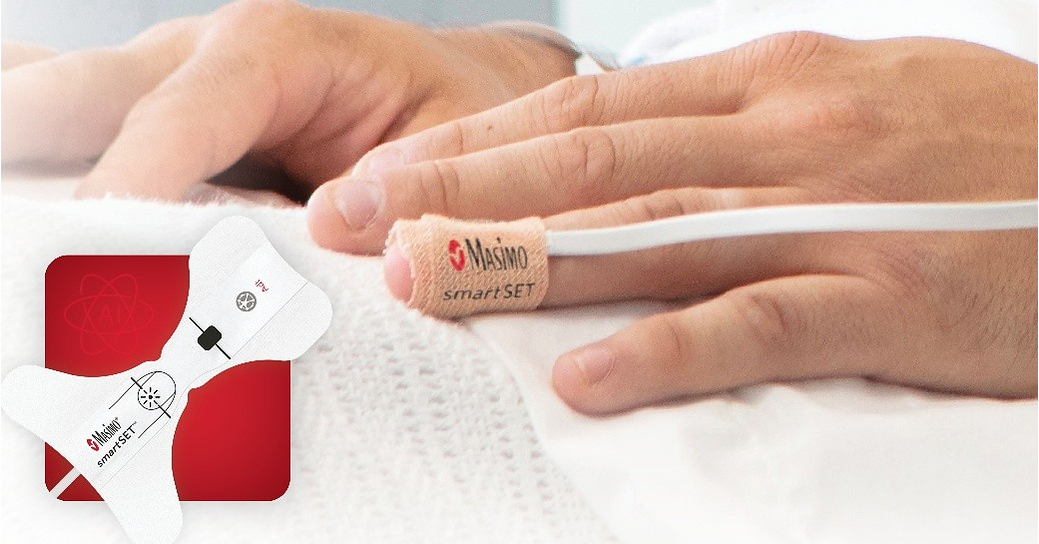
Masimo announced FDA 510(k) clearance for smartSET’s AFib detection capability on Radius VSM, joining its previously cleared AI-enabled opioid-induced respiratory depression (OIRD) detection. In clinical validation, the AFib feature showed 97% sensitivity and 100% specificity; it identifies rhythms suggestive of AFib and is intended to support, not replace, ECG evaluation. The product expansion could strengthen Masimo’s patient-monitoring offering, though the article reports no sales impact or market reaction.
Analysis
The commercial question is whether smartSET can change purchasing and workflow—not whether another algorithm has cleared a regulatory hurdle. If hospitals adopt it, continuous-monitoring differentiation could support Masimo’s position in general-care settings and make replacement decisions less price-led; it may also pressure incumbent monitoring vendors to bundle comparable analytics. But workflow integration, alarm burden, and hospital budget cycles can outweigh feature-level advantages, and AFib alerts still require confirmatory evaluation. A press release and company-held validation data do not establish real-world outcomes, reduced adverse events, or customer willingness to pay.
For Danaher, the signal is strategically positive but not yet an earnings catalyst: the article provides no adoption, pricing, revenue, or contribution data to establish materiality to the consolidated company. Near term, any reaction risks capitalizing a product milestone as commercial traction. Over 1–3 months, watch for evaluations converting into deployments and evidence of integration into hospital monitoring workflows. Over 6–18 months, broader platform uptake could strengthen differentiation; weak uptake, false-alert concerns, or competing bundled solutions would limit that effect. The contrarian point is that platform breadth may be valuable, but clearance alone is a poor proxy for recurring revenue.
AllMind Terminal
AI-powered research, real-time alerts, and portfolio analytics for institutional investors.
Request TrialMarket Sentiment
Overall Sentiment
moderately positive
Sentiment Score
0.35
Key Decisions for Investors
- Do not initiate a DHR position solely on this announcement; treat it as a watch item pending evidence of commercial conversion and consolidated financial relevance.
- Over the next 1–3 months, monitor customer deployments, hospital workflow integration, and any disclosed pricing or revenue contribution. Upgrade the thesis only if adoption is demonstrated; falsify it if evaluations fail to convert or alert burden limits use.
- Track competitive responses from established patient-monitoring vendors and hospital purchasing behavior. A shift toward bundled alternatives would weaken the differentiation thesis even if smartSET performs as described.
- For any future DHR long thesis, require real-world evidence on alert performance and measurable clinical or operational benefit, alongside company disclosures showing a meaningful contribution; do not infer either from regulatory clearance or company-sponsored validation alone.
More News
- AI rapidly improving, could vastly boost U.S. GDP, Anthropic's Clark tells policymakers
- AI stocks plunge. Inflation heats up. Where we're still finding opportunities
- Nasdaq Index: AI Selloff Deepens as Chips and CoreWeave Break
- ‘How many canaries have we killed in the coal mine?’ — Wall Street debates if the latest AI bubble warnings are another head fake or the real thing
- Bending Spoons wants to revive software castoffs. Berkshire is backing the plan
- Christine Lagarde: IMFC Statement