
Lockheed Martin Secures $1.2B Contract for Precision Strike Missile Increment 2 After Second Maritime Test
Source: PR Newswire
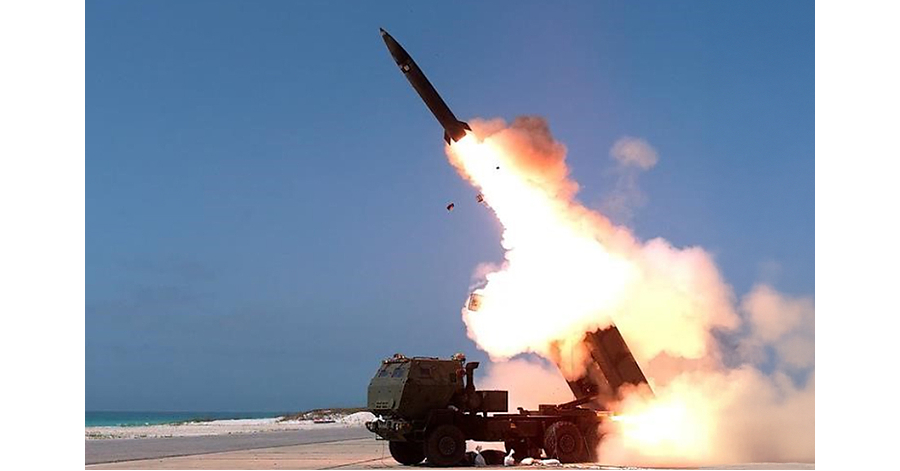
Lockheed Martin received a U.S. Army IDIQ contract worth up to $1.2 billion for production, follow-on orders and continued development of the Precision Strike Missile (PrSM) Increment 2. A second flight test demonstrated the missile's ability to engage moving maritime targets, supporting its transition from development into initial production. Lockheed is expanding capacity to quadruple PrSM output as the Army advances toward larger Increment 2 procurements, with further flight tests scheduled for 2027.
Analysis
The market should discount the contract ceiling heavily until funded delivery orders establish annual run-rate and unit economics. The more investable signal is the transition from development into a scalable production program: successful 2027 test milestones could convert a modest near-term revenue contribution into a multi-year precision-fires franchise with better absorption of fixed missile-factory costs. LMT's ownership of Aerojet Rocketdyne internalizes propulsion content, so incremental PrSM volume should have a larger consolidated margin and supply-security benefit than a conventional prime-only award.
Competitive effects extend beyond LMT. PrSM's maritime-targeting role increases the strategic value of HIMARS-compatible launch capacity, supporting General Dynamics' army munitions ecosystem and potentially constraining Army budget share available for competing long-range strike programs at RTX and Northrop Grumman. Conversely, an open-ended production ramp could tighten solid-rocket-motor, seeker, and energetics capacity; any shortage would shift value from the headline award to suppliers with qualified capacity rather than to LMT's reported deliveries.
Near term, this is unlikely to change consensus EPS materially without a disclosed funded quantity, production cadence, or margin profile. Over 1-3 months, the relevant catalyst is evidence that the program clears its next technical gates without seeker-performance or integration revisions; over 6-18 months, Army replenishment priorities and allied HIMARS demand could support follow-on volume. The key contrarian risk is that the market treats a $1.2B maximum as booked backlog: delays, reduced appropriations, or failed operational testing would defer revenue while LMT carries capacity-expansion costs.
AllMind Terminal
AI-powered research, real-time alerts, and portfolio analytics for institutional investors.
Request TrialMarket Sentiment
Overall Sentiment
moderately positive
Sentiment Score
0.62
Ticker Sentiment
Key Decisions for Investors
- Maintain or initiate a modest LMT overweight only on weakness rather than chase the announcement; add if funded orders and production-rate guidance demonstrate a credible multi-year conversion of the IDIQ ceiling. Thesis invalidation: 2027 test setbacks, no meaningful funded releases by the next two earnings cycles, or missile-segment margin dilution from ramp costs.
- Use LMT as the preferred precision-fires exposure versus a broad defense basket (long LMT / short ITA) for a 6-12 month horizon if appropriations visibility improves; the pair isolates program-execution upside from generalized defense-budget multiple expansion. Exit if Army funding shifts toward air and missile defense or unmanned systems at the expense of long-range fires.
- Create an event alert, not a position, for qualified propulsion/seeker suppliers if LMT identifies external bottlenecks or raises delivery cadence. A supply constraint would be more actionable than the current IDIQ headline, but the article does not disclose enough supplier-level content to support a named-component trade.
- Monitor LMT's next earnings call for incremental missile backlog, capex, working-capital use, and segment-margin commentary. A production ramp funded ahead of deliveries can pressure free cash flow temporarily; a negative FCF revision would offer a better entry point if test performance remains intact.
More News
- The Air Force Doesn't Want Lockheed Martin's New Stealth Drone -- but Lockheed Is Building 5 of Them Anyway
- If a president speaks, but TV crews aren’t there to capture audio, does he make a sound? Networks keep cameras away after Trump bans CNN
- All Iranian airlines to be 'shut down' from Wednesday, Bessent tells CNBC
- Taiwan benchmark Taiex rises to record intraday high as tech stocks advance
- AMD joins the $1 trillion club as chip rally surges - our AI Strategy saw it early
- Jamie Dimon says hyperscaler AI spending could hit $1 trillion next year