
SpaceX and NVIDIA Want to Put AI Data Centers in Orbit
Source: marketbeat.com
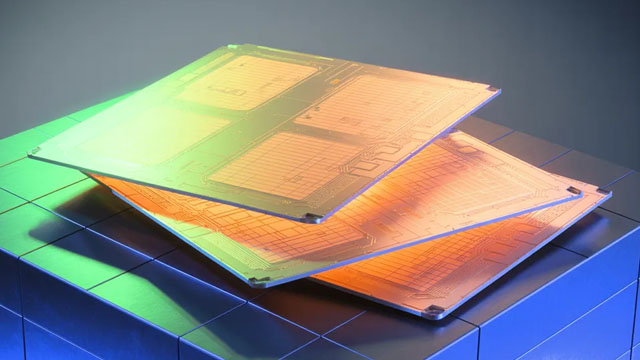
Elon Musk reportedly said he is "highly confident" that SpaceX could begin launching NVIDIA's most advanced AI computers into orbit as early as next year. The proposal signals a potentially novel space-based AI-computing infrastructure initiative, but remains an early-stage ambition without disclosed investment, capacity, commercial terms, or confirmed launch plans.
Analysis
The investable implication for NVDA is not incremental chip volume in the next 12 months; orbital deployment would initially be a low-unit, custom-engineering program with uncertain economics. The nearer-term value is narrative optionality around sovereign, defense, and edge-AI demand, potentially supporting NVDA's premium multiple if management validates a funded roadmap. Absent disclosed launch cadence, satellite power specifications, thermal-management design, and committed customer contracts, this should not be modeled as a material revenue driver.
The more credible second-order beneficiary is the space-industrial stack: launch capacity, radiation-tolerant electronics, satellite buses, power systems, optical interconnects, and ground-station infrastructure. Public-market proxies include RKLB, RDW, LUNR and PL, though each has sharply different exposure and execution risk; RKLB is best positioned if higher launch frequency and satellite-manufacturing demand become tangible. Data-center power constraints on Earth are the strategic rationale, but orbit shifts rather than eliminates the bottleneck: solar collection, heat rejection, launch insurance, communications bandwidth, and replacement cycles could make delivered compute materially more expensive than terrestrial capacity for years.
Consensus risk is treating this as confirmation that AI compute demand is unconstrained and assigning broad space-AI revenue prematurely. The thesis reverses quickly if SpaceX or NVDA does not disclose a paid demonstrator, a customer, or measurable performance targets within 6-12 months; a technically successful launch without economically competitive cost per delivered compute would be promotional rather than fundamental. Over 6-18 months, the key catalyst is defense or government procurement, where resilience and latency-insensitive workloads can justify costs that commercial cloud workloads cannot.
AllMind Terminal
AI-powered research, real-time alerts, and portfolio analytics for institutional investors.
Request TrialMarket Sentiment
Overall Sentiment
mildly positive
Sentiment Score
0.35
Ticker Sentiment
Key Decisions for Investors
- No incremental directional NVDA position solely on this report; retain exposure only within the core AI thesis. Add only on confirmation of funded contracts or NVDA guidance identifying aerospace/sovereign AI revenue, not a launch announcement.
- Establish a small 3-6 month long RKLB / short ARKX pair only if SpaceX announces a defined deployment schedule or satellite-manufacturing partners; RKLB offers clearer operational spillover, while the short hedges broad speculative space-beta. Exit if no contracted program emerges by the next two earnings cycles.
- Monitor NVDA implied volatility around investor events: selling short-dated upside calls against an existing long equity position may be attractive if headlines create a narrative-driven volatility spike without contract disclosure. Do not sell uncovered calls.
- Set a diligence alert for disclosed orbital compute cost, power generation, downlink capacity, radiation-hardening requirements, and launch replacement cadence. A credible cost curve approaching defense-grade economics would warrant reassessing long positions in RKLB, RDW, and satellite-infrastructure suppliers.
More News
- Here are the 3 big things we're watching in the stock market this week
- Bessent meets China Vice Premier He Lifeng ahead of Trump-Xi summit
- U.S. economy hits pivotal milestone: Spending on data centers and other information-processing hardware now exceeds housing investment
- Nvidia CEO Jensen Huang emerges as Trump's top ally in AI safety debate
- Citi CEO Says Companies Scrambling to Launch AI Cyber Defenses
- Neocloud Boom: Comparing Nebius, CoreWeave, & IREN
From AllMind Research
- Anthropic IPO Preview: Valuation, Timing, and What to Watch
- Shein After the IPO: Venue, Valuation, and What Must Be Proved
- What AI Research Tools Should a Small Hedge Fund Buy First?
- State of Public Markets, June 2026: Higher for Longer Meets the AI Supercycle
- AI Research Tools With Exact Source Citations