
Collinear AI Launches CWE-bench to Test Frontier Coding Agents on Defensive Cybersecurity Capabilities
Source: PRWeb
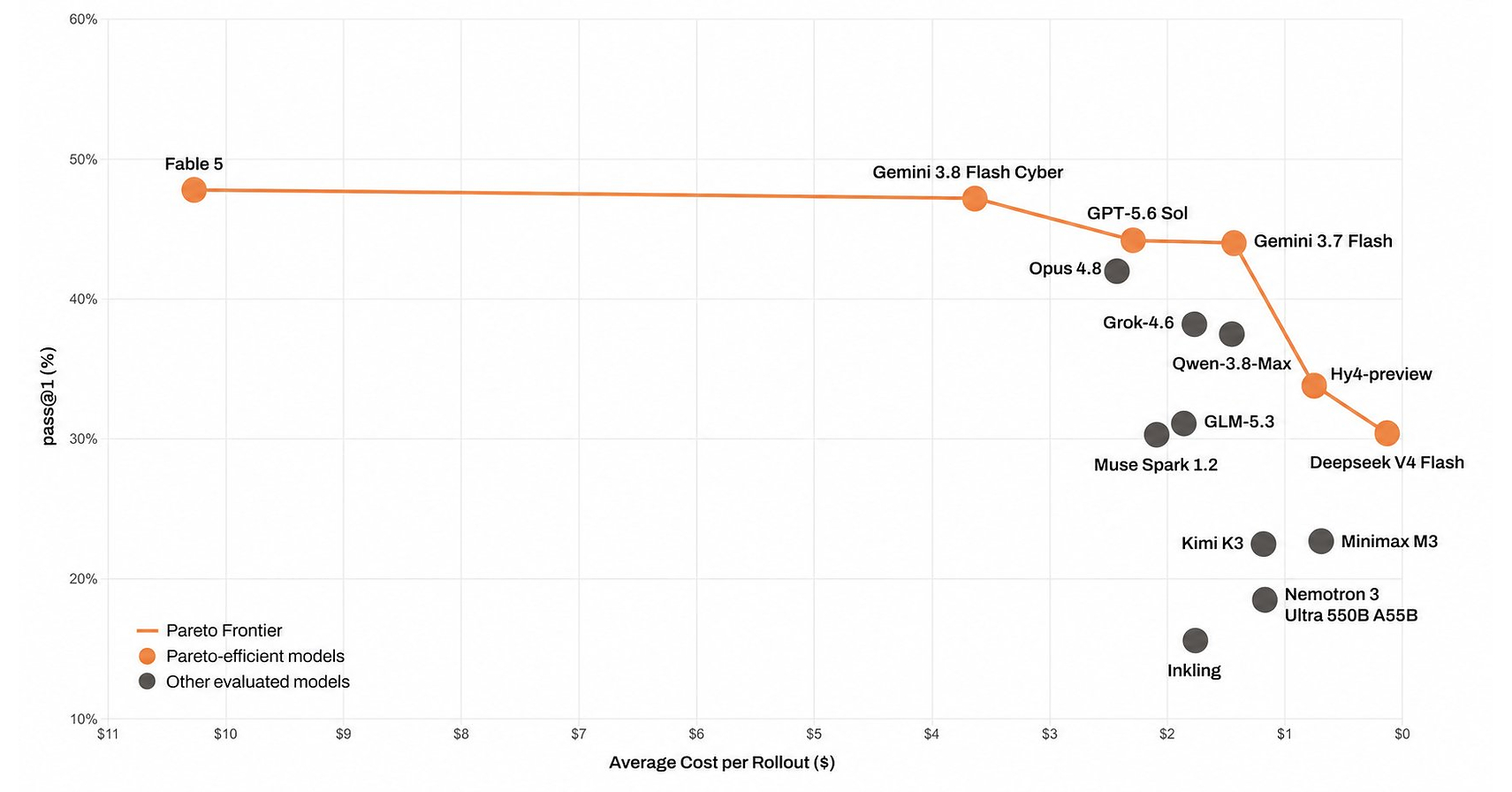
Collinear AI launched CWE-bench, a held-out cybersecurity benchmark with 100 agentic tasks covering 54 weakness types across all 10 OWASP Top 10 2025 categories. Early results show leading agents pass less than 50% of tasks (Fable 5 at 47% pass@1), with 18 tasks still unsolved by any model and no agent repairing a majority of the benchmark. The findings suggest frontier coding agents remain weak at defensive reasoning beyond memorized fixes, highlighting concrete areas for improvement.
Analysis
This is more of a budget-allocation signal than a direct revenue event. The weak showing of frontier agents on defensive code reasoning reinforces that enterprises will not replace security engineers with copilots; instead they will spend on verification layers, policy engines, and appsec tooling that sit between AI-generated code and production. That favors the picks-and-shovels names in cybersecurity more than the model vendors themselves, especially platforms that can sell into secure SDLC, identity, and runtime monitoring.
The second-order effect is on AI coding monetization: if boards conclude agentic coding still misses edge-case remediation, they may slow rollout of autonomous developer workflows and demand human-in-the-loop controls. That is a modest headwind for AI software multiples over the next 1-3 months, but it is not enough alone to break the thesis for hyperscalers or foundation-model leaders; the real risk is slower seat expansion and longer sales cycles, not outright churn. For pure-play security, however, this kind of benchmark is a catalyst for tighter procurement standards and incremental spend rather than a one-off narrative.
Contrarian view: the market may overfocus on the failure rate and underappreciate that evaluation itself is becoming a product category. The winners are likely firms that package governance, testing, and remediation workflows into developer tools, not the loudest “AI security” branding. The thesis breaks if enterprise buyers treat this as academic noise and if upcoming earnings do not show budget reallocation toward secure coding and verification in the next 1-2 quarters.
AllMind Terminal
AI-powered research, real-time alerts, and portfolio analytics for institutional investors.
Request TrialMarket Sentiment
Overall Sentiment
mildly negative
Sentiment Score
-0.25
Key Decisions for Investors
- Overweight a cybersecurity basket via HACK or CIBR for the next 1-3 months; the setup favors appsec and governance spend as enterprises harden AI-assisted development. Risk/reward is attractive if the group catches even a modest budget re-rating into earnings season.
- Pair trade: long CRWD or PANW vs short IGV over 1-3 months. The long leg benefits from verification, identity, and runtime controls; the short leg captures any delay in autonomous coding monetization and multiple compression if AI productivity claims are questioned.
- Watch for pullbacks in AI software leaders rather than shorting immediately; if enterprise guidance later shows no slowdown in developer-seat demand, the bearish read-through fails. Falsifier: strong net retention or accelerated AI-feature monetization in the next two quarters.
- If you want an earlier catalyst, buy near-term call spreads on HACK into upcoming software earnings to express a modestly bullish, lower-volatility view. Use a tight stop if cybersecurity guidance does not show pipeline conversion into appsec and governance.
More News
- Christine Lagarde: IMFC Statement
- Why did CoreWeave stock get crushed this week? Look to this corner of the debt market for clues
- Palantir patient data tech rejected by many NHS trusts in England
- Wall Street Anxiety Spreads as AI Rout Meets $110 Oil Shock
- AI stock sell-off ramps up over debt-fueled data center spending fears: ‘Full-blown crisis of confidence'
- Tesla is taking $250,000 deposits for a Roadster with SpaceX thrusters. The FAA says it isn’t an aircraft