
Oil Prices Swing Less on Trump’s Iran Comments as Traders Focus on Supply
Source: Bloomberg
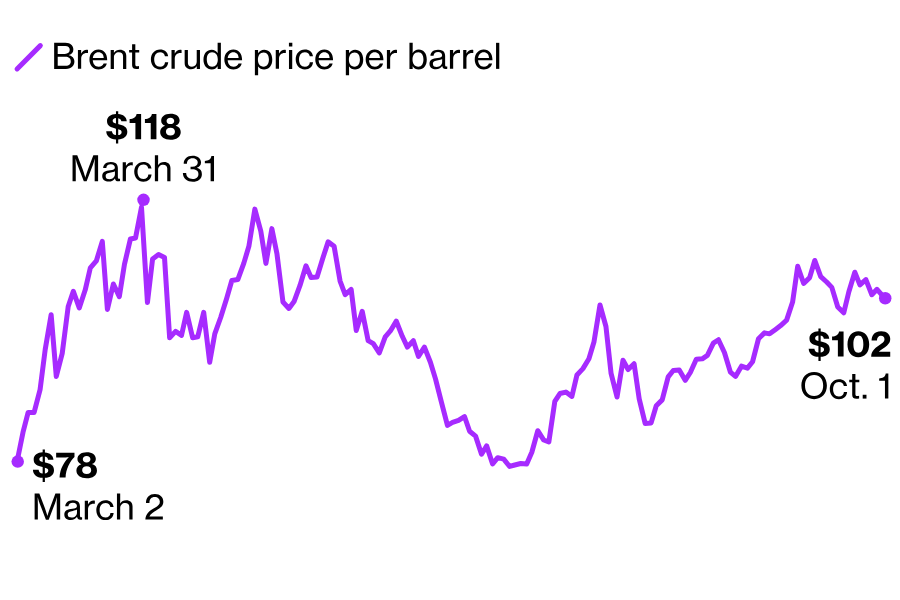
Seven months into the Iran conflict, oil traders are reacting less to President Trump’s rhetoric and more to physical supply indicators such as cargo flows, as his shifting statements are viewed as unreliable. Brent futures open interest has fallen to its lowest level since March 2025, and traders are reducing position sizes; intraday price swings have also narrowed from the early-war period. The conflict has caused a major oil supply shock, with energy inflation affecting global economic and interest-rate outlooks, while algorithmic trading can still amplify short-lived price moves.
Analysis
The key shift is from headline beta to flow and liquidity risk—not from high risk to low risk. If traders discount White House statements, crude can become less responsive to rhetoric while remaining highly exposed to verified changes in Hormuz transit, loadings, and insurance availability. Falling open interest also means less depth: a physical-flow surprise could produce a larger, less orderly move than recent session ranges imply. Momentum-driven CTA positioning may amplify that move, then reverse it, widening paper/physical dislocations.
Over the next 1–3 months, cargo and shipping data should have more signal than diplomatic headlines; monitor transit counts, export loadings, tanker rates, and prompt Brent spreads. Over 6–18 months, sustained energy costs can feed inflation and limit central-bank easing, but demand destruction and eventual supply rerouting are important offsets. The contrarian risk is treating quieter price action as a durable reduction in geopolitical tail risk. Conversely, buying crude solely on each threat risks paying for rhetoric that no longer changes expected flows. The thesis weakens if verified shipments recover persistently and prompt spreads ease; renewed infrastructure damage or a sharp fall in Hormuz transits falsifies the complacency case.
AllMind Terminal
AI-powered research, real-time alerts, and portfolio analytics for institutional investors.
Request TrialMarket Sentiment
Overall Sentiment
mildly negative
Sentiment Score
-0.20
Key Decisions for Investors
- Do not chase crude on rhetoric alone. Make any directional Brent position contingent on corroborated flow deterioration—such as falling Hormuz transits or disrupted loadings—and use defined-risk call spreads rather than unbounded futures exposure.
- Avoid naked short-volatility positions in Brent. Lower recent intraday ranges may understate gap risk given thinner open interest; if expressing a volatility view, cap loss and size for event-driven liquidity gaps.
- Track prompt Brent time spreads and physical indicators alongside flat price. A renewed tightening in prompt spreads with weaker cargo flows is a stronger long signal than a headline-driven price spike; persistent easing in spreads and recovering shipments would argue to exit.
- Treat energy as an inflation-policy watch item, not an automatic rates trade. A sustained crude move accompanied by broader inflation expectations would challenge duration positions such as TLT; a transient crude spike without follow-through in inflation measures is not enough to make that short.
More News
- Meeting of 9-10 September 2026
- Indian Stocks Fall to Lowest Since April 2025 on Oil Worries
- India to Turkiye, can new proposals to broker Russia-Ukraine truce succeed?
- Oil jumps as Middle East supply concerns persist amid shipping attacks
- The Hormuz bonus: Sailor salaries soar for transits amid Iran war
- Why has Iraq devalued its currency, and why are some MPs against it?