
Can MRVL's Data Center Business Sustain Its Growth in 2027?
Source: zacks.com
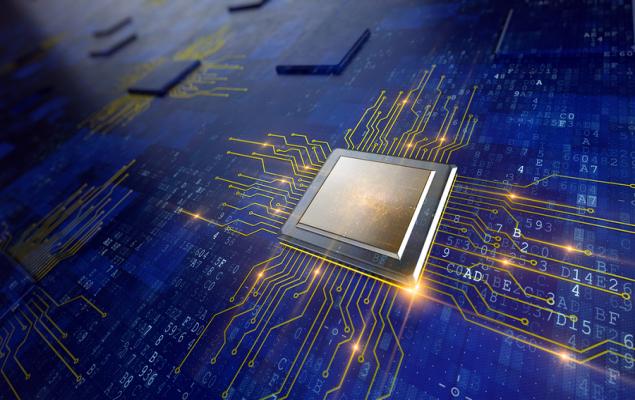
Marvell's fiscal Q2 2027 data-center revenue reached a record $2.17 billion, rising 46% year over year and 18% sequentially, representing 79% of company revenue. Management expects data-center revenue to grow about 60% in fiscal 2027, supported by demand for AI optical interconnects, switching and custom silicon; its custom business is projected to more than double in fiscal 2028. Consensus fiscal 2027 earnings imply 48% year-over-year growth, although MRVL trades at 12.77x forward sales versus the semiconductor-industry average of 4.75x and faces strong competition from Broadcom and AMD.
Analysis
MRVL has become a high-beta, concentrated AI-networking and custom-silicon exposure rather than a diversified semiconductor story. That concentration raises operating leverage if hyperscaler capex remains strong, but it also makes the equity unusually vulnerable to a single program delay, customer insourcing decision, or optical architecture transition. The key underwriting issue is not demand for AI compute; it is whether MRVL can translate design wins into sustained gross-margin accretion while competing against AVGO's deeper custom-ASIC ecosystem.
The most underappreciated positive read-through is for the optical supply chain: higher port speeds increase content per cluster even if unit growth moderates. COHR and LITE are more direct beneficiaries of accelerating 1.6T deployment, while ANET benefits if scale-out Ethernet remains the preferred architecture. Conversely, a faster shift toward proprietary scale-up fabrics and co-packaged optics could compress the addressable market for merchant DSPs before MRVL's newer products reach efficient production yields.
At a premium revenue multiple after a sharp rerating, MRVL needs upside to consensus rather than merely delivery on management's long-range targets. The nearer catalyst path is evidence in the next one to two earnings reports that custom-silicon ramps are producing backlog conversion, gross-margin stability and customer diversification; the 6-18 month risk is that a few hyperscalers use custom ASICs to lower total AI-system cost, increasing their bargaining power over MRVL and leaving it with lower-margin, concentrated programs. A weaker-than-expected AI capex outlook from AMZN or GOOG would matter more to MRVL than broad semiconductor demand data.
Consensus is likely extrapolating bandwidth growth without fully pricing execution risk in the handoff from 800G to 1.6T and from design-win announcements to volume revenue. AVGO remains the cleaner core custom-silicon ownership vehicle because it has greater customer breadth, packaging differentiation and cash-flow support; MRVL offers more upside only if it demonstrates that its incremental programs are additive rather than displacing legacy connectivity revenue. The stock is not an attractive fresh chase absent a pullback or independently verifiable evidence of FY28 custom-program volume commitments.
AllMind Terminal
AI-powered research, real-time alerts, and portfolio analytics for institutional investors.
Request TrialMarket Sentiment
Overall Sentiment
moderately positive
Sentiment Score
0.58
Ticker Sentiment
Key Decisions for Investors
- Maintain MRVL as a tactical, not core, long through the next two earnings prints; add only on a 15-20% pullback or after reported custom-silicon backlog and gross-margin guidance validate FY28 conversion. Exit or hedge if data-center growth decelerates materially without an offsetting gross-margin improvement.
- Prefer a 6-12 month long AVGO / short MRVL pair for AI-custom-silicon exposure. The trade monetizes MRVL's execution and concentration premium versus AVGO's broader program base; reassess if MRVL discloses multiple material production customers or meaningfully outgrows guidance with stable margins.
- For networking exposure, use a basket long ANET, COHR and LITE rather than incremental MRVL beta where 1.6T optical order growth is independently confirmed. Reduce if hyperscaler capex commentary shifts toward slower cluster deployment or a rapid co-packaged-optics transition.
- Set alerts around AMZN and GOOG capex guidance and NVDA networking commentary over the next 1-3 months. Any capex moderation or evidence that scale-up architectures are displacing merchant connectivity should trigger a reduction in MRVL exposure before the following quarterly report.
More News
- This AI-picked stock jumps 18% on Amazon’s $8 billion power deal
- Crusoe raises $3.9B to build massive data centers and small modular “AI factories”
- Jensen Huang says Nvidia will sell twice as many chips next year
- Generac shares surge on big Amazon deal. Wall Street thinks the generator stock has more to go
- Warsh says AI’s hyperscalers are part of why your borrowing costs are rising: ‘The competition for capital is real’
- Warsh spooks investors, OpenAI's 'concerning' incidents, Boeing's production problems and more in Morning Squawk
From AllMind Research
- Anthropic IPO Preview: Valuation, Timing, and What to Watch
- Shein After the IPO: Venue, Valuation, and What Must Be Proved
- What AI Research Tools Should a Small Hedge Fund Buy First?
- How to Track Guidance Changes Across a Coverage List With AI
- Stop Treating AI Like a Chatbot: What Are Agents, SubAgents, MCP, and Skills, and How Do They Actually Work?