
India Stock Bulls Pin Hopes on Corporate Earnings as Market Selloff Deepens
Source: Bloomberg
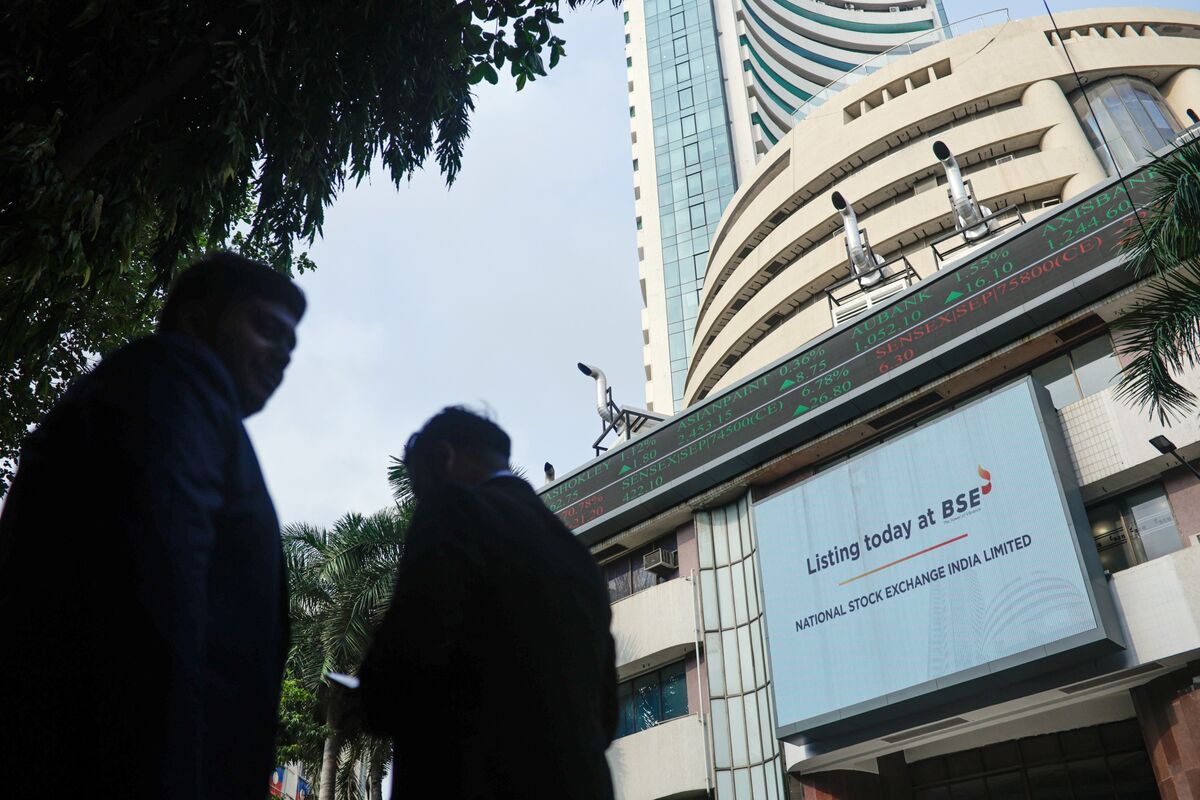
India's Nifty 50 fell below 23,000 to its lowest level in nearly six months as persistent foreign selling, rupee weakness and elevated crude prices undermined investor appetite despite cheaper valuations. Brent crude traded above $106 per barrel and the US 10-year Treasury yield reached a fresh 19-year high, worsening the global backdrop; investors are looking to the upcoming earnings season to halt the equity selloff.
Analysis
India’s equity de-rating will not be arrested by aggregate earnings alone; the key is whether management commentary validates margin resilience despite imported-energy and dollar funding pressure. Nifty’s largest weights—financials, IT services and domestic consumption—have divergent transmission: banks face slower credit growth and potential funding-cost pressure, while IT exporters gain translation support but remain exposed to US discretionary technology spending. Energy-intensive consumer, airline and chemical businesses are the most vulnerable to an earnings-reset cycle, particularly where pricing power is weak.
The more consequential near-term mechanism is foreign-flow persistence. A stronger dollar and higher developed-market real yields raise the hurdle rate for EM allocations, so a one-quarter earnings beat may produce only a tactical rally unless it coincides with currency stabilization and a retreat in crude. Over the next 1-3 months, foreign selling can force domestic institutions to absorb supply, supporting index heavyweights while leaving mid-cap and high-beta financials susceptible to disproportionate drawdowns; that creates a widening quality/liquidity premium.
Consensus may be too focused on a broad India-beta rebound from cheaper valuations. The better setup is selective: export earners and companies with dollar revenue can defend estimates, whereas domestic cyclicals still face a two-sided squeeze from higher input costs and tighter financial conditions. The thesis is falsified if Brent falls materially, the dollar weakens and US yields retrace—conditions that would rapidly reopen risk appetite and favor INDA/EPI beta over defensive exporters.
AllMind Terminal
AI-powered research, real-time alerts, and portfolio analytics for institutional investors.
Request TrialMarket Sentiment
Overall Sentiment
moderately negative
Sentiment Score
-0.42
Key Decisions for Investors
- Use any earnings-driven 3-5% rebound in INDA or EPI over the next 1-3 months to reduce broad India beta rather than chase it; maintain a tactical underweight until foreign-flow data and USD/INR stabilize. Cover the underweight if Brent sustains below $95 and US 10-year yields decline by at least 40-50bp.
- Prefer a relative-value basket of Indian IT-services exposure (INFY, WIT) versus broad India ETF exposure (short INDA or EPI) for 3-6 months. Dollar translation and less direct oil-input exposure should protect relative earnings; exit if US enterprise-tech spending guidance weakens or INR appreciation removes the currency tailwind.
- Avoid adding to India consumer-discretionary, aviation and energy-intensive chemical exposure ahead of results unless companies demonstrate price-pass-through and unchanged margin guidance. The relevant watch item is not revenue growth but gross-margin and FY guidance revisions.
- For portfolios requiring India allocation, tilt toward liquid large-cap quality rather than mid-cap beta for the next quarter; use SMIN only after evidence that local institutional inflows are absorbing supply and earnings revisions have stopped deteriorating. This is a liquidity-risk decision, not a valuation call.
More News
- Iran’s Araghchi meets Qatari mediators as US calls for nuclear talks
- War and LNG Shift Breaks Economics of European Gas Storage
- Oil extends gains as Middle East supply concerns persist
- Russia pounds Ukraine’s Kyiv after deadly strike on Academy of Sciences
- Stocks wobble as bonds slump to monthly loss
- Trump Helps Push Treasury Yields to New Record: Evening Briefing Americas