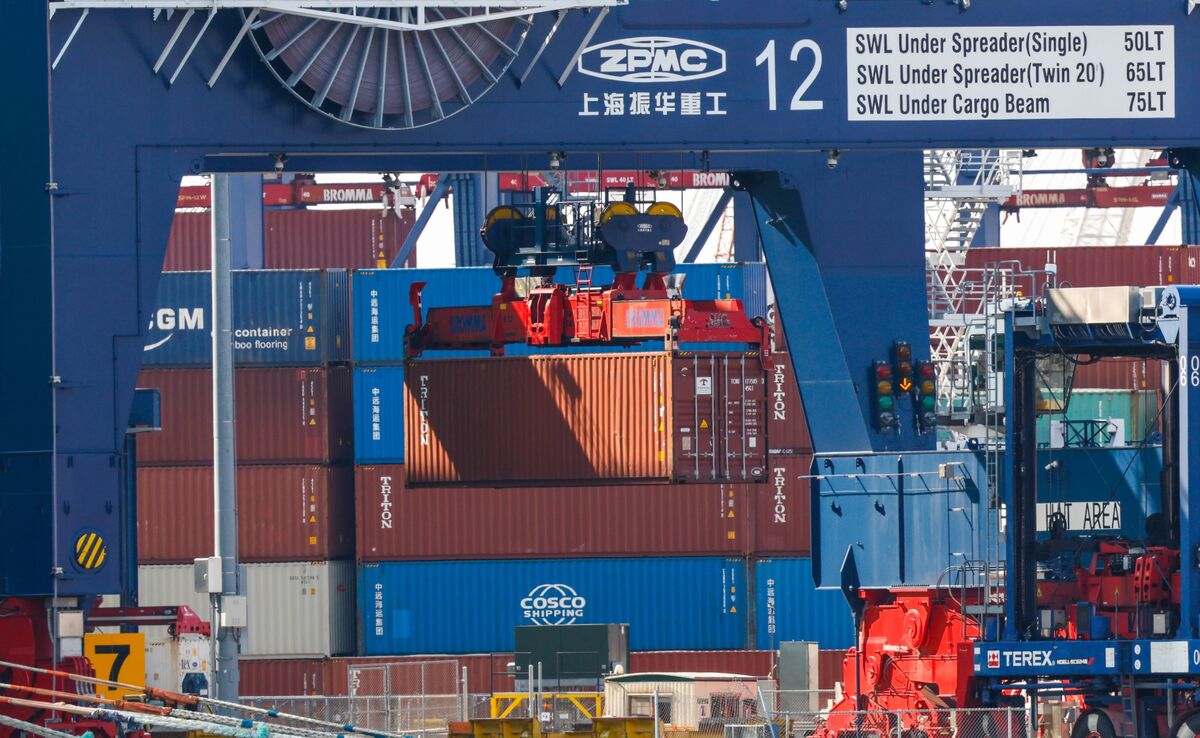
The US trade deficit widened 24.4% in July to $88.6B, the largest since early 2025, driven by a sharp import surge in computers and other technology equipment. The article links the faster technology import pace to ongoing investment in the AI buildout, suggesting strong AI-driven demand even as the external trade balance deteriorates.
The clean read is not “trade gap = macro weakness,” but “imports are pulling forward to satisfy AI capex,” which is structurally bullish for the compute supply chain and only secondarily a drag on GDP accounting. In the next 1-4 weeks, the market may dismiss this as statistical noise; over 1-3 months, it supports continued outperformance in semis, networking, and server exposure because the demand is coming from productive investment rather than consumption. The main beneficiary set is SMH/XLK, with the strongest beta in NVDA, AVGO, AMD, and the equipment stack.
The second-order loser is not a single company but any rate-sensitive, domestically focused segment that gets hit if stronger investment keeps nominal growth and Treasury yields elevated. That matters for small caps and housing-adjacent cyclicals more than for mega-cap tech; the import surge can be a stealth tightening signal if bond traders read it as growth-sticky. If the deficit is being widened by front-loaded shipments ahead of tariff or export-control changes, the trade is more transitory and could reverse sharply within 1-2 months, so the durability of the move matters more than the headline itself.
Contrarian angle: consensus may underappreciate that a wider deficit driven by AI hardware is a positive earnings tell, not a negative macro tell. The real risk is political: persistent tech import growth increases the odds of tariff rhetoric or broader supply-chain intervention, which would compress multiples for hardware names before fundamentals roll over. For now, this looks more like a relative-value signal than a directional macro short, unless we see import volumes roll over or guidance from hyperscalers soften.
AI-powered research, real-time alerts, and portfolio analytics for institutional investors.
Overall Sentiment
mildly negative
Sentiment Score
-0.20
Ticker Sentiment
