
Stowers scientists develop a new way to visualize what AI models learn from DNA -- and discover how to control what the models learn next
Source: PR Newswire
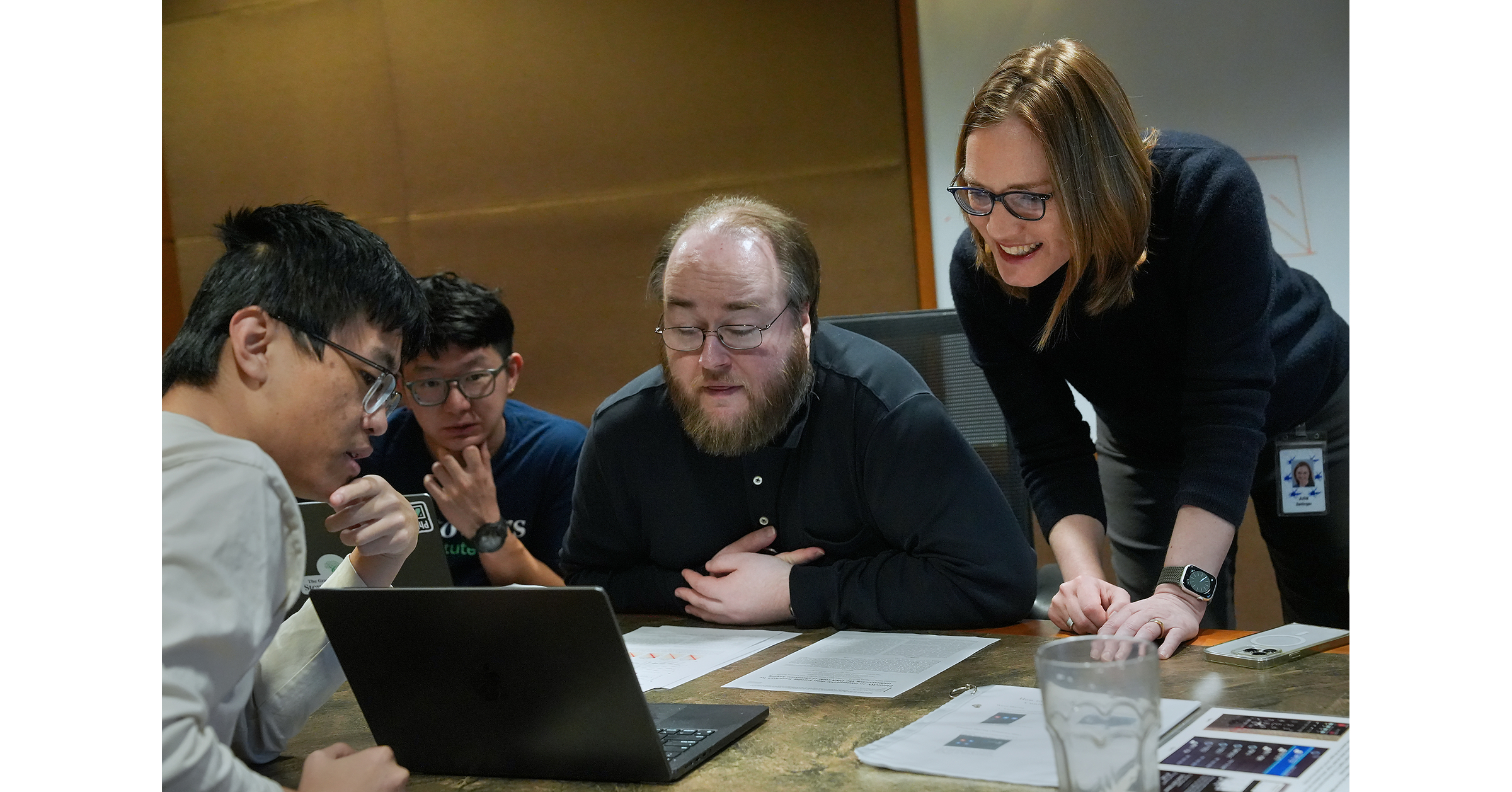
Stowers Institute researchers introduced PISA (pairwise influence by sequence attribution), a new AI interpretation method that maps single-DNA-base contributions to model predictions, enabling separation of technical experimental bias from underlying biology. Applied to MNase-seq nucleosome mapping, PISA both mathematically removed sequence-dependent enzyme bias and uncovered thousands of DNA sequences at nucleosome-linked chromatin domain boundaries, with effects extending hundreds of base pairs. The team also designed and experimentally validated DNA sequence arrangements, positioning PISA as a tool to turn trained genomic models into a hypothesis-generation and discovery platform.
Analysis
The economic signal here is not a near-term monetization story; it is a workflow upgrade that shifts value from raw model-building to proprietary data quality and downstream validation. That tends to favor AI-native biotech platforms with large internal datasets and integrated wet-lab loops, while putting modest pressure on commoditized assay and sequencing services if customers can prune exploratory experiments earlier. The first-order market reaction should be small because this is still a research-method advance, not a disclosed commercial product.
The more interesting second-order effect is competitive: if interpretability becomes standard, the moat widens for firms that can pair models with exclusive datasets and rapid experimentation, and narrows for vendors selling generic “AI for biology” messaging. In the 1-3 month window, the real catalyst is adoption by outside labs, citations, and software integration; absent that, any equity read-through is mostly sentiment. Over 6-18 months, the thesis only matters if it reliably improves variant prioritization or reduces failed wet-lab cycles, which could make mechanism-driven discovery more capital efficient.
Contrarian view: the market may overstate how quickly interpretability translates into drug discovery alpha. The bottleneck is still biological validation and clinical translation, not another layer of model explanation. So the right stance is to avoid chasing a headline-driven rally in genomics tools or biotech AI names unless there is evidence of third-party uptake; otherwise this is a useful academic step with limited immediate portfolio relevance.
AllMind Terminal
AI-powered research, real-time alerts, and portfolio analytics for institutional investors.
Request TrialMarket Sentiment
Overall Sentiment
mildly positive
Sentiment Score
0.25
Key Decisions for Investors
- Stay flat BAINF/EESO/GAP/LTH/MRES/TSTS; the article has no direct revenue or earnings linkage, so there is no justified event-driven position.
- If ILMN, TXG, or PACB sell off 3-5% on a misread that better models reduce sequencing demand, buy the dip for a 1-3 month rebound trade; downside is limited because any volume pressure would be offset by more targeted validation work.
- Watch TEM, RXRX, and SDGR for a 3-6 month thematic long only if there is evidence of external adoption or partnerships around interpretability/software layers; without that, do not force exposure.
- Set an alert: if there is no third-party software integration or independent replication within two quarters, treat this as academic noise and remove any biotech-AI basket thesis.
More News
- Gap sees executive exit as catalyst to rebuild struggling Athleta unit
- Why is T-Mobile stock tumbling today?
- Why is Verizon stock sliding today?
- SpaceX wants to become a 'major mobile carrier' with low-band spectrum acquisition
- OpenAI projected to bring in $20bn less in revenue than expected
- Soitec climbs 7% as BofA turns bullish on silicon photonics demand
From AllMind Research
- Anthropic IPO Preview: Valuation, Timing, and What to Watch
- Shein After the IPO: Venue, Valuation, and What Must Be Proved
- What AI Research Tools Should a Small Hedge Fund Buy First?
- AI Financial Research Benchmarks: What the Scores Mean
- State of M&A and Private Markets, June 2026: A $4.9 Trillion Rebound, Underwritten on Money That Never Got Cheaper