
UK Summons Russian Diplomat Over Failed Leipzig Drone Attack
Source: Bloomberg
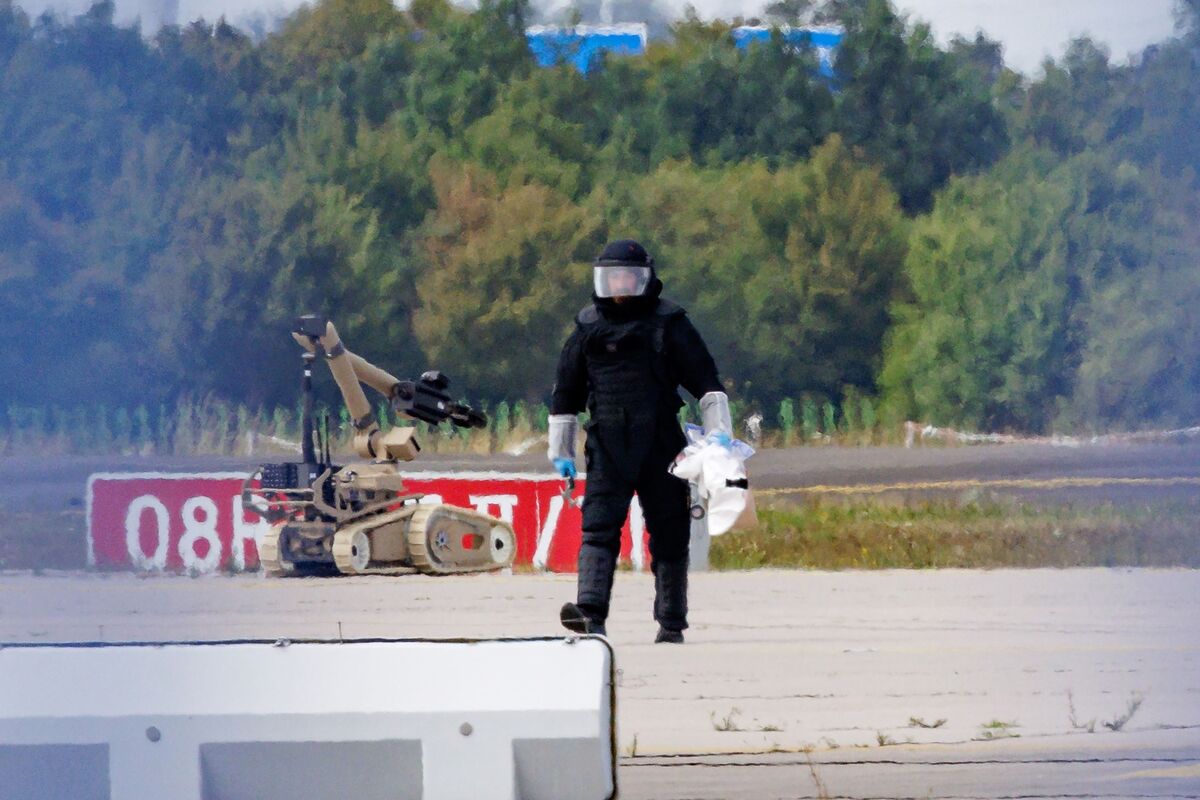
The UK summoned Russia’s Charge D’Affaires over a foiled “egregious and reckless” drone attack targeting Leipzig airport, Germany. The diplomatic backlash underscores escalating geopolitical risk tied to cross-border attacks on critical infrastructure, which can pressure risk sentiment even without direct financial figures.
Analysis
This is less a direct P&L shock than a signaling event: it reinforces that low-cost drones are now a civilian infrastructure problem, not just a battlefield one. The near-term winners are the counter-UAS ecosystem and higher-end air-defense primes (Rheinmetall, Hensoldt, BAE Systems, Thales, Saab) because airports, rail hubs, and energy assets are likely to translate headline risk into incremental procurement, spares, and software upgrades. The losers are European transport operators and airport operators only at the margin: the first-order effect is sentiment and security expense, but the second-order effect is longer dwell times, higher insurance deductibles, and more capex diverted to perimeter/security systems.
The key timing distinction is days versus months. In the next few sessions, this is mainly a risk-off headline for German travel and logistics, but earnings impact is negligible unless regulators respond with mandatory screening standards or flight restrictions. Over 1-3 months, repeated incidents would matter more: each additional event increases the probability of budget reallocation toward counter-drone systems and accelerates tender activity, which is a better setup for defense names than for airlines. Over 6-18 months, the structural beneficiary is any company that can sell layered detection + jamming + kinetic intercept, because civil infrastructure is an underpenetrated end market.
The contrarian view is that the market may overread a single foiled attack. Diplomatic escalation is noise unless it becomes a pattern; what matters for equities is whether Germany/EU convert this into funded procurement. If there is no follow-on incident or policy response within 2-4 weeks, the trade will likely fade and the better entry point will be on a broader defense pullback. Falsifiers are straightforward: no tender announcements, no budget revisions, and no repeat incidents in major European transport hubs.
AllMind Terminal
AI-powered research, real-time alerts, and portfolio analytics for institutional investors.
Request TrialMarket Sentiment
Overall Sentiment
mildly negative
Sentiment Score
-0.35
Key Decisions for Investors
- Watchlist, not immediate trade: add Rheinmetall (RHM.DE) and Hensoldt (HAG.DE) on any 3-5% headline-driven pullback; thesis only works if Europe turns civil-drone concern into funded counter-UAS procurement over the next 1-3 months.
- If a second infrastructure incident hits within 2-4 weeks, initiate a pair: long European defense/counter-UAS names (RHM.DE, HAG.DE, BA.L, HO.PA) vs short Lufthansa (LHAG.DE) or a European transport basket; target is security-spend beneficiaries outperformance as operational friction rises.
- Avoid chasing airport operators on this tape; any short in Fraport (FRA.DE) or Lufthansa should be event-driven only, with a tight stop if no regulatory response appears within 10 trading days.
- Set an alert for EU/German airport-security directives or emergency procurement language; that is the real catalyst, not the diplomatic summons. If absent, expect the headline premium to decay quickly.
More News
- Oil falls as crude flows remain 'surprisingly strong'
- Trump & Xi to Meet Amidst Friction on Wars, Tech, Trade
- US Diesel Tops $6.50 a Gallon as Wars Worsen Global Fuels Crunch
- Trump ‘open’ to meeting Iranian President Pezeshkian- Fox reporter
- Here are the 3 big things we're watching in the stock market this week
- Tech leads shares higher in Asia, oil eases