
XD THERMAL Develops Integrated Cooling Architecture for European Electric Bus Platform
Source: PR Newswire
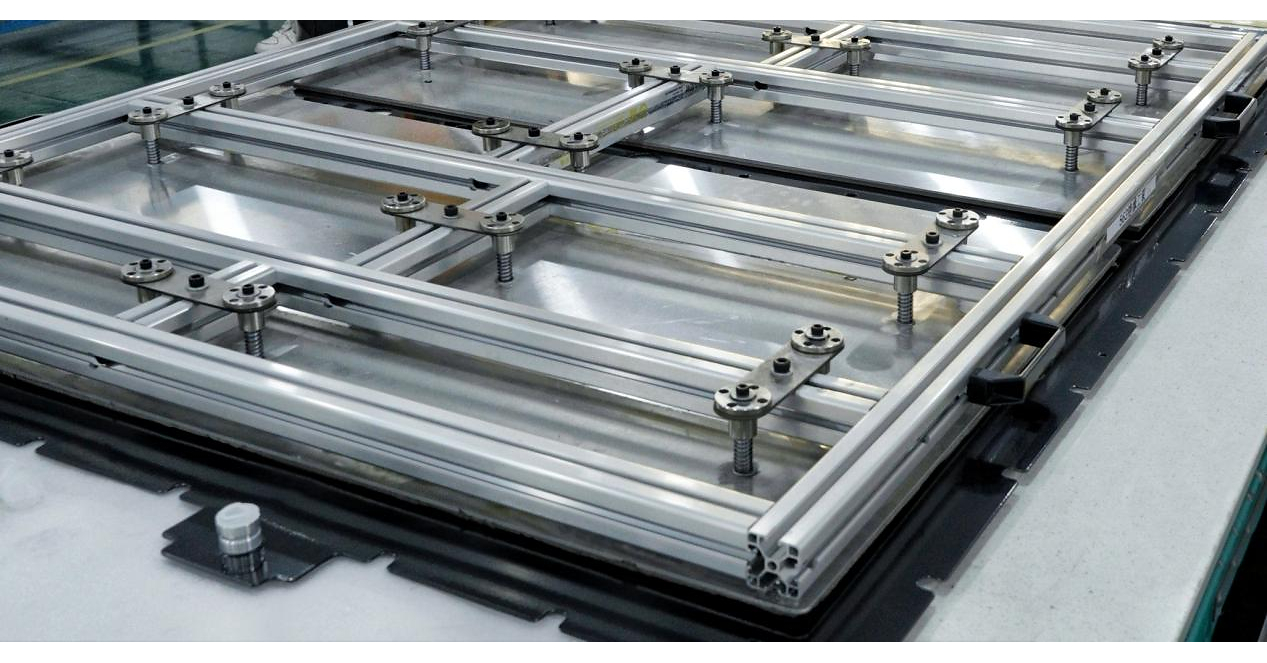
XD THERMAL says it has completed a dual-sided integrated liquid-cooling architecture for a European electric bus platform with a 35.3-kWh battery system, reaching production readiness in ~2 months after a ~6-week prototype. Integrating cooling into the enclosure cut cooling-related components by ~25% and improved heat distribution to support lithium battery lifespan, though sealing validation (multi-interface joints) required staged air/helium leak testing. The firm also expanded commercial-vehicle thermal-management capacity since early 2025 and expects its manufacturing base to support additional electric bus and heavy-duty programs, positioning the technology for series production discussions at IAA TRANSPORTATION 2026.
Analysis
This reads more like a process-validation milestone than a monetizable product event. The economic implication is a small but real shift in value capture from discrete cooling hardware toward enclosure integrators, stampers, coating/process-control vendors, and OEMs that can absorb thermal design into the pack architecture. If the approach scales, it should compress BOM and assembly labor while improving warranty economics; that is constructive for bus and heavy-duty EV OEMs, but it can pressure standalone thermal-component suppliers whose differentiation is mostly in a single subsystem.
The immediate market impact is likely muted because one prototype and a PR do not equal recurring revenue. The relevant catalyst window is 1-3 months: any named customer, SOP date, or volume validation around IAA Transportation would make this investable. The 6-18 month thesis only matters if fleet data show lower degradation and leak-related warranty claims; otherwise the design is just another engineering variant that competitors can replicate.
Contrarian view: consensus may overrate the architecture and underweight manufacturing execution. The moat is not dual-sided cooling per se; it is whether the company can repeatedly hit sealing, coating, and quality targets at production scale across different pack geometries. Falsifiers are straightforward: if field testing shows yield losses, leakage, or higher per-unit cost than a conventional pack, the story reverses quickly and any adoption benefit disappears.
AllMind Terminal
AI-powered research, real-time alerts, and portfolio analytics for institutional investors.
Request TrialMarket Sentiment
Overall Sentiment
mildly positive
Sentiment Score
0.18
Key Decisions for Investors
- No immediate directional trade on this PR alone; treat as a watch item until a named OEM, program size, and SOP timeline are disclosed at IAA Transportation.
- Set a catalyst alert on public thermal-management names with commercial-vehicle exposure, especially BWA and MOD; consider long only if they win disclosed enclosure-integrated content rather than discrete cooling parts.
- Avoid shorting pure-play thermal suppliers on the basis of this announcement; the substitution risk is real but needs evidence of serial production and design win conversion first.
- If follow-up disclosures confirm fleet deployment and unit-cost reduction, consider a pair trade: long an integrated supplier/OEM beneficiary, short a basket of legacy component-heavy auto suppliers most exposed to BOM simplification.
- Watch for falsifiers over the next 1-3 months: leak-test issues, delayed validation, or any commentary that per-pack cost increases despite the component count reduction.
More News
- AI Capex, Gamble or Jackpot?: Market Snapshot
- ‘I told you so’: China’s chip sector is making breakthroughs—and U.S. export controls are the reasons why
- One Singapore ship was sunk, but here's why others are still transiting the Strait of Hormuz
- CoreWeave credit default swaps hit distress levels as investors sour on AI debt
- The IPO drought is driving private equity-owned companies to the debt market to pay investors
- Hybe shares jump 10% as K-pop sensation BTS' tour lifts earnings hopes
From AllMind Research
- Anthropic IPO Preview: Valuation, Timing, and What to Watch
- Shein After the IPO: Venue, Valuation, and What Must Be Proved
- What AI Research Tools Should a Small Hedge Fund Buy First?
- What Exactly Does Post-Training in LLMs and Finance-Focused AI Actually Mean for Asset Managers?
- What Is a Financial Ontology?