
SpaceX Stock Jumps on Bullish Morgan Stanley Call: ETFs to Watch
Source: zacks.com
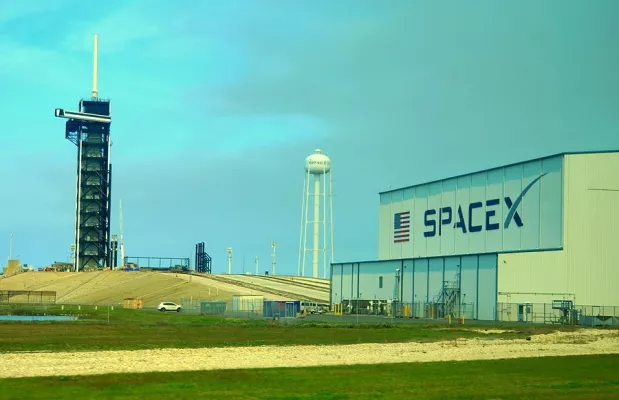
SpaceX shares rose about 7.7% Monday to $171.09 after Morgan Stanley issued a Buy rating and a $300 price target, implying roughly 75% upside; the stock had rebounded about 58% since early August after falling about 48% through late July. Morgan Stanley cited Starship flight 15, AI product releases and neocloud contracts as catalysts, while SpaceX’s AI unit is supplying computing capacity to customers including Anthropic and Google; Anthropic is reportedly expected to spend up to $84.5 billion through 2029 on that capacity. The article also lists ETFs with 15.80%–26.76% SpaceX exposure and reports a 35-analyst average price target of $221.97, 29.74% above the Oct. 5 close.
Analysis
The key asymmetry is between a near-term sentiment catalyst and a longer-dated monetization story. A Starship catch could reduce perceived execution risk, but one successful test would not by itself establish launch cadence, economics, or recurring cash flow; failure could unwind the recent momentum quickly. The AI thesis has more measurable potential, yet the headline contract figure is a customer’s expected spend through 2029—not confirmed SpaceX revenue or margin. Verify contracted capacity, delivery timing, utilization, and customer concentration before capitalizing it as durable earnings. NVIDIA may benefit from incremental accelerator demand, while Alphabet and Microsoft face a two-sided effect: customer spend can validate external compute demand, but purchased capacity could also enable competitors and substitute for their own cloud offerings. Those implications remain conditional on actual deployment and economics.
Near term, bullish analyst positioning and a sharp rebound leave SPCX vulnerable to a “good news, sell the news” response around Flight 15 and late-October results. Over 1–3 months, the decisive evidence is operational execution plus reported AI revenue, utilization, and guidance—not another price-target revision. Over 6–18 months, launch cadence and AI infrastructure returns determine whether the valuation can be supported. The contrarian point: the market may be over-crediting announced demand while underpricing execution, capital intensity, and concentration risk. Space-focused ETFs may spread single-name exposure, but their reported SpaceX weights still leave them sensitive to the same event risk; check current holdings, liquidity, and fees.
AllMind Terminal
AI-powered research, real-time alerts, and portfolio analytics for institutional investors.
Request TrialMarket Sentiment
Overall Sentiment
moderately positive
Sentiment Score
0.55
Ticker Sentiment
Key Decisions for Investors
- Do not chase SPCX solely on the analyst call or pre-test momentum. Treat Flight 15 as a binary catalyst; reassess after the result rather than assuming a successful catch converts directly into earnings.
- Watch for late-October evidence on AI capacity delivered, utilization, recognized revenue, customer concentration, and capital requirements. A material gap between announced commitments and reported monetization would falsify the near-term AI bull case.
- For investors requiring exposure, consider a small, defined-risk SPCX call spread only after checking option liquidity and implied volatility; avoid naked short-dated options into the test. If those data are unattractive or unavailable, wait for the event.
- A failure or material delay in Starship execution, or AI guidance that does not substantiate contracted demand, is a trigger to reduce exposure. A successful test accompanied by measurable AI monetization would support revisiting the thesis, not automatically validating the $300 target.
- If using MARS, ORBX, WARP, XSPC, WSPC, or UFO instead of SPCX, verify current holdings and concentration first; ETF diversification does not remove shared exposure to SpaceX execution and valuation risk.
More News
- Meta may ditch the idea of a cloud business for Muse. We think that’s a good trade
- Nvidia Is on the Verge of a $6 Trillion Market Value
- Wall Street says Elon Musk's Terafab talks with TSMC could spell bad news for Intel
- Google squeezes more power from existing nuclear plants in Constellation deal. These stocks benefit
- 'Magnificent Seven' profit lag: How the rest of the stock market may outpace tech giants this earnings season
- What's behind an 'explosion of buying' Tuesday, including the rally in GE Vernova