
AMID POLITICAL AD BOMBARDMENT, SAUSAGE DECLARES ITS CANDIDACY… FOR DINNER
Source: PR Newswire
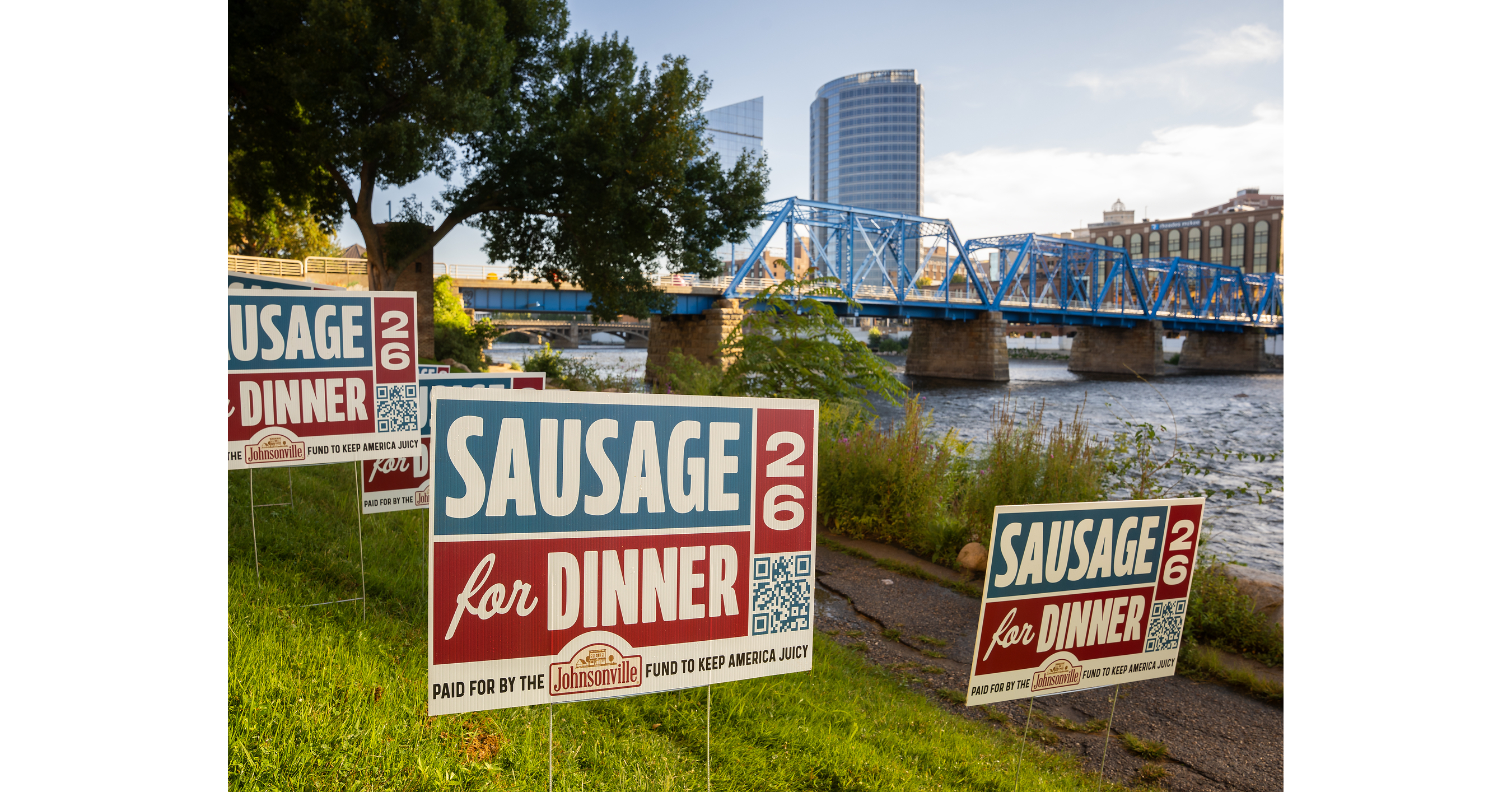
Johnsonville launched its "Sausage for Dinner 2026" marketing campaign, citing a Harris Poll in which 53% of Americans said they dislike deciding dinner and 31% said current events had distracted them from meal planning. The company pledged $100,000 to Hunger Free America as it promotes affordable sausage products in politically ad-saturated cities, beginning in Grand Rapids, where political-ad spending is projected to rise 75% versus the 2024 general election. The campaign is primarily a brand and community-engagement initiative, with limited direct financial implications.
Analysis
This is primarily a private-brand marketing event, not a standalone public-markets catalyst. The investable read-through is that branded, convenience-oriented protein can defend volume better than discretionary packaged food if election-season media clutter raises customer-acquisition costs and consumers prioritize low-friction meal solutions. Public comparables with adjacent refrigerated/prepared-food exposure include TSN, HRL, CAG and GIS, although Johnsonville's campaign spend and claimed consumer-attention effect are not independently sufficient to alter their estimates.
The more relevant near-term mechanism is local advertising scarcity: political spending can inflate spot-TV, out-of-home and digital inventory prices in swing-state markets through November. That is modestly negative for consumer brands reliant on regional media and promotional launches, while scaled retailers with owned media ecosystems—WMT, COST and KR—can capture vendor marketing dollars and traffic without bearing equivalent external-media inflation. Watch Q3/Q4 selling, general and administrative expense commentary and promotional intensity rather than extrapolating survey responses into category demand.
Contrarian view: the campaign's novelty may generate earned media precisely because it avoids buying incremental conventional political inventory, making its return on spend better than traditional CPG advertising. Still, any category benefit is likely competitively neutral: private-label sausage and fresh meat remain the principal substitution risk if household budgets tighten. There is no actionable single-name trade from this release absent scanner data showing refrigerated sausage velocity gains, price realization, or measurable share loss at public branded-food peers.
AllMind Terminal
AI-powered research, real-time alerts, and portfolio analytics for institutional investors.
Request TrialMarket Sentiment
Overall Sentiment
mildly positive
Sentiment Score
0.12
Key Decisions for Investors
- No new position based solely on this release; set a 1-3 month NielsenIQ/Circana alert for refrigerated sausage unit velocity, promotional depth and private-label share in Midwest and swing-state markets.
- Monitor TSN and HRL during Q3 earnings for prepared-food volume, trade-spend and advertising-cost commentary. A >100 bps sequential deterioration in branded volume with rising SG&A would support a tactical underweight versus defensive grocery retail.
- Prefer WMT or COST over broad packaged-food exposure into the final 6-8 weeks before the election: owned-media and traffic scale should be relatively advantaged if regional paid-media costs rise. Exit the relative trade if retailer traffic decelerates or food-at-home deflation materially intensifies.
- Avoid treating food-insecurity messaging as a demand signal. The relevant falsifier for any convenience-protein thesis is scanner evidence of downtrading toward private label or fresh unprocessed protein despite stable branded pricing.
More News
- What next for France as riots rattle markets? Three questions facing investors ahead of more protests
- Looters hit 3,000 French businesses. Within hours, the haul was trending on Vinted under the riot’s date
- Brazil’s Lula and Bolsonaro debate policy proposals before run-off
- US-Iran war, then and now: How the landscape has changed since February
- Why is Israel launching a new military operation in the occupied West Bank?
- ‘There’s nothing temporary about a temporary store’: How Spirit Halloween’s CEO took it from 130 stores to 1,550—and swallowed your mall’s Hot Topic