
Huawei präsentiert sechs weltweite Referenzprojekte und erschließt ein neues Energiesystem durch die Synergie von KI und Energie
Source: PR Newswire
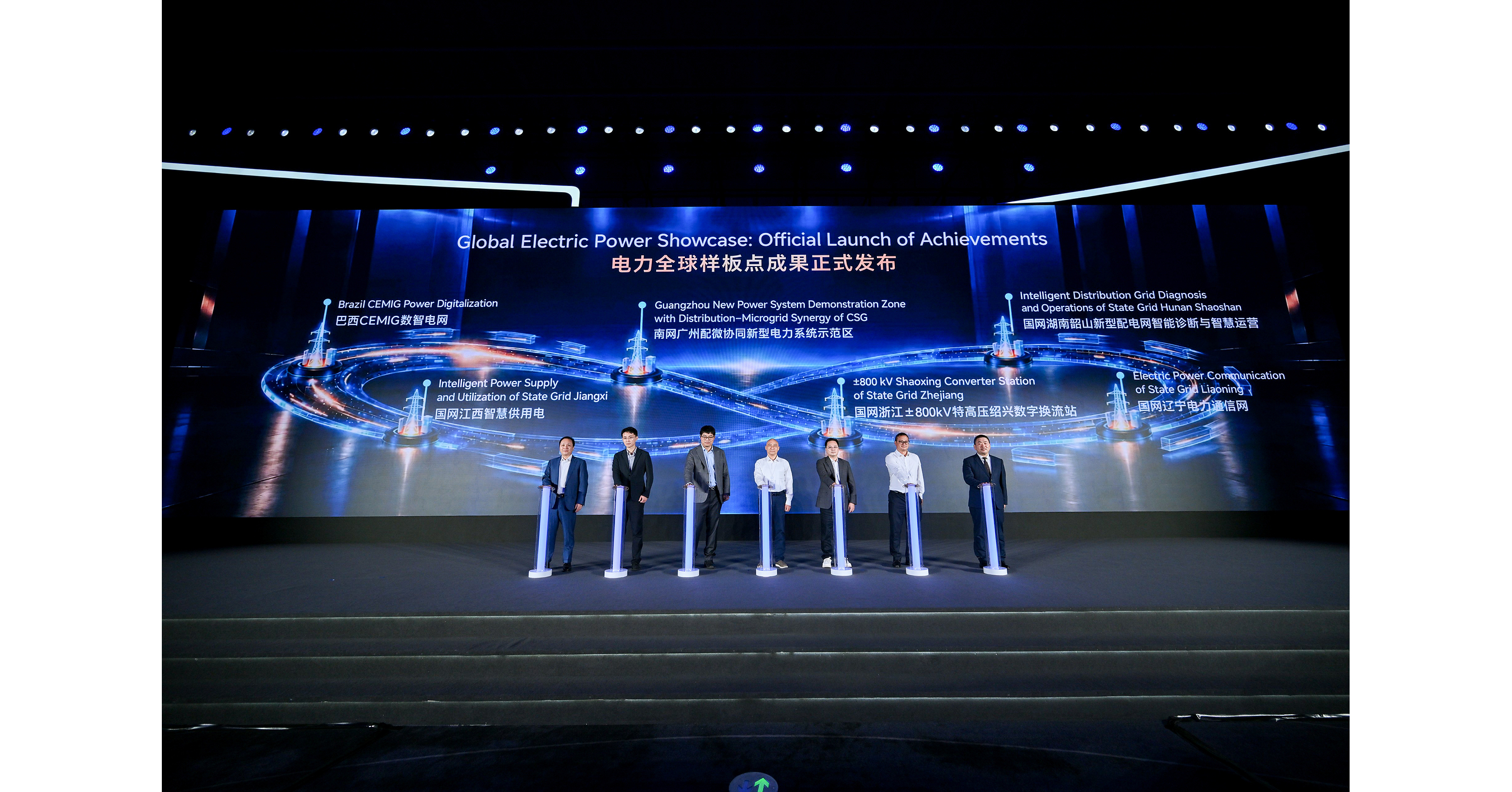
Huawei unveiled six global power-sector reference projects at its Global Electric Power Summit 2026, showcasing AI-enabled digitalization across generation, grids, substations and electricity consumption. The company is targeting low-voltage grid management—identified as a key bottleneck—through data, measurement, control and traceability capabilities, while positioning AI as central to integrating decentralized renewables and supporting grid reliability. The announcement is strategically positive for Huawei's energy digitalization business but provides no financial metrics, contracts, or near-term earnings implications.
Analysis
This is strategically relevant but not yet an earnings catalyst: reference deployments do not establish contract value, recurring software attach rate, or procurement conversion. The investable read-through is that distribution-grid digitization is shifting spend from discrete hardware toward sensing, communications, edge control and asset-management software; this generally favors ABB (ABBNY), Schneider (SBGSY), Siemens (SIEGY), Eaton (ETN), Itron (ITRI) and Landis+Gyr (LDOS) where regulated utility capex can support multi-year revenue visibility.
Huawei's strongest competitive leverage is likely in price-sensitive emerging-market utilities, where a bundled telecom-plus-grid-control architecture can reduce upfront integration cost. That is a modest negative for Western automation vendors' international tender margins, particularly in Latin America and parts of Asia, but it is not a broad displacement thesis: cybersecurity rules, local-content requirements and utility interoperability standards remain substantial barriers in North America and Europe. CEMIG (CIG) is a useful watchlist name, but a single deployment should not be extrapolated into a material regulated-asset-base uplift without disclosed capex and allowed-return terms.
Near term (days to weeks), the release is unlikely to move listed peers. Over 1-3 months, utility capital plans, smart-meter/order backlog and grid-automation guidance are the relevant catalysts; over 6-18 months, accelerating distributed-generation and data-center interconnection queues should widen the low-voltage modernization bottleneck. The contrarian view is that AI-grid narratives may be over-monetized before utilities prove savings through lower losses, outage duration or deferred substation capex; absent measurable ROI, procurement cycles remain slow and hardware-led.
The key falsifier for a grid-digitalization long basket is 2027 utility capex guidance showing distribution automation flat-to-down, or order growth at ETN/ITRI/LDOS decelerating despite elevated interconnection demand. Conversely, disclosed multi-country framework awards, software recurring-revenue disclosure, or regulatory approval to place digital-grid spending into rate base would justify higher confidence.
AllMind Terminal
AI-powered research, real-time alerts, and portfolio analytics for institutional investors.
Request TrialMarket Sentiment
Overall Sentiment
mildly positive
Sentiment Score
0.38
Key Decisions for Investors
- No standalone trade on this release; treat it as an alert for Huawei-related tender disclosures, contract values and CEMIG's next regulated-capex update.
- Build a 6-18 month long basket of ETN and ITRI on market weakness, targeting distribution-grid capex rather than AI beta. Risk/reward is favorable only if backlog and utility-order commentary remain positive; exit or reduce if 2027 distribution automation guidance turns negative.
- For international competitive-risk hedging, prefer long ETN / short SBGSY in equal dollar amounts over the next 3-6 months: ETN has greater North American electrification exposure, while Schneider has relatively greater global project exposure. Falsify if Schneider reports accelerating North American order growth or Huawei-linked tender wins fail to materialize.
- Monitor CIG for rate-base filings and capex authorization rather than buying on technology headlines; initiate only if disclosed automation investment is material to its regulated asset base and accompanied by approved returns.
More News
- SEBI Allows Portfolio Managers to Invest Overseas, Short Equity Options
- Trump, Xi Address AI, Taiwan During State Visit
- Oracle Japan shares surge 7% after record fiscal first quarter, bucking selloff of U.S. parent
- China's Xi urges U.S. to cooperate on AI
- Trump Hosts China’s Xi With Trade, AI, Taiwan in Focus
- Surging Treasury yields are posing a brand new problem for Kevin Warsh and the Fed
From AllMind Research
- Anthropic IPO Preview: Valuation, Timing, and What to Watch
- Shein After the IPO: Venue, Valuation, and What Must Be Proved
- What AI Research Tools Should a Small Hedge Fund Buy First?
- Can Hedge Funds Use ChatGPT? A Control Framework
- Palantir (PLTR) Q4 2025 Earnings: 70% Revenue Growth, Then an 11% Single-Day Crash