
Rimodellare il valore della rete per una nuova crescita nell'era dell'IA
Source: PR Newswire
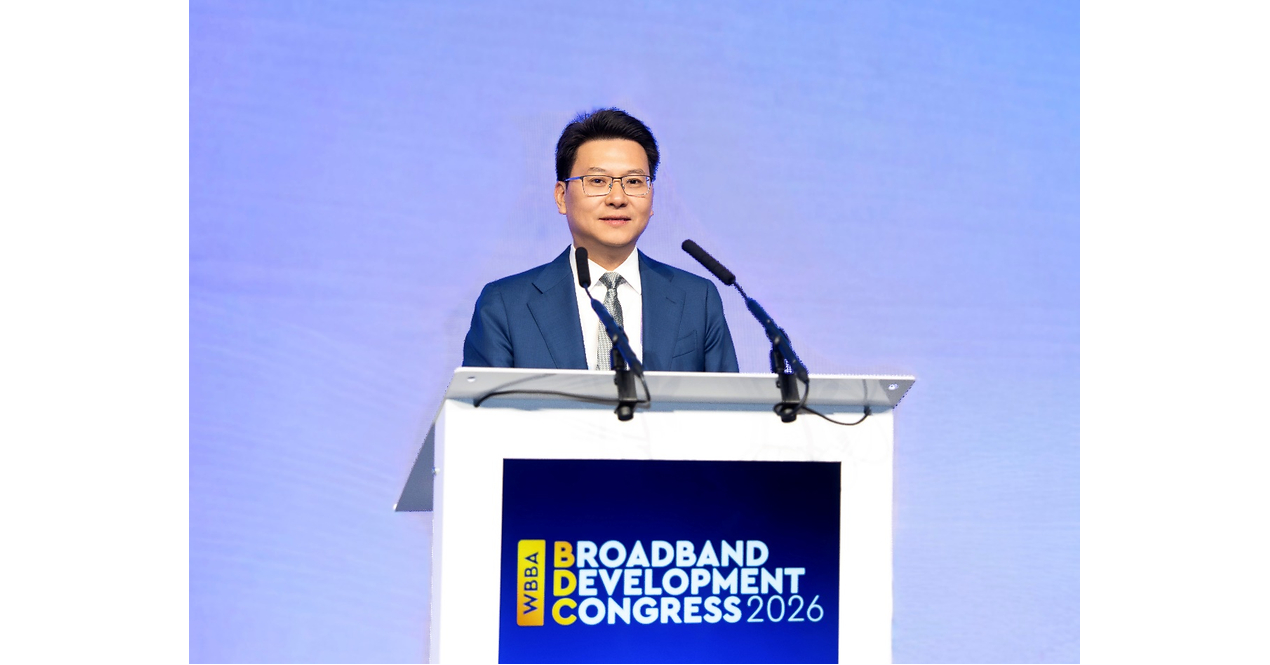
At a Vienna broadband congress, Huawei optical product line president Bob Chen urged operators to redesign networks around AI data-center (AIDC) demand, sell connectivity bundled with latency and reliability, and adopt AI-enabled network operations. The article says AI-model token consumption rose nearly 50-fold in the past year and AIDC numbers nearly 10-fold; cited examples include Wi-Fi speeds improving about 20% under interference and device energy use falling by more than 20% with AI optimization. These are industry proposals and examples presented in Chen’s speech, not reported financial results.
Analysis
The investable signal is a possible change in the mix of network spending, not proof of a larger telecom capex cycle. If AI workloads push traffic between compute hubs, investment could rotate toward optical transport, data-center interconnect and programmable switching, while legacy access upgrades lose relative priority. That favors specialist optical and networking vendors such as Ciena, Nokia and Cisco over a broad telecom-equipment basket—but Huawei’s strategic framing is not evidence that operators have approved budgets or can charge premiums for latency and reliability.
The key second-order question is who captures the value. Hyperscalers and data-center operators may own the compute relationship and bargaining power; carriers incur fiber and network costs but may struggle to monetize deterministic latency. AI-assisted operations could improve carrier economics through lower power use and fewer truck rolls, yet those efficiencies may be competed away through lower prices rather than higher margins. Also, much AI traffic is internal to data centers; the article does not establish that inter-site traffic is large enough to drive a material carrier upgrade cycle.
Days: limited fundamental read-through; avoid treating the event as a sector catalyst. Over 1–3 months, watch operator capex commentary, optical bookings/backlog and disclosed AI-related network contracts. Over 6–18 months, the thesis strengthens only if enterprise private-network pricing and carrier returns on AI-oriented capex become visible. Falsify it if major operators maintain flat transport budgets, optical orders weaken, or AI-network deployments remain confined to hyperscaler campuses. The contrarian risk is that investors capitalize a broad “AI networking” theme before recurring carrier revenue is demonstrated.
AllMind Terminal
AI-powered research, real-time alerts, and portfolio analytics for institutional investors.
Request TrialMarket Sentiment
Overall Sentiment
mildly positive
Sentiment Score
0.25
Key Decisions for Investors
- No trade on the announcement alone: it is a vendor executive’s industry vision, not independently verified demand or a disclosed order book.
- Build a watchlist—not an immediate position—in optical transport and networking suppliers including Ciena, Nokia and Cisco. Consider relative exposure only after bookings, backlog or operator guidance confirms a transport-capex rotation; do not infer ticker mappings from this dataset.
- Monitor telecom operators for evidence that latency/reliability tiers earn incremental revenue rather than simply raising network costs. A carrier long thesis needs improving transport returns or monetization evidence, not AI traffic claims alone.
- Falsification alert: downgrade the theme if the next 1–3 months bring weaker optical orders or unchanged/reduced operator transport budgets despite continued AI infrastructure spending.
More News
- Why did CoreWeave stock get crushed this week? Look to this corner of the debt market for clues
- AI stock sell-off ramps up over debt-fueled data center spending fears: ‘Full-blown crisis of confidence'
- Dow falls 189 points as AI stocks slide and oil prices surge
- Wall Street Anxiety Spreads as AI Rout Meets $110 Oil Shock
- Wall Street's fear gauge is ripping. Traders see it going even higher
- All the news about the iPhone Duo