
Here's How to Play Citigroup Stock Ahead of Q3 Earnings Release
Source: zacks.com
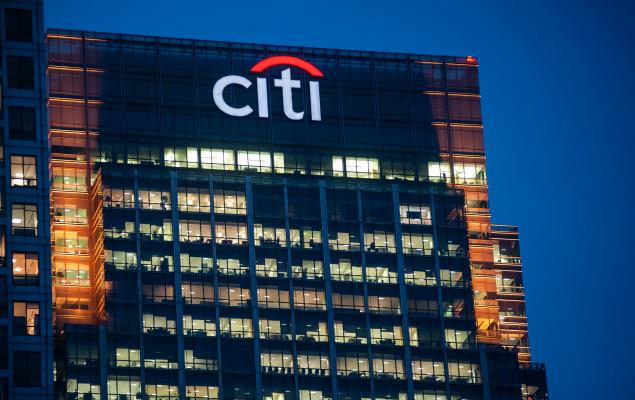
Ahead of its Oct. 13 Q3 report, Citigroup is forecast to post revenue of $23.66 billion, up 7.1% year over year, and earnings of $2.66 per share, up 18.8% despite a recent downward estimate revision. NII is estimated at $16.6 billion, up 11.1%; however, higher expenses and expected reserve building may weigh on results, while the stock fell 7.5% in Q3. Longer-term positives include projected $2-$2.5 billion in annualized savings by year-end 2026, a 12% dividend increase to $0.67 per share, and an ongoing $30 billion repurchase program; the article advises waiting for results before taking new positions.
Analysis
The setup is asymmetric but not an obvious pre-earnings buy: C’s sharper quarterly drawdown and modest valuation discount create room for a relief rally, yet neither provides much protection if the report shows that revenue strength is being absorbed by costs or credit. A small positive estimate “whisper” signal is less important than the recent downward EPS revisions; an earnings beat alone may not clear the bar if expenses, cards or reserves disappoint.
The key quality test is conversion of revenue into returns. NII growth from loan expansion is valuable only if deposit costs and credit performance remain controlled; a further rate rise is not automatically bullish for bank margins. Meanwhile, markets strength may be cyclical and less durable than the multi-year efficiency thesis. Treat projected savings as unproven until Citi demonstrates them in a lower expense run-rate, net of restructuring and technology spending. Rising non-accruals and reserve builds would also weaken the case that the expected profitability improvement is sustainable.
Near term (days), results and guidance can drive a sharp relative move; the concurrent WFC report may reset the sector read-through, while BAC follows the next day. Over 1–3 months, watch expense trajectory, credit costs and any change in return targets. Over 6–18 months, Banamex deconsolidation and reduced stranded costs could support capital flexibility, but the timing and realizable proceeds remain execution risks—not a near-term earnings catalyst. The reported valuation gap versus BAC and WFC is narrow, so the contrarian opportunity is chiefly a potential improvement in Citi’s execution, not a deep-value cushion.
AllMind Terminal
AI-powered research, real-time alerts, and portfolio analytics for institutional investors.
Request TrialMarket Sentiment
Overall Sentiment
mildly positive
Sentiment Score
0.15
Ticker Sentiment
Key Decisions for Investors
- Avoid adding ahead of the Oct. 13 report solely on the beat model or valuation. For existing C exposure, hold only at risk levels consistent with a binary earnings event; do not interpret an EPS beat as confirmation without expense and credit quality.
- Consider a staged long C / short BAC relative-value position only after results if Citi shows expense control net of transformation costs, stable credit metrics and maintains its return outlook. Keep sizing modest: BAC reports the following day, and sector beta can overwhelm the company-specific thesis.
- Falsify the execution thesis if management lowers its return outlook, expense growth remains elevated without evidence of savings, or credit deterioration forces materially heavier provisioning. Also monitor Banamex timing and capital treatment; do not price the anticipated release as assured.
- Alert, not a recommendation: verify the reported efficiency ratio, card expense and loss trends, reserve build, deposit costs, and management’s quantified savings run-rate against prior guidance before initiating a longer-horizon position.
More News
- French yields are near levels not seen since 2002. Why that could give U.S. Treasurys a boost
- What's behind the recovery rally in tech stocks — plus, Elon Musk's very good week
- Wall Street sees buying opportunity in banks as shares tank ahead of earnings
- Earnings season kicks into high gear as big banks report next week. Here's what's ahead
- This AI infrastructure stock will rise on agentic AI boom, Bank of America says
- HIMS jumps 7% on peptide tailwind — but Citi sees 17% downside from here
From AllMind Research
- Anthropic IPO Preview: Valuation, Timing, and What to Watch
- Shein After the IPO: Venue, Valuation, and What Must Be Proved
- What AI Research Tools Should a Small Hedge Fund Buy First?
- Hebbia Alternatives: A Workflow-Based Buyer’s Guide
- 2026 Global Markets Outlook: Asset Allocation After the Great Disconnect