
Huawei Cloud Stack : Tout pour l'IA, vers une nouvelle ère de l'intelligence
Source: PR Newswire
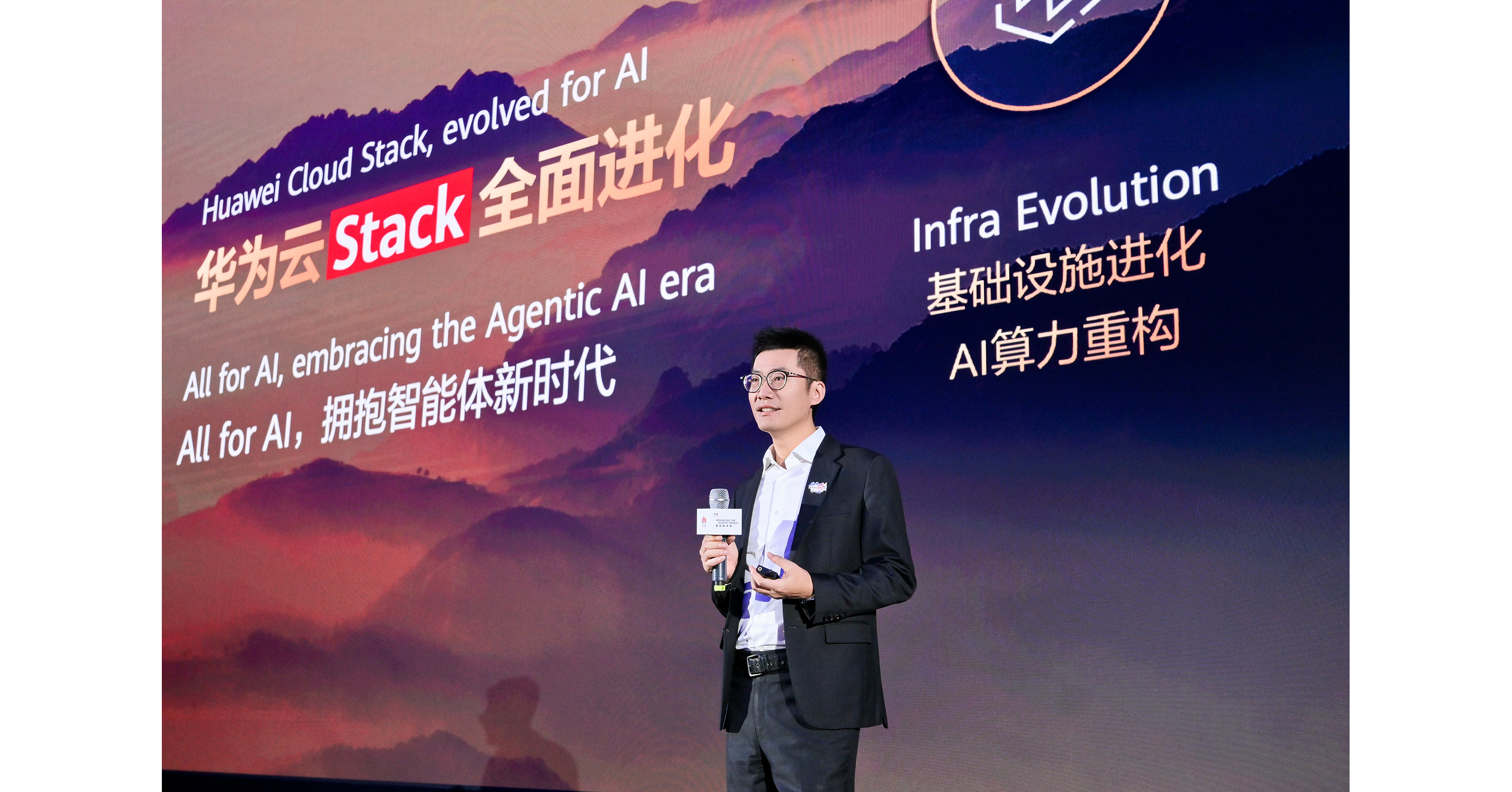
Huawei unveiled its agent-ready Hybrid Cloud Next architecture and expanded Huawei Cloud Stack capabilities for AI infrastructure, data management, model training/inference and agent operations at HUAWEI CONNECT 2026. The company said technologies including NPU pooling and memory snapshots can lift compute-resource utilization to 70% from 30%. Huawei also cited deployments with Standard Bank for cloud-native core banking and Sky47's Pakistan AI cloud platform, underscoring enterprise adoption across finance and emerging-market industries.
Analysis
The investable implication is not Huawei revenue but a potential acceleration of sovereign and regulated-enterprise AI stacks that prioritize data residency, deterministic latency, and vendor-controlled integration over frontier-model flexibility. This is incrementally negative for hyperscaler-led AI monetization in sanctioned or data-localized markets, while increasing competitive pressure on NVIDIA's export-constrained accelerator opportunity and on VMware/Broadcom's private-cloud pricing umbrella. The claimed utilization gains should be treated as a marketing KPI until disclosed workloads, power draw, and customer TCO are independently validated; higher utilization can also reduce hardware unit demand per deployed agent workload.
Over the next 1-3 months, the relevant catalyst is evidence that reference deployments convert into recurring hardware, maintenance, and implementation commitments rather than pilot announcements. A broader rollout would favor regional systems integrators, power/cooling vendors, and local data-center operators in emerging markets, but could fragment software standards and raise enterprise switching costs—supportive for Huawei's installed-base lock-in, not necessarily for global AI software vendors. Over 6-18 months, the key second-order risk is that sovereign AI demand becomes a separate, lower-margin technology stack where Chinese hardware wins on availability and financing rather than benchmark performance.
Consensus may overread this as another GPU-demand signal. If enterprises deploy more inference-oriented, tightly managed agent workflows, token efficiency and infrastructure utilization become more important than raw training-cluster capacity; that shifts value toward networking, orchestration, and power efficiency, and away from indiscriminate accelerator-capex assumptions. The thesis is falsified if regulated customers continue selecting NVIDIA-compatible stacks despite localization constraints, or if disclosed deployments fail to generate measurable production inference volumes and renewal commitments.
AllMind Terminal
AI-powered research, real-time alerts, and portfolio analytics for institutional investors.
Request TrialMarket Sentiment
Overall Sentiment
moderately positive
Sentiment Score
0.42
Key Decisions for Investors
- No directional trade on the release itself: Huawei is not publicly investable and the disclosed customer examples do not establish material revenue or backlog. Set an alert for independently reported sovereign/private-cloud AI awards, deployment scale, and recurring-service terms over the next 90 days.
- Use NVIDIA (NVDA) versus Broadcom (AVGO) as a watch-pair, not an immediate position: sustained evidence of Huawei-led sovereign AI substitution would be relatively more adverse to NVDA's restricted-market accelerator TAM, while AVGO retains more diversified networking/custom silicon exposures. Initiate only after corroborating contract data; invalidate on renewed NVDA-compatible design wins in localized markets.
- Monitor Vertiv (VRT) and Eaton (ETN) for second-order upside if regional AI data-center buildouts translate into power-density upgrades. Entry should follow capex orders or backlog commentary, not vendor architecture announcements; key risk is utilization optimization delaying incremental facility buildouts.
- For banking technology exposure, watch Standard Bank Group (SBK.JO) for core-system migration execution rather than buying on AI rhetoric. A position would require evidence of lower cost-to-income, stable operational-loss metrics, and no migration-related service disruption over the next 2-4 reporting periods.
More News
- Bolivia’s Congress approves $1.9bn IMF loan amid protest threats
- Google's Gemini becomes latest AI model to break out and hack computer systems
- Kevin Warsh just revealed a huge change for the Fed. The press missed it
- UBS now expects AI capex to reach nearly $1tn this year and around $1.4tn by 2027
- Stocks face a key hurdle in next week’s U.S.-China summit. Here’s what’s at stake
- Blackstone Sees India Nearing Tipping Point for Foreign Capital
From AllMind Research
- Anthropic IPO Preview: Valuation, Timing, and What to Watch
- Shein After the IPO: Venue, Valuation, and What Must Be Proved
- What AI Research Tools Should a Small Hedge Fund Buy First?
- Document Search Enhancements, AI Enhancements, AI Actions, & Chat Export
- AI Vendor Landscape for Institutional Investment Teams