
Midterm Pressure Has Some Republicans Breaking With Trump
Source: Bloomberg
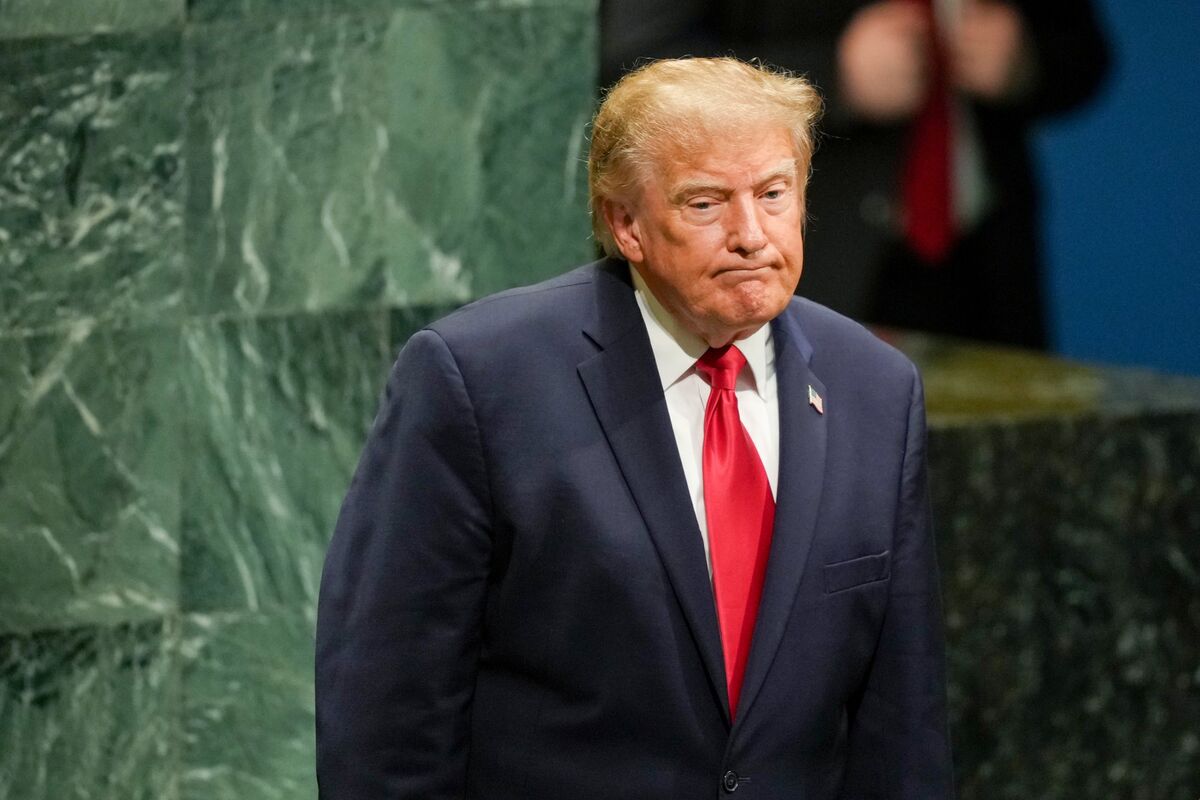
With midterm elections approaching, some Republican lawmakers are increasingly distancing themselves from President Donald Trump despite his call for South Carolina voters to treat the election as if he were on the ballot. The emerging split indicates potential party-cohesion risks for Republicans' midterm campaign strategy.
Analysis
The investable implication is not a broad “political risk-off” signal but a higher probability of legislative gridlock through the next Congress. That favors incumbents whose valuation depends on avoiding adverse policy changes—large-cap technology and managed care—while reducing the near-term probability of sector-specific catalysts such as further corporate-tax changes, broad deregulation, or durable fiscal packages. The immediate market effect should be limited; the relevant 1-3 month transmission channel is whether intraparty tension weakens confidence in passing must-pass funding, tax, or health-policy legislation without concessions.
A divided or politically fragile governing coalition is most consequential for rate-sensitive domestic cyclicals: regional banks, homebuilders, and small caps need predictable fiscal, regulatory, and growth conditions more than mega-cap defensives do. Conversely, elevated shutdown/debt-limit headlines can create temporary Treasury-volatility spikes that pressure KRE and IWM disproportionately, even if the underlying economic effect is modest. The contrarian view is that markets often overprice headline dysfunction: absent a concrete funding lapse, debt-ceiling confrontation, or polling shift sufficient to alter expected congressional control, this is not a standalone directional equity trade.
Watch congressional funding deadlines, generic-ballot changes, and prediction-market odds of divided government rather than individual political endorsements. A sustained rise in divided-government probability should modestly support long-duration growth relative to regulated domestic cyclicals, while a credible unified-government outcome with a defined tax or deregulatory agenda would reverse that relative-value thesis.
AllMind Terminal
AI-powered research, real-time alerts, and portfolio analytics for institutional investors.
Request TrialMarket Sentiment
Overall Sentiment
mildly negative
Sentiment Score
-0.20
Key Decisions for Investors
- No immediate outright position: treat the news as a policy-volatility watch item until a funding, debt-limit, or election-probability catalyst produces a measurable move in rates or sector dispersion.
- For a 1-3 month relative-value hedge, consider long QQQ versus short IWM in equal dollar amounts if congressional-control odds move toward divided government; the trade benefits from lower odds of pro-cyclical fiscal action and greater sensitivity of small caps to policy uncertainty. Exit if small-cap relative strength improves by more than 5% or polling restores a credible unified-government path.
- Maintain caution on KRE into major Washington fiscal deadlines; use KRE puts rather than a structural short because a benign resolution can quickly compress political-risk premia. The bearish case is falsified by stable funding passage and a continued decline in Treasury volatility.
- Monitor IHF and major managed-care names for policy-driven dislocations rather than buying broadly: reduced legislative capacity can preserve the status quo, but reimbursement-rule actions remain an executive-branch risk independent of congressional gridlock.
More News
- Oil industry warns a diesel export ban will raise fuel prices as Trump weighs restrictions
- Why Trump banning diesel exports would upset the U.S. oil sector and upend global fuel markets — ‘the cure would be far worse than the disease’
- Trump-Xi Summit Looms & AI in the C-Suite
- A US Diesel Export Ban Would Be a Calamity for the Market
- Venezuela’s Delcy Rodriguez promises elections at UN, gives no date
- Four US Republicans call for Trump to release Taiwan security funds