
STRATEGIC PARTNERSHIP WITH CARESTER FOR OXIDE SEPARATION DEVELOPMENT AND 10-YEAR OFFTAKE AGREEMENT
Source: PR Newswire
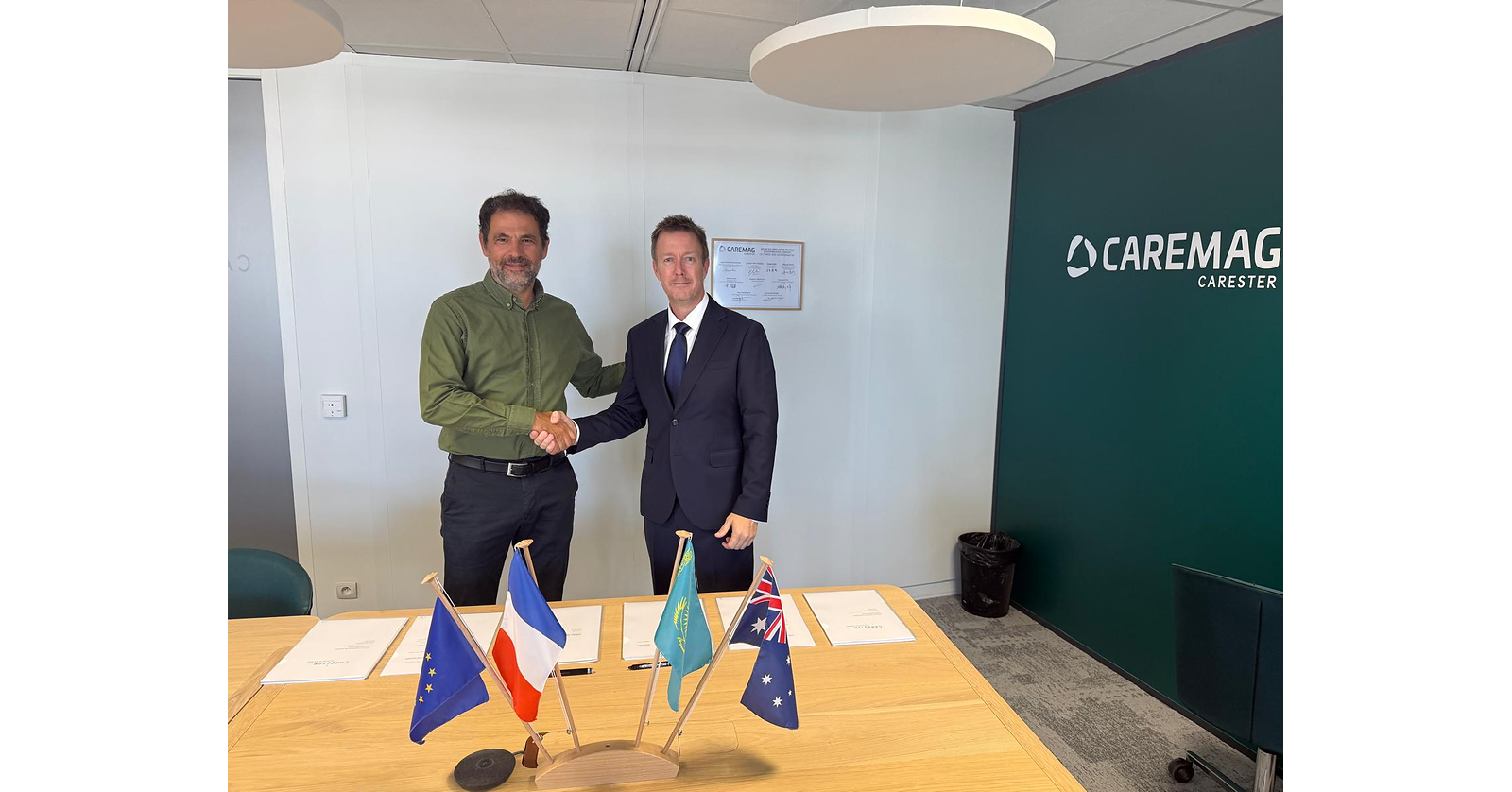
Lindian executed a Technology & Engineering Services Agreement and long-term binding offtake deal for an 8,000 tpa REO solvent extraction and oxide separation SX Facility at Stepnogorsk, Kazakhstan, with DFS targeted for completion by Q4 2026. Carester will purchase 70% of SEGH volumes under a binding long-term structure (10-year term plus two 5-year extensions) and has RoFR over 70% of MHREC production, supplying Caremag in Lacq, France—backed by €216m of French/Japanese funding. Management highlights higher payabilities for MHREC/SEGH tied to government floor-linked pricing and indicates the SX Facility will be internally funded using operating cash flows plus A$125m undrawn Nico facilities, positioning Lindian to move from concentrate/carbonates into higher-value separated NdPr oxide and SEGH carbonate production.
Analysis
This is primarily a de-risking event, not a near-term earnings event. The real mechanism is lower perceived project-finance friction: a binding route-to-market plus a credible downstream partner can compress the equity risk premium if the DFS confirms that capex and operating intensity are materially below greenfield peers. The market should care less about the announced tonnage and more about whether this converts Lindian from a single-asset explorer into a platform with repeatable conversion margin and optionality on third-party feed.
Second-order, the most interesting effect is on regional supply-chain bargaining power. If Stepnogorsk becomes a multi-feed hub, Lindian is no longer just selling material; it is controlling a chokepoint for separated oxides and heavy rare earth intermediates. That would be structurally negative for smaller upstream peers that lack downstream access, while modestly positive for engineering/service names only if the project advances toward EPC — otherwise the consultant revenue is immaterial and non-recurring.
The risk is execution, not demand. The next 1-3 months are about whether the DFS validates the low-cost brownfield narrative; the 6-18 month window is commissioning and ramp, where dilution risk reappears fast if capex drifts or internal cash flow underdelivers. The contrarian view is that the market may overread strategic language: many rare-earth projects look “de-risked” until the first real capex check, so today’s rerating could fade unless the December/quarterly milestones come in cleanly. A failure would be signaled by DFS slippage, capex inflation, or any hint that additional feedstock is harder to secure than implied.
AllMind Terminal
AI-powered research, real-time alerts, and portfolio analytics for institutional investors.
Request TrialMarket Sentiment
Overall Sentiment
moderately positive
Sentiment Score
0.35
Ticker Sentiment
Key Decisions for Investors
- Long IWTNF on weakness over the next 1-3 weeks; treat this as an option on downstream de-risking rather than a current cash-flow story. Upside is a rerating into DFS/commissioning milestones, but cut if the DFS is delayed or capex comes in >20% above the market’s brownfield expectation.
- Pair trade: long IWTNF / short REMX for the next 3-6 months to isolate project-specific de-risking from the broad rare-earth basket. This works best if the market starts rewarding vertically integrated supply chains and not just upstream exposure.
- Do not chase TTEK on this announcement alone; any incremental engineering revenue is likely too small to move estimates unless it converts into broader EPC backlog. Reassess only if the company discloses meaningful contract value or follow-on work.
- Set an alert for the DFS completion in Q4 2026: if the study shows weak unit economics, capex creep, or heavy dependence on government support, treat any rally in IWTNF as fadeable.
More News
- Iran says two tankers catch fire after hitting mines in Strait of Hormuz
- Why Marco Rubio’s visit to Mumbai has ruffled feathers in India
- US and Iran both claim control of Strait of Hormuz amid attacks on vessels
- Bending Spoons wants to revive software castoffs. Berkshire is backing the plan
- AI rapidly improving, could vastly boost U.S. GDP, Anthropic's Clark tells policymakers
- ‘How many canaries have we killed in the coal mine?’ — Wall Street debates if the latest AI bubble warnings are another head fake or the real thing