
Yarbo Brings the M Series to Life at IFA 2026, From CES Prototype to Real Product, in Your Hands
Source: PR Newswire
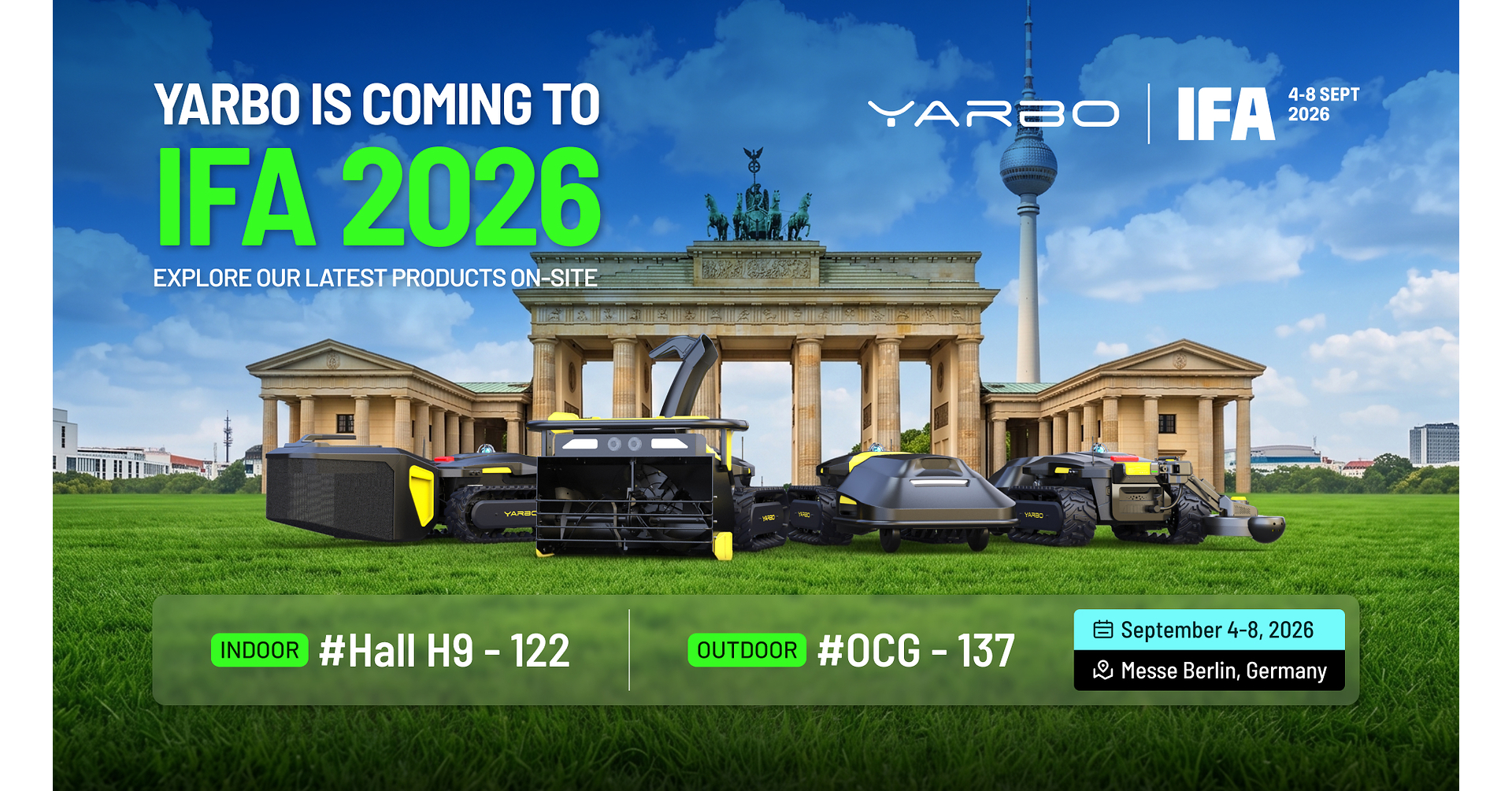
Yarbo will debut the final version of its M Series modular yard-robot platform at IFA 2026 (Sept. 4–8) after a CES prototype, targeting standard residential yards with tracked mobility on slopes up to ~35°/70% grade. Setup and mapping are designed to take ~30 minutes without boundary wires (Data Center Gen2/NetRTK, optional LiDAR), and the system is claimed to mow up to ~1.5 acres/day with wireless charging from 10% to 90% in ~65 minutes. The company also reported raising over $3.6M from 850 crowdfunding backers this year, signaling growing demand for multi-purpose yard-care automation.
Analysis
This is more of a category-validation event than a near-term earnings catalyst. The investable question is whether residential yard robotics can move from enthusiast adoption to repeatable retail sell-through at a price point that still leaves room for channel margin, warranty reserve coverage, and software/support costs; if not, these products stay premium niche rather than volume disruptors.
The competitive read-through is modestly negative for incumbent outdoor-equipment OEMs and robotic-mower specialists, but the second-order risk is margin compression from feature-matching rather than share loss. If a compact, wire-free system with fast setup works in the field, competitors may be forced to spend more on autonomy, mapping, and dealer training, which can lower near-term profitability even if unit volumes don’t change much. The bigger winner could be the channel, not the OEM: premium outdoor retail, service networks, and ecommerce marketplaces capture demand with less product-specific execution risk.
Contrarian view: crowdfunding and trade-show demos are weak evidence of scalable demand. The market may be overestimating the pace of adoption because the true adoption bottleneck is not product awareness but installation friction, reliability across edge cases, and post-sale support burden; those issues usually surface over 1-3 quarters, not at launch.
Time horizon matters: for the next few days this is mostly sentiment; over 1-3 months the key catalyst is preorder conversion and retail/distributor commitments; over 6-18 months the real signal is whether competitors and retailers start reallocating shelf space and R&D toward autonomous yard care. Falsifiers include weak fulfillment, high return rates, or any sign the category requires heavy discounting to move inventory.
AllMind Terminal
AI-powered research, real-time alerts, and portfolio analytics for institutional investors.
Request TrialMarket Sentiment
Overall Sentiment
mildly positive
Sentiment Score
0.25
Key Decisions for Investors
- No immediate public-equity trade: the current signal is too small and too private-company-specific to justify chasing in listed names; reassess only after 30-60 days of preorder, return-rate, or channel data.
- Set a watchlist on HUSQ.B, TTC, and SWK for any evidence of pricing pressure or higher warranty/service expense in outdoor equipment; if confirmed, look to short rallies of 5-10% into perceived category excitement.
- If you want a mild hedge against a broader consumer-automation adoption wave, prefer a small long in HD over niche hardware names; the risk/reward is better because the retailer can capture premium spend without taking product execution risk, but only if channel checks show real demand.
More News
- Blackstone President Jon Gray Bets Big on AI Boom
- Ukraine to resume strikes on Russian refineries, shattering hopes of an 'energy ceasefire'
- What's behind the sell-off in AI neocloud stocks like CoreWeave and Nebius
- SK Hynix plunges 8% amid Asia tech rout as Fed rate hike fears, AI funding worries mount
- TSMC Earnings Beat; Anthropic Says It's Now Profitable
- TSMC chip capacity is ‘fierce’ battleground for AI customers, amid record quarter