
Využít každý sluneční paprsek, přivést elektřinu tam, kde chybí: Globální fórum nízkouhlíkového průmyslu 2026 hledá cesty k překonání rozdílů v přístupu k elektřině
Source: PR Newswire
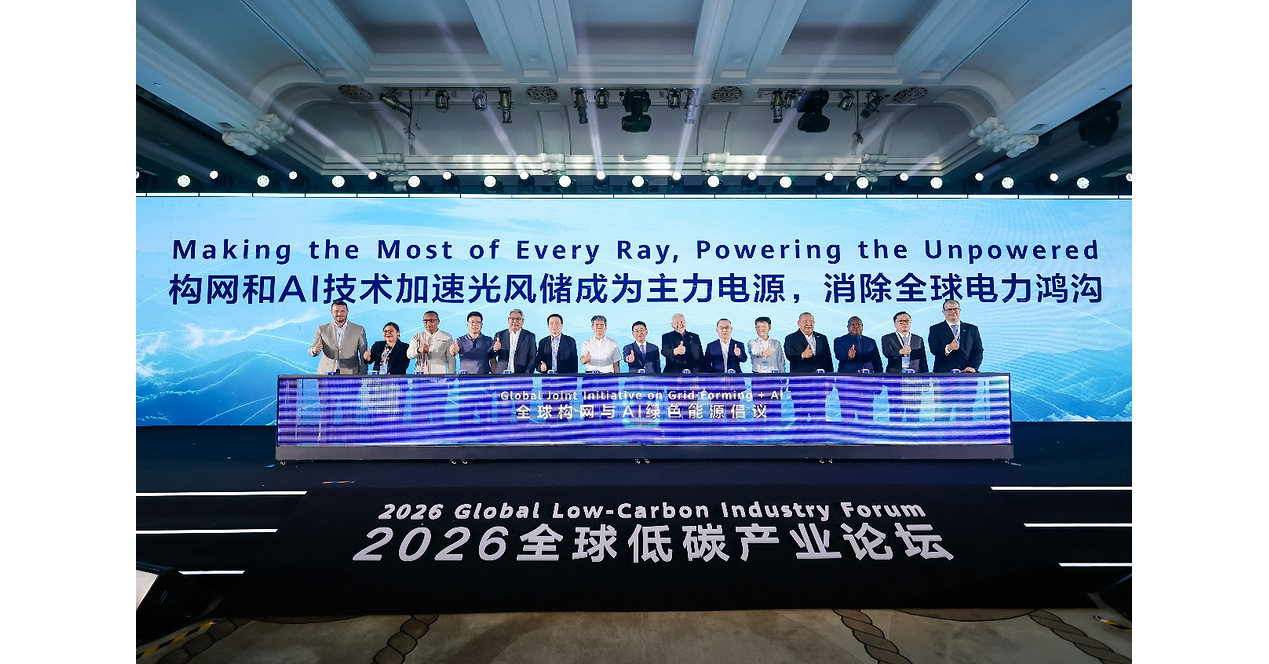
Huawei Digital Power and industry partners highlighted grid-forming storage and AI as tools to improve renewable-grid reliability, lower costs and expand electricity access. The MTerra Solar project in the Philippines has commissioned its first phase, comprising 2.5GWp of solar capacity and 3.3GWh of battery storage, within a planned 3.5GW solar and 4.5GWh storage complex. The project is expected to supply roughly 2.4 million households and reduce annual carbon emissions by more than 4.3 million tonnes, while a new global Grid Forming & AI initiative targets wider deployment and standardization for the nearly 700 million people without electricity access.
Analysis
The investable implication is a value-pool shift away from commodity solar modules toward inverters, battery controls, switchgear and grid-services software. Grid-forming requirements increase system-level qualification costs and favor vendors with validated power electronics and utility relationships: Eaton (ETN), Schneider (SU.PA), Siemens Energy (ENR.DE), Tesla (TSLA) and Fluence (FLNC). For storage developers, the critical change is potential recurring capacity/ancillary-service revenue rather than one-time arbitrage economics; that can lower contracted-project risk and expand asset valuations once procurement rules become standardized.
Near-term equity impact is likely limited because this is vendor-sponsored messaging rather than evidence of binding orders, auction awards, or independently disclosed economics. The 1-3 month catalyst path is European grid-service tender design, interconnection rules, and utility RFPs that explicitly require grid-forming capability; these would differentiate qualified BESS platforms from lower-cost storage integrators. Over 6-18 months, AI data-center load growth makes behind-the-meter storage, UPS coordination and flexible-load controls a second demand leg for ETN, VRT and Schneider, but only where grid operators permit data centers to monetize demand response.
Consensus may overstate the benefit to solar manufacturers. Higher renewable penetration does not automatically translate into superior module demand if curtailment, transmission delays and financing costs remain binding; grid-forming hardware raises project capex before ancillary-service revenues are proven. Huawei's technical prominence is strategically relevant but not directly investable, and geopolitical restrictions could redirect addressable Western-market share toward non-Chinese power-electronics vendors rather than expand the total market.
The key falsifier is whether grid-forming tenders clear at compensation levels sufficient to cover incremental inverter/BESS capex. Watch European ancillary-service auction prices, utility contract language, FLNC gross-margin progression, TSLA energy-storage deployment margin, and ETN/VRT order growth tied to data-center power infrastructure. Absent measurable tender volumes or margin evidence by the next two reporting cycles, this remains a thematic watch rather than a broad renewable-equity catalyst.
AllMind Terminal
AI-powered research, real-time alerts, and portfolio analytics for institutional investors.
Request TrialMarket Sentiment
Overall Sentiment
moderately positive
Sentiment Score
0.62
Key Decisions for Investors
- Maintain a 6-12 month overweight in ETN versus broad renewable exposure (ICLN): ETN has direct exposure to switchgear, power quality and data-center electrical buildout, while ICLN retains module-price and project-financing sensitivity. Reassess if ETN's electrical backlog decelerates materially or valuation expands another ~20% without corresponding order growth.
- Establish a small, catalyst-driven FLNC watch position only after management identifies contracted grid-forming awards and confirms gross-margin stability; target a 3-6 month holding period. Risk/reward is asymmetric if ancillary-service revenue becomes contractible, but avoid pre-positioning on conference claims given execution and working-capital history.
- Prefer TSLA Energy exposure through equity only on evidence that storage deployment growth is accelerating faster than automotive-margin deterioration; use the next earnings release as the decision point. Grid-forming demand is a positive increment to Megapack utilization, but is unlikely by itself to offset auto-side earnings risk.
- Set alerts for German, UK and broader EU grid-service auctions specifying synthetic inertia or grid-forming capability. A meaningful award pipeline would support adding ENR.DE or SU.PA; failure of auctions to generate bankable pricing would invalidate the storage-services monetization thesis.
- Avoid a directional solar-module trade from this signal. The more defensible relative-value expression is long grid-enablement equipment (ETN/SU.PA) versus a diversified solar-manufacturer basket, contingent on confirmed tender requirements rather than policy rhetoric.
More News
- Trump signs sweeping Russia sanctions over Ukraine war
- Google's Gemini becomes latest AI model to break out and hack computer systems
- Saudi Oil Cuts Tied to War Hit Europe: Evening Briefing Americas
- Trump says U.S. to build a 'large Military presence' in Greenland as part of a security deal with it and Denmark
- Houthis accuse Saudi Arabia of launching 26 strikes in 24 hours
- Stocks face a key hurdle in next week’s U.S.-China summit. Here’s what’s at stake
From AllMind Research
- Anthropic IPO Preview: Valuation, Timing, and What to Watch
- Shein After the IPO: Venue, Valuation, and What Must Be Proved
- What AI Research Tools Should a Small Hedge Fund Buy First?
- Automating Financial Model Updates: A Source-Controlled Workflow
- Weekly Update: Live Event Center, In-App Documents, and Faster Transcripts