
Zhou Jianjun di Huawei: costruire una soluzione AIDC interattiva con la rete per massimizzare i token per watt
Source: PR Newswire
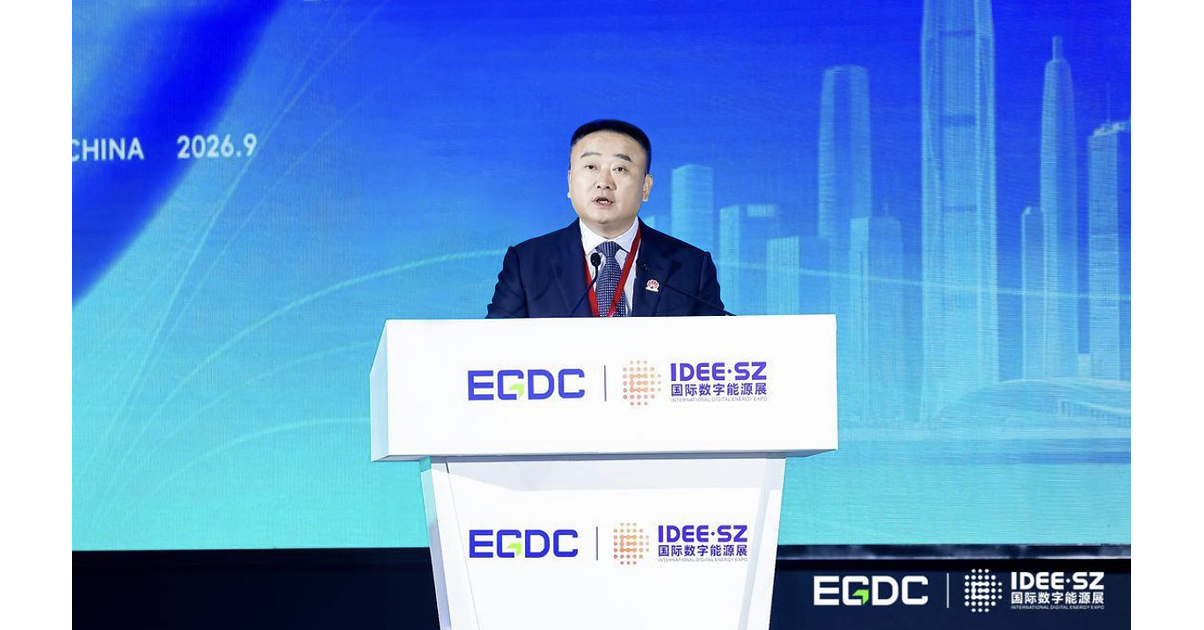
Huawei unveiled a grid-interactive AI data center (AIDC) solution designed to maximize tokens per watt as AI facilities scale from megawatt-sized sites toward hundreds of megawatts and gigawatt capacity. Its "3+1" architecture combines grid-forming power and storage, high-density liquid cooling, AI-enabled proactive operations and modular prefabricated construction. Huawei said the system is intended to stabilize high-density AI workloads on weaker, more volatile grids while improving energy efficiency and deployment speed, though the announcement included no financial targets, customer contracts or revenue impact.
Analysis
The investable implication is not Huawei-specific; it reinforces that AI capacity is increasingly constrained by interconnection quality, power conversion and heat rejection rather than GPU availability alone. This favors incumbents with certified, integrated electrical and thermal systems—Vertiv (VRT), Eaton (ETN), Schneider Electric (SU.PA), ABB (ABBN.SW) and Siemens Energy (ENR.DE)—because hyperscalers will pay to reduce commissioning risk at multi-megawatt rack density. The second-order winner is grid equipment: flexible loads and onsite storage can shorten utility approval cycles, raising the value of switchgear, transformers, UPS and medium-voltage distribution ahead of the eventual server shipment.
Huawei's claim is strategically more threatening to Western power-infrastructure vendors outside North America, where its bundled inverter, storage, cooling and service offering can compress component-level pricing and take share in emerging-market data-center builds. That said, this is a product-marketing event rather than independently verified evidence of orders, uptime or customer economics; meaningful revenue impact requires disclosed deployments, utility interconnection agreements and repeatable service margins. Over the next 1-3 months, AI-infrastructure multiples can react to evidence that power-delivery lead times are extending; over 6-18 months, the key question is whether utilities charge data centers for grid services or curtailment, which would make grid-interactive architectures a necessity rather than a premium feature.
Consensus remains focused on cooling as the bottleneck, but power-quality equipment may be the scarcer and less easily substituted layer. A risk to the bullish capex read-through is that grid constraints defer projects rather than expand spend: a slowdown in hyperscaler capex guidance, declining electrical-backlog conversion, or a shift toward geographically distributed inference would weaken VRT/ETN premium valuations before revenue is recognized. Watch utility queue reform and announced gigawatt-scale campus power contracts; these are more decision-useful than vendor efficiency claims.
AllMind Terminal
AI-powered research, real-time alerts, and portfolio analytics for institutional investors.
Request TrialMarket Sentiment
Overall Sentiment
mildly positive
Sentiment Score
0.38
Key Decisions for Investors
- Maintain a 6-12 month long VRT / short SMCI pair: VRT captures the higher-value electrical-and-thermal integration layer while SMCI remains more exposed to server-cycle volatility and component competition. Size only after confirming VRT backlog conversion and liquid-cooling attach-rate commentary at the next earnings update; exit if VRT guides to material order deceleration or gross-margin compression.
- Build a 6-18 month basket long ETN, ABBN.SW and SU.PA on market pullbacks, emphasizing electrical distribution and automation rather than GPU suppliers. The catalyst is disclosed hyperscaler power-campus awards and utility interconnection approvals; the principal risk is capex deferral from transformer shortages, which would delay revenue despite healthy nominal demand.
- Use a relative-value watch: long FLNC versus short a broad renewable-equipment proxy only if new AI-campus contracts explicitly include storage-backed grid services or capacity payments. Storage attached to data centers has attractive optionality, but no position is warranted without contract terms, because merchant storage economics and balance-sheet execution remain the falsification points.
- Avoid treating the Huawei announcement as a direct tradable catalyst. For non-China competitors, upgrade the competitive risk only if Huawei reports named overseas AIDC wins with independently measurable deployment scale; absent that evidence, the near-term signal is sector validation rather than share-loss confirmation.
More News
- Trump signs sweeping Russia sanctions over Ukraine war
- Google's Gemini becomes latest AI model to break out and hack computer systems
- Saudi Oil Cuts Tied to War Hit Europe: Evening Briefing Americas
- Trump says U.S. to build a 'large Military presence' in Greenland as part of a security deal with it and Denmark
- Stocks face a key hurdle in next week’s U.S.-China summit. Here’s what’s at stake
- Houthis accuse Saudi Arabia of launching 26 strikes in 24 hours