
Dollar Set to Weaken for a Second Month on Treasury Buyback
Source: Bloomberg
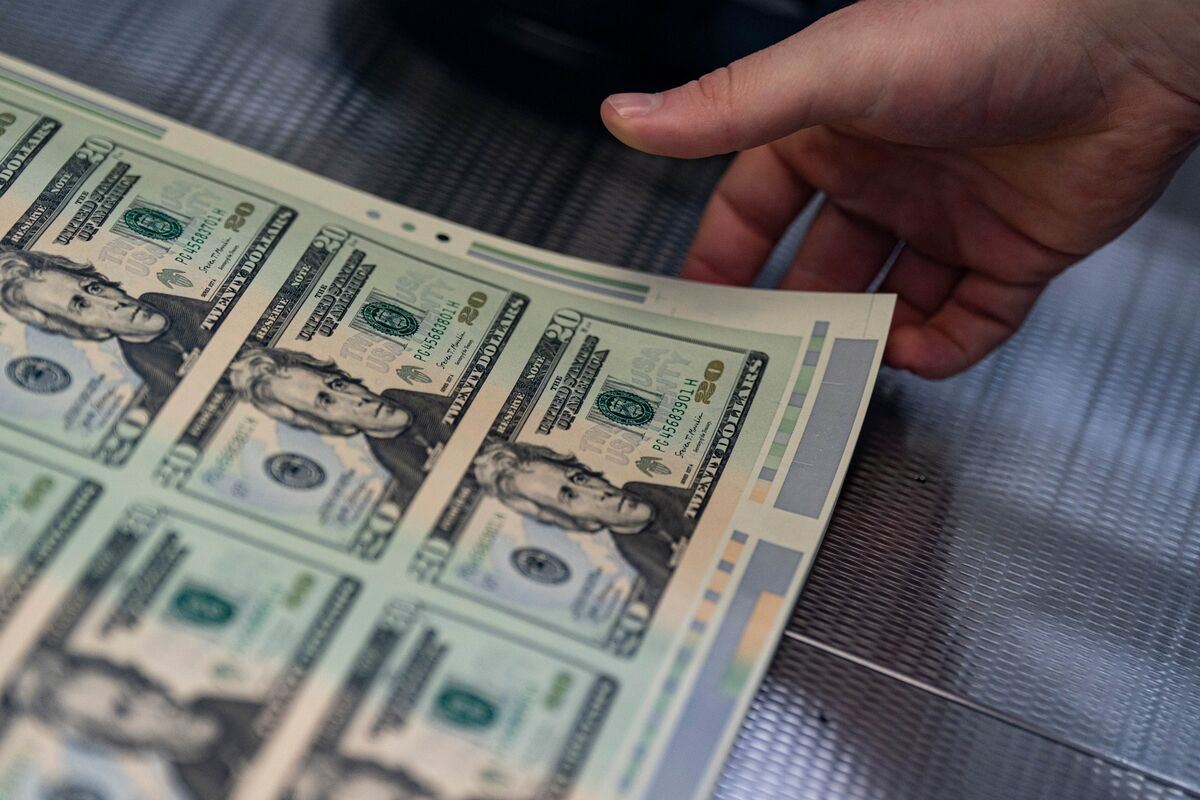
The Bloomberg Dollar Spot Index is down 0.9% in August and is set to extend last month’s 1.3% decline, potentially marking its longest slide since February. The move is attributed to US plans to accelerate Treasury buybacks, which weighed on the greenback. Overall, the dollar trend is bearish near-term, but the article frames it as a continuation rather than a shock.
Analysis
The immediate market mechanism is not the buyback itself but the signal that Treasury is willing to lean against duration congestion and improve liquidity at the long end. That tends to compress front-end USD funding stress and can ease financial conditions globally, which is why the first beneficiaries are not obvious domestic names but risk assets with high USD sensitivity: EM, commodities, and multinational revenue streams. The move is most likely a 2-6 week flow trade unless it is reinforced by softer U.S. data or dovish Fed repricing; by itself, this is usually too small a policy lever to sustain a durable dollar regime break.
Second-order, a weaker dollar is a margin tailwind for import-sensitive U.S. sectors but a translation headwind for foreign buyers of U.S. assets; that argues for relative outperformance in non-U.S. equities and commodity-linked markets over U.S. defensives. The most leveraged expression is through currencies with clean beta to USD weakness, not through broad index exposure. If the Treasury action also improves bond-market depth, it could modestly lower volatility in rates, which supports higher-multiple growth and gold simultaneously—an unusual but tradable combo if real yields stay anchored.
The contrarian view is that this is likely being over-interpreted as a macro regime shift. Unless 2Y/10Y yields break lower or the Fed confirms an easier path, DXY can stabilize quickly because the dominant driver remains rate differentials, not Treasury micro-operations. Falsifiers: a sharp bounce in U.S. yields, stronger payroll/CPI prints, or a return of risk-off flows that reasserts dollar scarcity. In that case, the current dollar weakness should fade within days rather than months.
AllMind Terminal
AI-powered research, real-time alerts, and portfolio analytics for institutional investors.
Request TrialMarket Sentiment
Overall Sentiment
mildly negative
Sentiment Score
-0.10
Key Decisions for Investors
- Pair trade: long EEM / short UUP for 1-3 months. Best expression if DXY continues leaking lower; risk/reward is favorable because EM beta to USD softness is higher than the ETF’s direct sensitivity to Treasury buyback optics.
- Add tactical long in FXE or FXA on pullbacks, 2-6 week horizon. Use as cleaner FX beta than broad equities; thesis breaks if U.S. rates reprice higher and EUR/USD or AUD/USD fails to hold recent support.
- Long GLD as a hedge against a weaker-dollar / lower-real-yield regime, but only as a small weighting. Upside improves if 10Y real yields roll over; exit if DXY reclaims its 50-day trend and gold underperforms on a risk-on tape.
- Overweight U.S. multinationals with non-U.S. revenue exposure versus domestic import-sensitive sectors; use a relative basket rather than single-name risk. The catalyst is 1-3 months of FX translation tailwind if the dollar stays soft.
- Watchlist alert: if DXY breaks the recent monthly low and U.S. 10Y yields do not rise with it, add to the pro-weak-dollar trade; if DXY rebounds on stronger data, treat this as a fading technical and reduce exposure quickly.
More News
- Treasuries Soar as Tech Slump Threatens Growth
- Suddenly, Wall Street is worried that the U.S. economy is more ‘vulnerable’ than it looks
- AI Selloff Deepens in Asia as Funding Fears Mount
- SK Hynix plunges 8% amid Asia tech rout as Fed rate hike fears, AI funding worries mount
- TSMC Earnings Beat; Anthropic Says It's Now Profitable
- Why is Samsung Electronics stock plunging today?