
Fed rate hike fails to calm troubled markets as Dow falls 600 points. Expect more sharp swings in stocks and bonds.
Source: MarketWatch
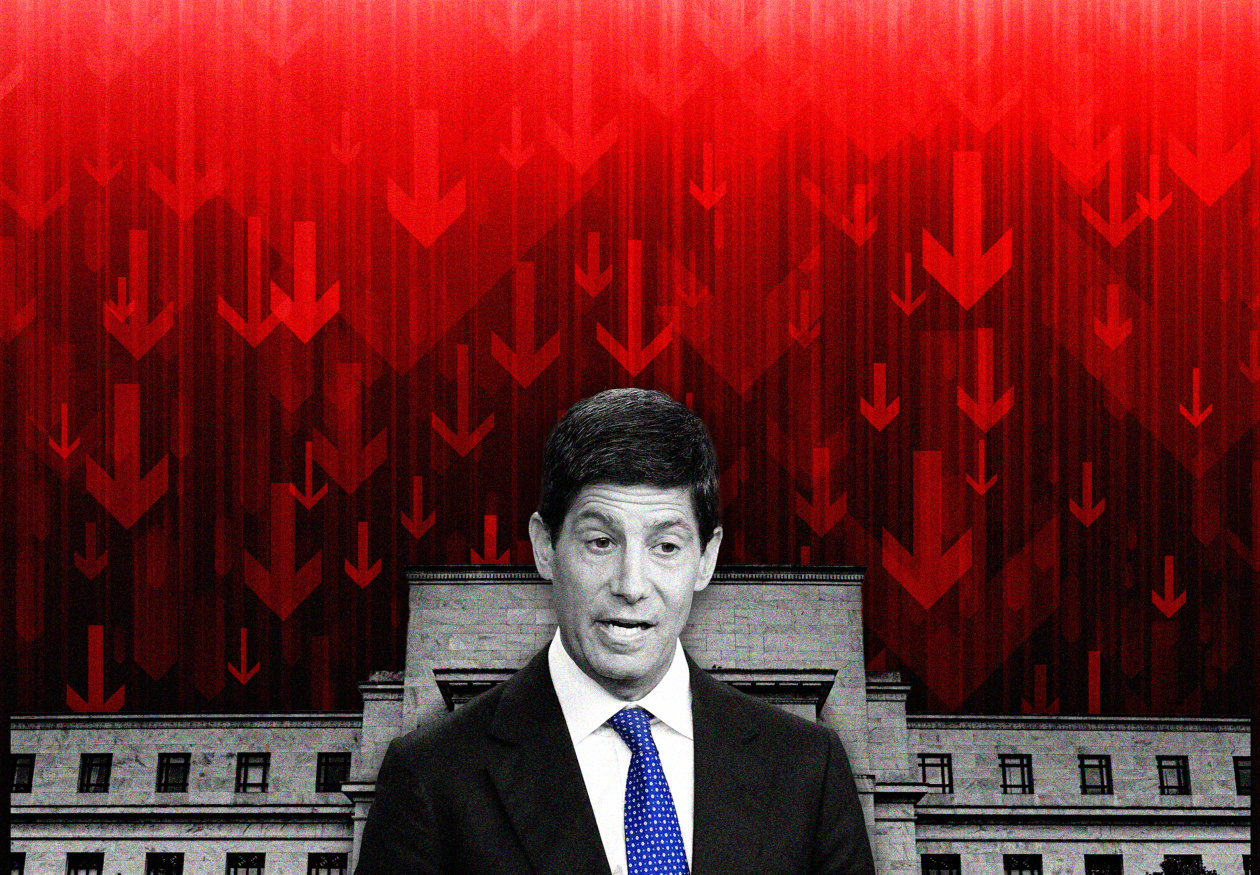
The Federal Reserve raised interest rates, but the move failed to stabilize stressed bond markets or relieve pressure on equities, with the Dow falling about 600 points. Stocks and bonds initially rallied following the decision and updated projections before reversing lower, signaling that investors remain concerned about persistent inflation and the prospect of further policy tightening. Fed Chair Kevin Warsh emphasized a firm commitment to bringing inflation down, pointing to continued sharp swings across stock and bond markets.
Analysis
The failed stabilization attempt signals that the marginal buyer of duration remains absent: policy credibility may eventually reduce inflation premia, but the near-term transmission is higher real yields, tighter financial conditions, and renewed pressure on long-duration equity valuations. The first 1-3 month vulnerability is concentrated in unprofitable growth, private-credit-dependent borrowers, REITs, and levered small caps; a higher-for-longer regime raises refinancing costs before it produces a meaningful disinflation benefit.
The more important second-order risk is credit-market liquidity. If Treasury term premium and investment-grade spreads rise together, banks and insurers face mark-to-market pressure while lower-quality issuers lose practical access to capital markets. That would turn a rates-driven equity selloff into an earnings-risk event over the next two quarters, favoring cash-generative large-cap quality and firms with net cash over nominally defensive but highly levered sectors.
Consensus may be too focused on the next policy decision and insufficiently focused on whether long-end yields fall after it. A hawkish central bank can be equity-positive only if inflation expectations and term premium compress; if the curve bear-steepens despite tighter policy, the market is questioning fiscal supply, growth resilience, or policy efficacy. That outcome is bearish for both the traditional 60/40 allocation and rate-sensitive cyclicals, while creating a tactical opportunity to own volatility rather than chase the initial index decline.
Falsification: reduce the defensive posture if the 10-year yield declines materially alongside narrowing high-yield spreads and improving breadth; that combination would indicate policy is restoring confidence rather than draining liquidity. Conversely, a sustained widening in high-yield spreads, weak Treasury auctions, or downward earnings revisions would justify escalating the risk-off view.
AllMind Terminal
AI-powered research, real-time alerts, and portfolio analytics for institutional investors.
Request TrialMarket Sentiment
Overall Sentiment
strongly negative
Sentiment Score
-0.55
Key Decisions for Investors
- Initiate a 1-3 month quality pair: long QUAL or MGC versus short IWM. The spread targets continued refinancing and valuation pressure on smaller, more levered issuers; reassess if high-yield spreads tighten meaningfully and small-cap earnings estimates stabilize.
- Buy 2-3 month S&P 500 downside hedges through put spreads rather than outright puts, funded selectively with upside call overwrites. Volatility is likely to remain bid while rates and equities are positively correlated; target a defined premium budget rather than adding directional short exposure after sharp down days.
- Underweight REITs and highly levered utilities via IYR and XLU until long-end yields and credit spreads decouple. These sectors may look inexpensive on dividend yield but face a dual headwind from higher discount rates and refinancing needs; cover if the 10-year yield falls and forward FFO guidance holds.
- Use TLT only as a tactical hedge after confirming that the long end is rallying with tighter credit spreads. If yields rise while spreads widen, avoid duration longs and prefer cash/T-bills; the missing decision variable is whether the selloff is inflation-policy driven or a broader term-premium and liquidity shock.
More News
- Fed Raises Rates in Unanimous Vote: Evening Briefing Americas
- Bloomberg Surveillance: The Fed Decides 9/16/2026
- Investors react to Fed hike and market sell-off: Brace for 'higher for longer' rates
- Iran war has cost the US $38bn: How will it impact US economy, politics?
- 'Science fiction': Transport companies — the backbone of economy — are sounding alarm on fuel prices
- Banks provide $22 billion chip loan to Blackstone, Alphabet cloud venture, Bloomberg News reports