

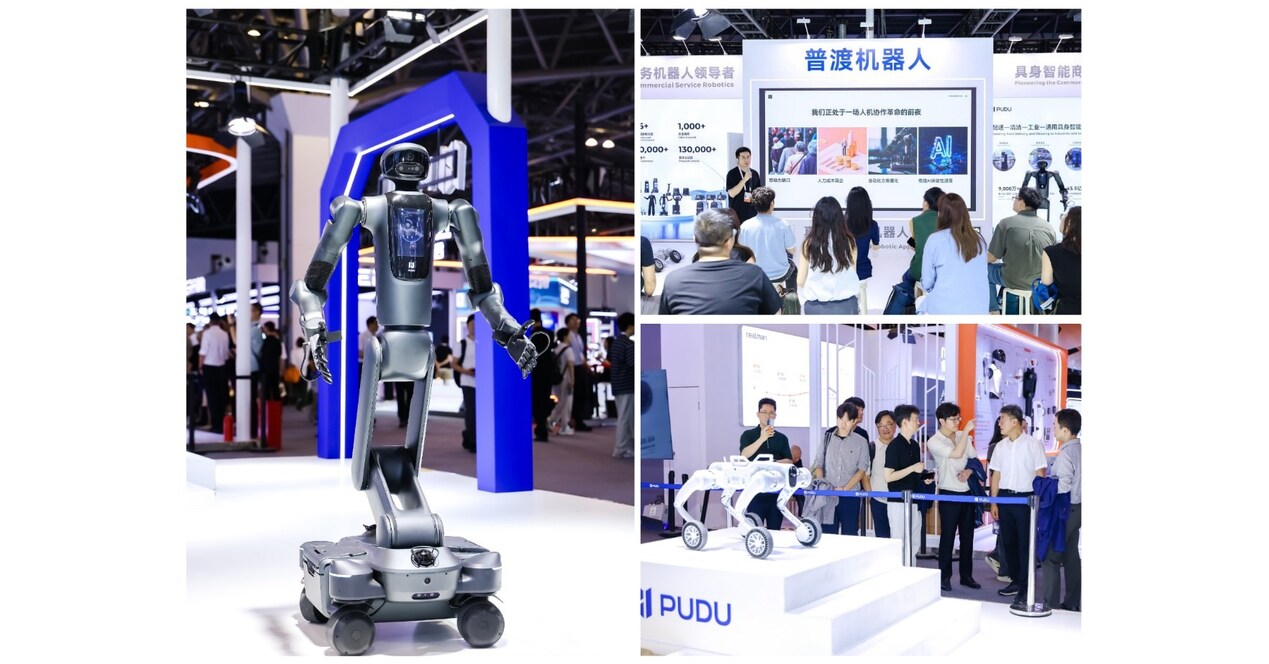
Pudu Robotics used WAIC 2026 to unveil its “One Brain, Multiple Embodiments” physical agent architecture and introduced PUDU D7 in its first offline public showcase. The D7 is described as an industrial-grade semi-humanoid robot powered by the PuduFM, supporting up to a 14kg payload and 2m operating height for warehouse logistics, material handling, and high-reach picking. The company reiterates strong commercial scale (No.1 globally in commercial service robot revenue and shipments; 130,000+ units shipped across 85+ regions), framing progress toward large-scale Embodied AI deployment.
This reads more like a proof-of-life for the robotics theme than a fresh fundamental inflection. The economically durable winners are the businesses that can monetize fleets after deployment — integrators, sensor/vision vendors, edge-compute suppliers, and automation incumbents with service contracts — not the companies spending most on conference-day narrative. In other words, the value capture likely shifts from “best demo” to “best installed base + lowest field-support cost,” which should favor diversified industrial automation names over single-product robotics stories.
The key catalyst path is not immediate price action but evidence over 1-2 quarters that the platform architecture lowers deployment friction and improves repeatability. If unit economics do not improve, the market will treat this as AI theater and compress multiples across the robotics complex. Watch for order conversion, gross margin on new deployments, and service attach rates; those are the real falsifiers, not more product unveilings.
Contrarian view: consensus is probably overestimating how quickly embodied AI becomes general-purpose labor replacement. Near-term adoption is still constrained by integration, maintenance, and site-specific customization, so the first monetization wave should be mundane workflows like cleaning, delivery, and intralogistics. That argues for owning quality automation cash flows rather than chasing pure-play robotics beta; if the theme fades, the downside is mostly sentiment-driven over 1-3 months, while the structural winner selection can take 6-18 months to resolve.
AI-powered research, real-time alerts, and portfolio analytics for institutional investors.
Overall Sentiment
mildly positive
Sentiment Score
0.12
Ticker Sentiment
