
Musk praises China’s leadership and pushes for AI regulation ahead of state dinner
Source: MarketWatch
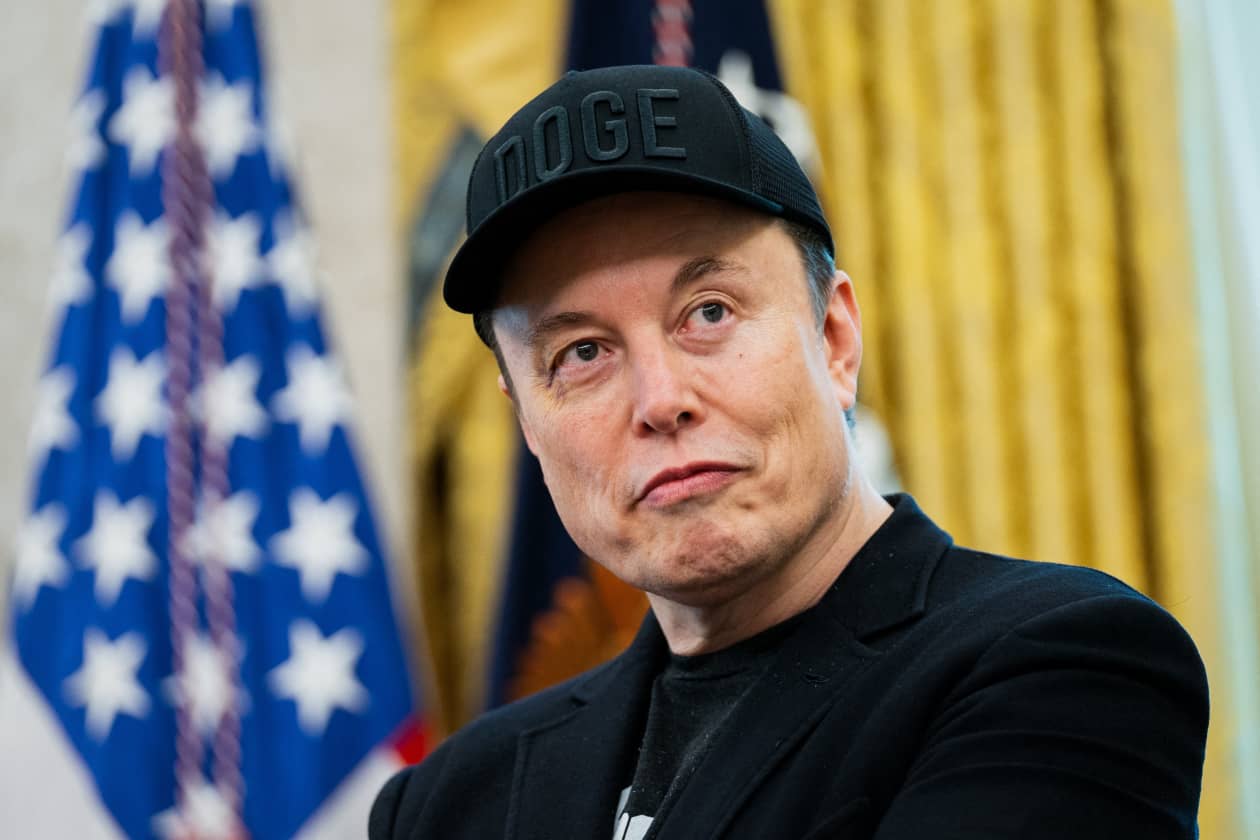
Elon Musk called for lower U.S.-China tariffs and fewer trade restrictions ahead of a planned meeting between the two countries' leaders. He also urged the U.S. and China to establish a joint platform for AI regulation, while reiterating support for slower AI development. The comments are relevant to Tesla's China exposure and Musk's AI investments but do not include a concrete policy change or company-specific financial update.
Analysis
The market-relevant signal is Tesla’s China exposure rather than the political messaging itself. Any bilateral tariff de-escalation would reduce the probability of renewed friction around Shanghai-sourced components, China-made exports, and battery-material procurement; the near-term earnings sensitivity is likely modest, but a lower geopolitical risk premium could support TSLA’s multiple more than its FY earnings. Conversely, Tesla’s willingness to publicly align with Beijing raises a distinct U.S. policy risk: scrutiny of connected-vehicle data, Chinese supply-chain dependence, and eligibility for future domestic-content incentives could intensify over the next 6-18 months.
AI-regulation advocacy is not inherently positive for TSLA. A harmonized regime could lower cross-border deployment friction for autonomous-driving and robotics products, but compliance requirements favor scaled incumbents only if rules are technically achievable; restrictive data-localization or model-audit mandates would increase Tesla’s China operating complexity. The more immediate competitive implication is that Chinese EV makers—BYDDF, LI, XPEV and NIO—retain a structural cost and speed advantage in their home market, while trade barriers remain the main constraint on their overseas share gains.
Consensus is likely to overread this as a diplomatic positive for TSLA. Corporate access does not eliminate the risk that a U.S.-China leaders’ meeting produces only temporary rhetoric while EV-specific tariffs, outbound-investment limits, and software/data controls remain politically durable. This is a low-conviction trading catalyst absent evidence of formal tariff relief or a change in Tesla’s China volume/margin outlook.
AllMind Terminal
AI-powered research, real-time alerts, and portfolio analytics for institutional investors.
Request TrialMarket Sentiment
Overall Sentiment
neutral
Sentiment Score
0.05
Ticker Sentiment
Key Decisions for Investors
- No directional TSLA trade solely on this development; treat it as an alert for formal bilateral tariff language or U.S. connected-vehicle restrictions. Reassess if TSLA raises China delivery guidance or discloses sustained China-made export growth over the next 1-3 months.
- Maintain a relative-value watch: long TSLA / short BYDDF only if credible tariff de-escalation enables greater Tesla China supply-chain flexibility without reciprocal market-access gains for Chinese EVs. Falsifier: BYDDF overseas delivery momentum or price cuts that widen its cost advantage; do not initiate before policy details.
- For portfolios long TSLA, consider 3-6 month downside hedges around U.S. policy events using put spreads rather than reducing core exposure. The risk is asymmetric if Washington advances restrictions on Chinese connected-car software or components, which would pressure Tesla’s valuation premium before the P&L effect is visible.
- Avoid extrapolating AI-regulation comments into a SpaceX/"SPCX" position: no publicly traded SpaceX security is available, and there is insufficient evidence that prospective AI rules alter its near-term revenue or cash-flow trajectory.
More News
- Oil's losing streak, Trump at the UN, Royal Caribbean's Sandals stake and more in Morning Squawk
- As Trump and Xi meet, Chinese automakers could be a Pandora's box for U.S. auto industry
- How Meta took the lead in the race for the post-smartphone world
- Anthropic Could Join the Nasdaq-100 Only 15 Trading Days After Its IPO, Just Like SpaceX Did
- Meta is having a ChatGPT moment with Muse. What is it and what makes it so special
- Tesla Roadster reveal is creating a unique options opportunity, says Mike Khouw
From AllMind Research
- Anthropic IPO Preview: Valuation, Timing, and What to Watch
- Shein After the IPO: Venue, Valuation, and What Must Be Proved
- What AI Research Tools Should a Small Hedge Fund Buy First?
- Run Cost-Controlled Financial Research in AllMind Agent Studio
- State of Public Markets, June 2026: Higher for Longer Meets the AI Supercycle