
Modi’s India Reliability Pitch Confronts a Mix of Dualities
Source: Bloomberg
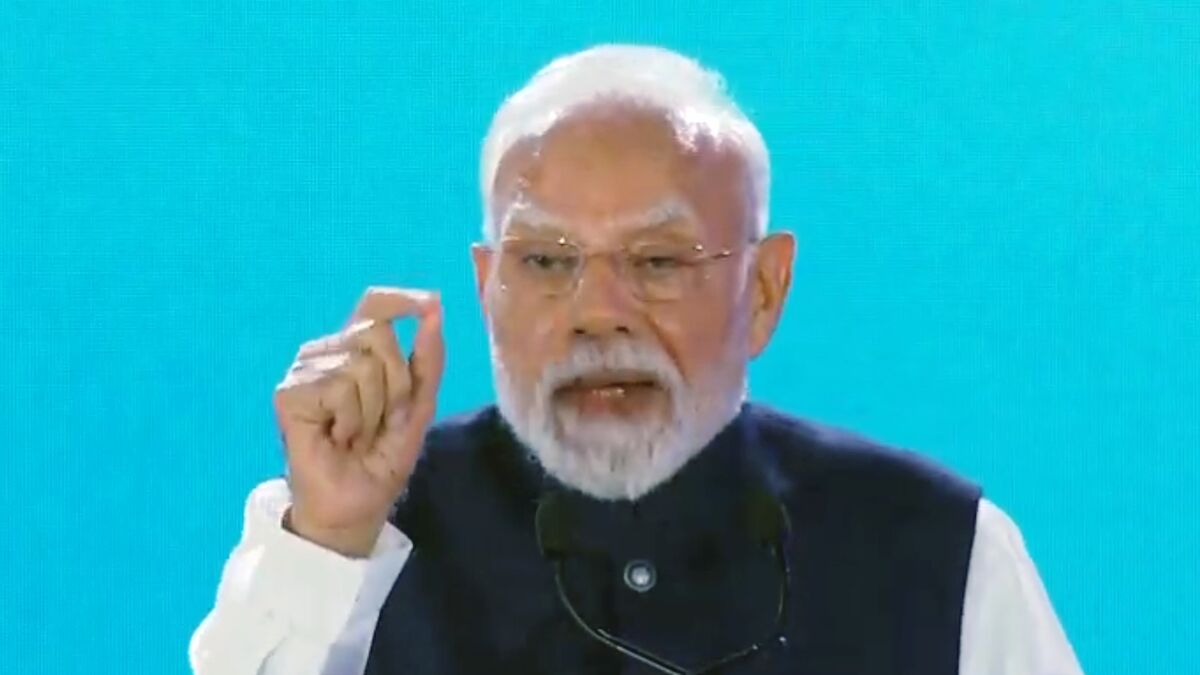
At the Bloomberg New Economy Forum in Delhi, Prime Minister Narendra Modi pitched India as reliable, while young Indians protested what the article describes as their disenfranchisement. Blackstone President Jon Gray said India is the world’s most liquid market outside the US. The excerpt offers contrasting political and investor perspectives but gives no specific market reaction or figures.
Analysis
The investable tension is between India’s appeal as a destination for capital and the domestic legitimacy required to sustain predictable policy execution. Those are related but not interchangeable: strong market liquidity can support near-term inflows, while political or social friction can raise the risk premium on longer-duration growth expectations without immediately impairing corporate earnings. The article provides no detail on the protests’ scale, demands, or policy implications, so this is a risk signal—not evidence of a broad deterioration.
Over the next days, the headline may affect sentiment more than fundamentals. Over 1–3 months, watch whether political friction becomes a constraint on implementation or disrupts investor flows; over 6–18 months, persistence would matter more through confidence in institutional continuity and the cost of capital. The contrarian point is that “reliability” messaging may be priced as a national attribute, while execution risk is uneven across sectors and policy areas. Avoid treating either the pitch or one protest signal as decisive. The thesis weakens if unrest remains isolated, policy delivery continues, and foreign flows show no sustained deterioration; it strengthens if protests broaden or are followed by material policy delays or flow reversals.
AllMind Terminal
AI-powered research, real-time alerts, and portfolio analytics for institutional investors.
Request TrialMarket Sentiment
Overall Sentiment
mixed
Sentiment Score
0.00
Key Decisions for Investors
- No directional India trade on this item alone. The evidence is too thin to distinguish a contained political event from a durable shift in execution risk.
- For existing India exposure, review concentration in long-duration, policy-sensitive positions and set a watch alert for sustained foreign-flow deterioration or demonstrable delays to policy implementation; neither trigger is established here.
- Over the next 1–3 months, monitor the protests’ geographic and participant breadth, stated demands, government response, and subsequent policy actions. Escalation or concrete implementation slippage would justify reassessing India risk versus other emerging markets.
- Do not pay for a hedge solely against this headline. Revisit downside protection if political friction broadens and is accompanied by persistent market outflows or a material deterioration in corporate or policy guidance.
More News
- South Korean carmaker Hyundai plans 'strategic' investment of $15.5 billion in India by 2032
- Speculation Over STT Cut Lifts Sentiment for Indian Stocks
- Applied Materials’ $5 billion AI lab aims to cut chip development time in half—and restore Silicon Valley’s edge
- China's exports likely grew by double-digits in September
- In charts: How one of the world's biggest economies got trapped by debt
- Meta’s Muse models reach the AI frontier—and kill any hopes to ‘pace’ it
From AllMind Research
- Anthropic IPO Preview: Valuation, Timing, and What to Watch
- Shein After the IPO: Venue, Valuation, and What Must Be Proved
- What AI Research Tools Should a Small Hedge Fund Buy First?
- AI Financial Research Benchmarks: What the Scores Mean
- State of M&A and Private Markets, June 2026: A $4.9 Trillion Rebound, Underwritten on Money That Never Got Cheaper