
Stock Volatility Surges as Plunge Has Investors Seeking Cover
Source: Bloomberg
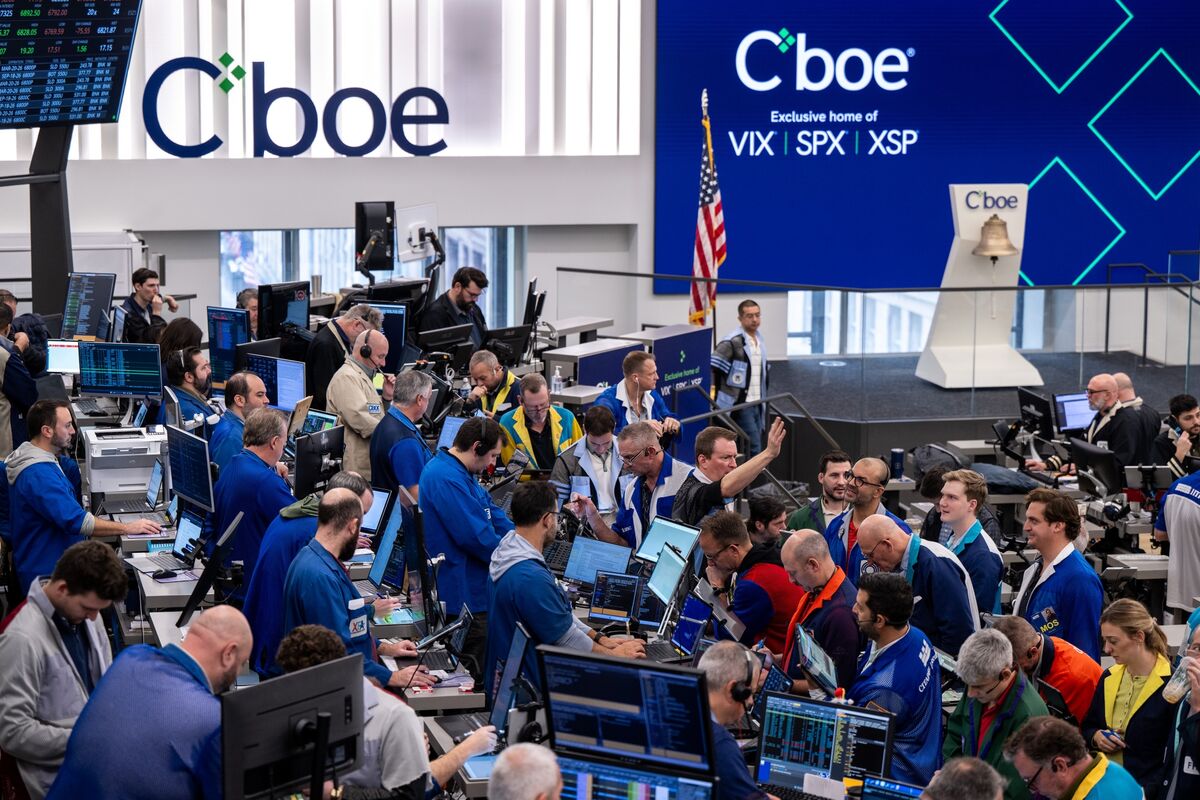
The Cboe Volatility Index reached its highest intraday level since April on Friday as investors bought protection against further declines. Technology stocks were hit by disappointing earnings, while the S&P 500 fell as much as 2.5% to 7,527.
Analysis
The key market mechanism is the potential feedback loop between falling equities and volatility-sensitive positioning: if realized volatility stays high, vol-control and risk-budgeted strategies may reduce exposure, adding supply beyond discretionary selling. Dealer hedging can amplify moves when options positioning leaves dealers short gamma, but the article provides no positioning data, so treat that as a risk scenario—not a confirmed driver. The near-term signal is therefore less the volatility spike itself than whether breadth, index volume and the volatility-futures curve confirm persistent stress.
Over the next 1–3 months, earnings revisions and guidance matter more than the initial options bid. If estimates keep falling, elevated implied volatility may persist and equity risk premia can widen; if results stabilize, hedging demand can unwind quickly, pressuring long-volatility positions. Over 6–18 months, a sustained rise in equity volatility would raise the cost of capital and favor companies with resilient cash generation over long-duration growth, but this episode alone does not establish that regime shift.
Contrarian point: buying outright volatility after a sharp spike risks paying peak insurance premium. Prefer defined-risk hedges and require confirmation from breadth, earnings revisions or volatility-curve stress. No company-specific inference is supported by the supplied data.
AllMind Terminal
AI-powered research, real-time alerts, and portfolio analytics for institutional investors.
Request TrialMarket Sentiment
Overall Sentiment
moderately negative
Sentiment Score
-0.45
Key Decisions for Investors
- Avoid chasing outright VIX calls at the volatility spike. For portfolios needing near-term downside protection, consider staged, defined-risk SPX put spreads with expiries spanning the next 1–3 months; size to the loss budget and compare spread cost with the portfolio’s actual drawdown exposure.
- Add hedge risk only if weakness broadens or earnings guidance deteriorates. A reversal in breadth, stabilizing estimate revisions and a normalization of the VIX futures curve would argue against adding protection and could trigger a hedge reduction.
- Watch for forced-deleveraging confirmation in index volume, cross-sectional breadth and volatility-sensitive fund flows; these data are missing here. If stress persists, reassess net equity exposure rather than assuming options hedges alone will offset gap risk.
- Falsification: a durable equity rebound accompanied by improving breadth, stabilized earnings revisions and easing implied volatility would undermine the persistent-risk-off thesis. Conversely, continued estimate cuts or renewed curve stress would support maintaining defined-risk hedges.
More News
- Trump called out Big Oil profits. Here’s how much their refining earnings have surged since
- Nasdaq Nears Correction as Amazon, Alphabet, Intel Disappoint Wall Street
- Wall Street Punishes Tech Stocks on Earnings Misses
- Reddit stock plunges 30% after weak outlook, heads for worst day ever
- Big Oil Scores $56 Billion Windfall on Spiking Fuel Prices
- Intel plunged 28.6% for its worst drop since 1974 — and the AI sell-off gave the S&P 500 its worst day since June