
Pylontech nimmt die Serienproduktion von LFP-Zellen mit 588 Ah und 601 Ah für Energiespeichersysteme (ESS) auf
Source: PR Newswire
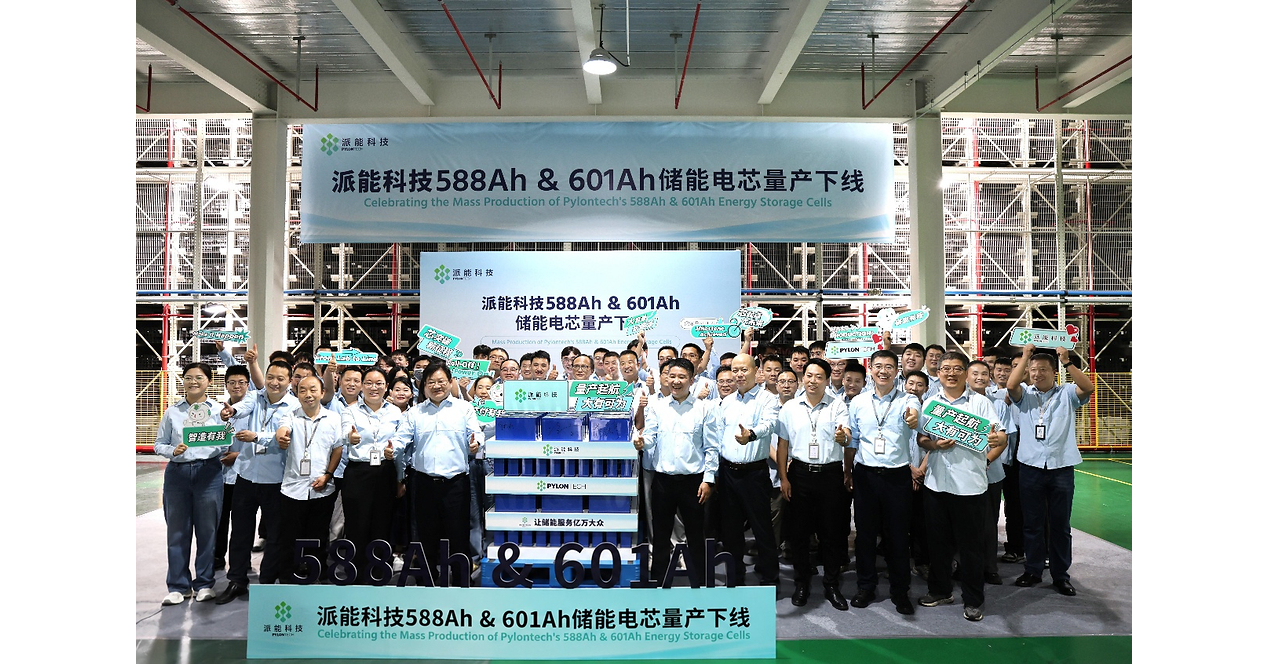
Pylontech began mass production in Hefei of 588Ah and 601Ah prismatic LFP cells for utility-scale energy-storage systems, with more than 100MWh already produced. Its 601Ah cell delivers 425.8Wh/L energy density, over 12,000 cycles and 96.5% efficiency, supporting next-generation PyOcean systems of 6.25MWh and 8MWh. The launch expands Pylontech's large-scale storage capabilities following deliveries including 120MW/240MWh in Jiangsu and 200MW/400MWh in Ningxia.
Analysis
This is more a cost-curve signal than a near-term earnings catalyst. Larger-format LFP cells can reduce pack-level bill of materials, wiring, enclosure complexity and installation labor, but the economic benefit accrues only if field reliability and yield hold through bankability testing; a small defect-rate increase in oversized cells can erase the apparent BOS savings through warranty reserves and insurer scrutiny. The relevant competitive pressure is on CATL (300750:SZ), EVE Energy (300014:SZ), REPT Battero (0666:HK) and other Chinese ESS-cell vendors, where differentiation is increasingly shifting from cell specifications toward delivered system availability, financing support and long-duration service guarantees.
For Western integrators, cheaper Chinese cells are a mixed outcome over the next 6-18 months. Fluence (FLNC) and Tesla Energy (TSLA) could see improved system gross-margin potential if procurement access remains open, but U.S./EU localization rules, tariffs and cybersecurity restrictions may prevent full pass-through; Sungrow (300274:SZ) is better positioned as an integrated inverter-plus-storage competitor in export markets. The near-term market impact should be limited because production-start announcements do not establish customer acceptance, contracted volumes, or realized yield; project awards and third-party safety certification are the key validation points over the next 1-3 quarters.
Consensus may overvalue headline cell capacity and undervalue working-capital risk. The ESS market is moving toward lower $/kWh but longer warranty obligations, so suppliers that chase utilization through aggressive pricing can report revenue growth while suffering cash conversion and future service liabilities. A sustained decline in lithium carbonate would further commoditize cells and favor asset-light integrators; conversely, tariff escalation or major thermal-event headlines would favor localized, bankable suppliers over the lowest-cost Chinese source.
AllMind Terminal
AI-powered research, real-time alerts, and portfolio analytics for institutional investors.
Request TrialMarket Sentiment
Overall Sentiment
moderately positive
Sentiment Score
0.58
Key Decisions for Investors
- No standalone position in Pylontech solely on this release; wait for disclosed external orders, utilization/yield data and independently certified cycle/safety performance. Reassess after the next two reporting periods if ESS revenue mix rises without receivables or inventory materially outgrowing sales.
- Maintain a 6-12 month relative-value preference for CATL (300750:SZ) over smaller Chinese ESS-cell peers such as EVE Energy (300014:SZ): CATL's procurement scale, bankability and customer financing ecosystem should better defend margins as large-format LFP becomes standardized. Falsify if CATL's ESS gross margin falls materially despite stable lithium costs or if export restrictions disproportionately impair overseas shipments.
- Use FLNC as a watch-list long rather than an immediate trade: initiate only after bookings/backlog conversion demonstrates that lower cell costs are reaching project margins, with a defined stop on another guidance cut or deterioration in project gross margin. Upside requires execution and lower procurement costs; downside remains concentrated customer, contract-timing and warranty exposure.
- For a tariff/local-content escalation scenario over 6-18 months, favor U.S.-exposed storage deployment beneficiaries through a modest long TSLA versus short a broad China battery proxy, rather than shorting Chinese suppliers outright. The spread is invalidated if U.S. policy preserves broad ESS-cell exemptions or if TSLA Energy margins fail to improve despite rising deployment volumes.
More News
- Wall Street’s Nasdaq hits all-time high as AI frenzy gathers pace
- Data-Center Bet Makes ESDS One of India’s Best New Listings
- Asia stocks ride tech wave higher, oil stays subdued
- South Korean solar stocks jump as curbs on Chinese sector expected to remain in place
- Trump Says US Team Met With Iranians at UNGA
- South Korea’s Lee, Trump welcome progress in US strategic investment projects