
Micron And The Memory Bottleneck
Source: seekingalpha.com
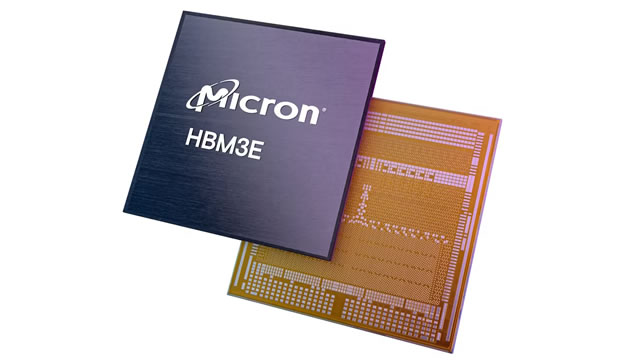
Micron is positioned as a key AI-infrastructure beneficiary and the only major U.S. supplier of DRAM and high-bandwidth memory (HBM), with its shift toward engineered, capacity-constrained HBM supporting recent outperformance. MU returned 548.75% over the past 12 months and holds an A+ performance grade, but its D- safety grade, high volatility and post-rally consolidation indicate elevated downside risk after the sharp run.
Analysis
The key underwriting issue is no longer AI-memory demand but the durability of scarcity rents as HBM transitions from qualification-driven supply to broader capacity additions. MU’s earnings torque is unusually high because incremental HBM revenue displaces lower-margin conventional DRAM wafer output; however, that also makes gross-margin expectations vulnerable to yield normalization, customer qualification delays, or a faster Samsung Electronics recovery. The market will likely reward confirmed HBM mix and pricing more than headline revenue growth over the next two earnings cycles.
Near term, a consolidation phase is more likely to be governed by positioning and estimate-revision velocity than fundamentals. A premium multiple can persist if management raises HBM supply commitments and FY forward gross-margin outlook, but a merely in-line guide could de-rate the shares even with strong year-over-year growth because investors are pricing a sustained shortage. Watch hyperscaler capex commentary from MSFT, AMZN, GOOGL and META: a shift from accelerator procurement toward power, networking or inference optimization would hit memory-content assumptions before it appears in MU’s reported results.
The less obvious beneficiary of continued HBM tightness is NVDA, whose system economics improve if memory availability supports Blackwell rack shipments; conversely, constrained HBM supply can defer GPU revenue rather than transfer it to MU. Equipment names LRCX and AMAT offer a lower-single-name-risk way to express eventual memory capacity expansion, though that is more likely a 6-18 month effect than a near-term catalyst. The contrarian risk is that investors extrapolate HBM economics into a normal memory cycle: once incremental capacity clears qualification, pricing can reset materially faster than end demand.
AllMind Terminal
AI-powered research, real-time alerts, and portfolio analytics for institutional investors.
Request TrialMarket Sentiment
Overall Sentiment
mildly positive
Sentiment Score
0.28
Ticker Sentiment
Key Decisions for Investors
- Do not chase MU during consolidation; add only on a pullback tied to market volatility rather than a cut to HBM bit-growth or gross-margin guidance. Target a 6-12 month holding period, with thesis invalidated by two consecutive quarters of weaker HBM pricing/mix commentary or inventory rebuilding.
- For existing MU exposure, buy a 3-6 month put spread around the next earnings date rather than reduce the core position outright. The asymmetric risk is an in-line outlook failing to satisfy elevated expectations; cap hedge cost at roughly 1-2% of underlying notional.
- Pair long MU / short SOXX only if management raises forward HBM supply or margin expectations while broader semiconductor estimates remain flat. This isolates memory-specific estimate upside; exit if DRAM spot pricing weakens for several weeks or Samsung qualification progress accelerates.
- Build a 6-18 month watch position in LRCX or AMAT on evidence of incremental DRAM/HBM wafer-fab-equipment orders. Do not treat general AI capex as sufficient confirmation; the required signal is disclosed memory-fab spending or order-book acceleration.
More News
- Labor crisis in U.S. chip manufacturing leaves Samsung, TSMC desperate for talent
- Intel and Micron lead our portfolio higher, and J&J's strengthens our case for owning it
- SK Hynix jumps 5% Samsung rises 3% as Intel warning challenges peak memory fears
- Market Indexes Bounce Back From the Fed's Rate Hike
- Stocks stage a comeback after Fed-induced declines — plus, what's ailing Boeing
- Why Was Micron Technology Stock Up Today?