
LG ELECTRONICS UNVEILS THE NEXT EVOLUTION OF AI HOME AT IFA 2026
Source: PR Newswire
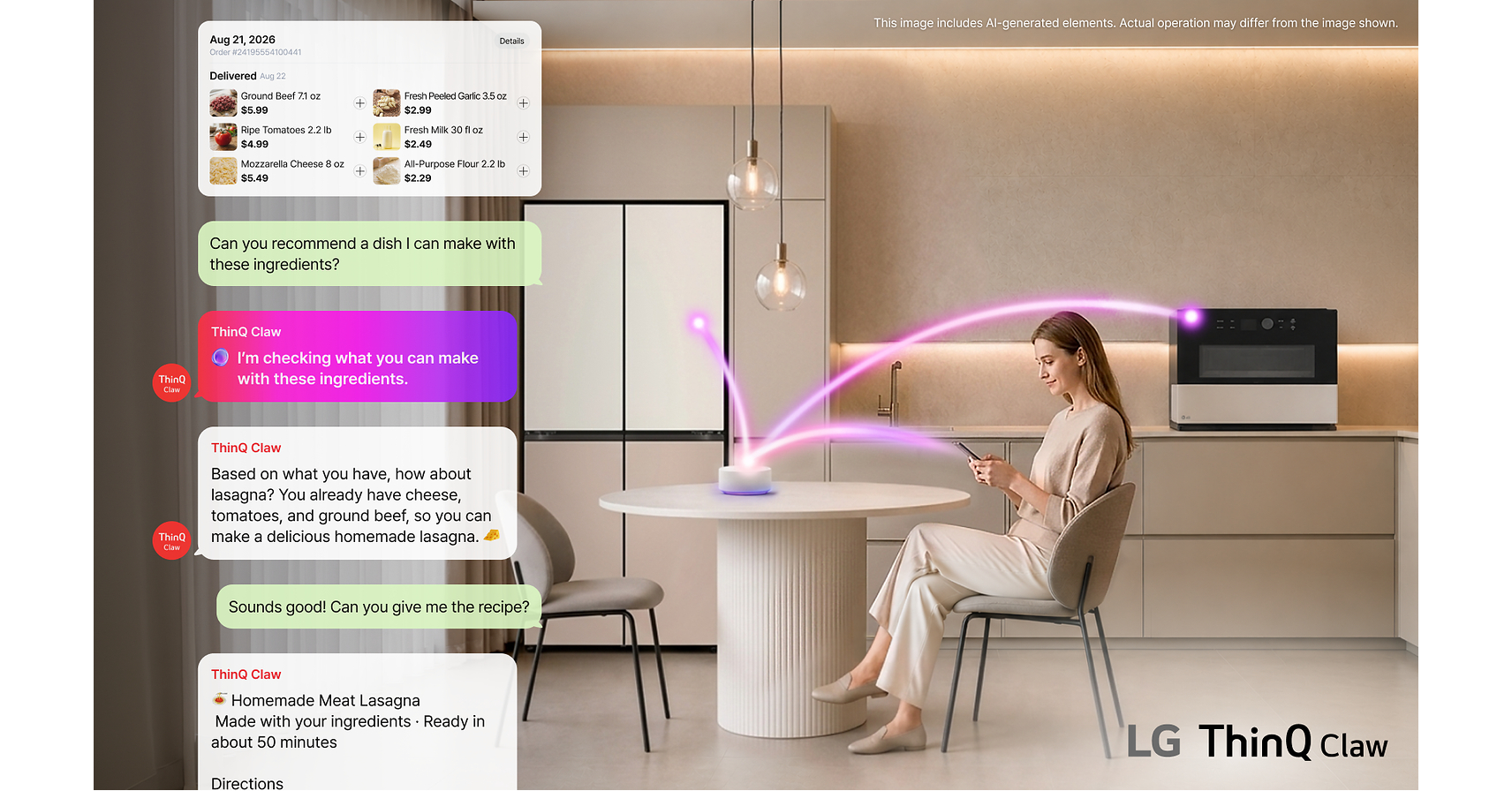
LG Electronics unveiled the next evolution of its AI Home at IFA 2026, centered on upgraded contextual intelligence and a new text-chat AI agent called ThinQ Claw that can coordinate appliances and services based on user intent and home context. The company also showcased an expanded AI Home ecosystem with Homey interoperability, a Home Energy Management System demo to optimize generation/storage/consumption (potentially reducing electricity bills under dynamic pricing where supported), and the European debut of ThinQ Pro for shared and commercial spaces. LG highlighted its LG Shield security framework for connected appliances and customer data, positioning the update as a more personalized and streamlined daily home experience.
Analysis
This reads more like ecosystem positioning than an earnings inflection. The incremental value is not the AI label itself; it is whether LG can convert a one-time appliance sale into a sticky software relationship that lifts mix, reduces churn, and supports premium pricing. That is structurally more threatening to commodity appliance peers like WHR and ELUXY than to the broader consumer-tech complex, because the battlefield shifts from hardware specs to who controls the home orchestration layer.
Second-order, the open-platform angle is a double-edged sword: interoperability increases LG’s addressable install base, but it also weakens differentiation and makes hardware easier to substitute. If the control layer is truly platform-agnostic, the monetization opportunity may accrue to ecosystem owners and voice/chat interfaces (AMZN, GOOG) rather than the appliance OEM. The energy-management piece is more interesting, but only where dynamic pricing, storage, and EV charger penetration are already meaningful; otherwise it is a demo feature, not a profit driver.
Catalyst-wise, the next 1-3 months matter only if LG starts quantifying attach rates, software revenue, or margin uplift. Over 6-18 months, the key falsifier is whether connected-home features reduce replacement cycles or simply become table stakes. Cyber/privacy is the latent risk: as LG adds more always-on devices, any security incident would be a faster adoption headwind than any product launch can be a tailwind. The market should not pay up for "AI home" until there is evidence of monetization discipline and not just narrative breadth.
AllMind Terminal
AI-powered research, real-time alerts, and portfolio analytics for institutional investors.
Request TrialMarket Sentiment
Overall Sentiment
mildly positive
Sentiment Score
0.18
Key Decisions for Investors
- No immediate directional trade in LG-related hardware on this headline alone; treat as a watch item until LG discloses software/services revenue, premium mix, or measurable attach rates over the next 1-2 quarters.
- Relative-value idea: short WHR vs long AMZN over 3-6 months if smart-home adoption accelerates, because value capture is more likely to migrate to the orchestration layer than to standalone appliance OEMs. Falsify if LG/WHR show sustained gross margin expansion from connected-home features.
- Keep ENPH and SEDG on a buy-list only if European HEMS deployments move from demo to revenue-bearing integrations; otherwise avoid chasing. Best entry would be on evidence of tariff-linked demand or utility partnerships, not the product launch itself.
- Set an alert on LG commentary around subscription/services revenue as a % of appliance sales. If that ratio stays low-single-digit, the AI-home premium is likely marketing-driven and any rerating should fade.
More News
- CoreWeave credit default swaps hit distress levels as investors sour on AI debt
- Brian Sullivan: Why the 'real' price of oil is likely $30-$40 higher than where it is now
- Treasuries Soar as Tech Slump Threatens Growth
- Latest Oil Market News and Analysis for Oct. 16
- Blackstone President Jon Gray Bets Big on AI Boom
- Suddenly, Wall Street is worried that the U.S. economy is more ‘vulnerable’ than it looks