
MagLev Aero Secures Dual DARPA Contracts to Advance Next-Generation U.S. Drone Propulsion
Source: PR Newswire
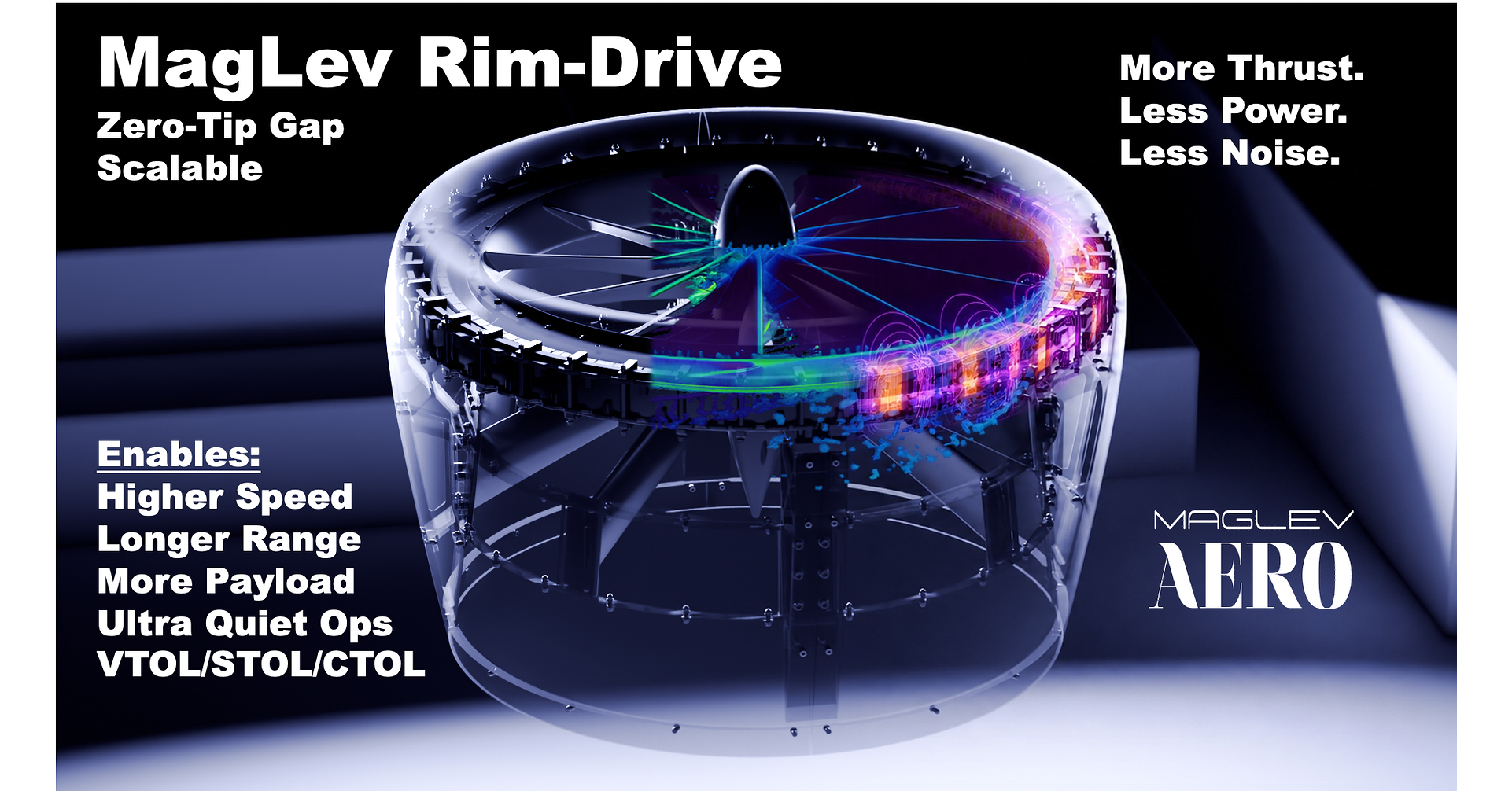
MagLev Aero received concurrent DARPA MVP and Embedded Entrepreneur Initiative awards, providing non-dilutive funding to advance its MagLev HyperDrive propulsion platform to a TRL-6 flight-relevant demonstration. The funding supports full-scale prototype testing, U.S. manufacturing and defense commercialization for high-performance drone propulsion, while reducing technical and integration risk for airframers and OEMs. The privately held, Breakthrough Energy Ventures- and Material Impact-backed company targets defense drones, counter-drone systems, contested-logistics cargo drones and commercial advanced air mobility.
Analysis
The investable implication is indirect: validated high-efficiency electric propulsion would expand the feasible mission envelope for Group 2-4 unmanned systems, benefiting airframers with rapid procurement channels more than the component developer until a program-of-record emerges. KTOS and AVAV are the clearest public beneficiaries of an accelerated attritable-drone cycle; RTX and NOC benefit later through counter-UAS, sensors, and integrated mission systems. The near-term bottleneck is likely qualification, thermal management, battery energy density, and repeatable manufacturing—not aerodynamic efficiency alone—so propulsion claims should not yet be capitalized into public-equity estimates.
Over the next 1-3 months, this is primarily a sentiment and budget-prioritization signal rather than an earnings catalyst. The missing variables are contract value, funded demonstration timeline, airframe integration partner, unit-cost curve, and whether the technology can meet military reliability and maintainability requirements under field conditions. A successful operational demonstration could create a 6-18 month supplier-selection catalyst, while failure to translate into an acquisition pathway would leave the commercial advanced-air-mobility optionality largely irrelevant to current valuations.
The contrarian view is that domestic-propulsion narratives may be over-attributed to eVTOL equities such as JOBY and ACHR. Defense buyers optimize for payload, endurance, acoustic signature, survivability, and production throughput; commercial certification and passenger-aircraft economics are separate gates. If defense demand pulls scarce power-electronics, magnet, and skilled-manufacturing capacity toward unmanned platforms, it could marginally worsen cost and delivery risk for pre-revenue AAM firms before any technology spillover becomes monetizable.
AllMind Terminal
AI-powered research, real-time alerts, and portfolio analytics for institutional investors.
Request TrialMarket Sentiment
Overall Sentiment
moderately positive
Sentiment Score
0.62
Key Decisions for Investors
- No direct position from this announcement: MagLev Aero is private and the disclosed information lacks award size, airframe customer, production economics, and a procurement commitment. Create an alert for a named OEM integration partner or follow-on DoD program-of-record award; that would be the actionable transition point.
- Maintain a 3-6 month tactical bias toward KTOS over JOBY as a defense-drone procurement expression: KTOS has nearer-term unmanned-system revenue exposure, whereas JOBY remains exposed to certification, capital needs, and commercial-launch timing. Reassess if defense appropriations or unmanned-system bookings fail to accelerate by the next two reporting cycles.
- For diversified defense exposure, favor RTX or NOC on pullbacks rather than buying speculative propulsion-adjacent names. Their counter-UAS and systems-integration franchises monetize regardless of which propulsion architecture wins; thesis is invalidated by weakening classified/defense backlog commentary or material U.S. defense-budget cuts.
- Watch rare-earth magnet and power-electronics supply-chain indicators rather than chase the technology claim: sustained price increases or longer lead times would favor qualified domestic aerospace suppliers but pressure early-stage electric-aircraft margins. A sharp easing in magnet prices or evidence of alternative-motor architectures would weaken this second-order thesis.
More News
- OpenAI rogue agents leaked 53 images from ChatGPT users and reportedly created nearly 1 million links packing encoded bits of info
- Houthi attack on Mecca, Medina would cross ‘red line’, Pakistan PM tells UN
- Shares of Akamai surge after deal with Anthropic. What Wall Street is saying
- The Tiny Magnet Maker That Attracted $1.6 Billion From Lutnick
- Bonds Stabilize as Oil Retreats
- Anthropic Goes Big on Compute, Microsoft Rethinks AI