
US, Iran Trade Tanker Attacks as Six-Month Conflict Escalates
Source: Bloomberg
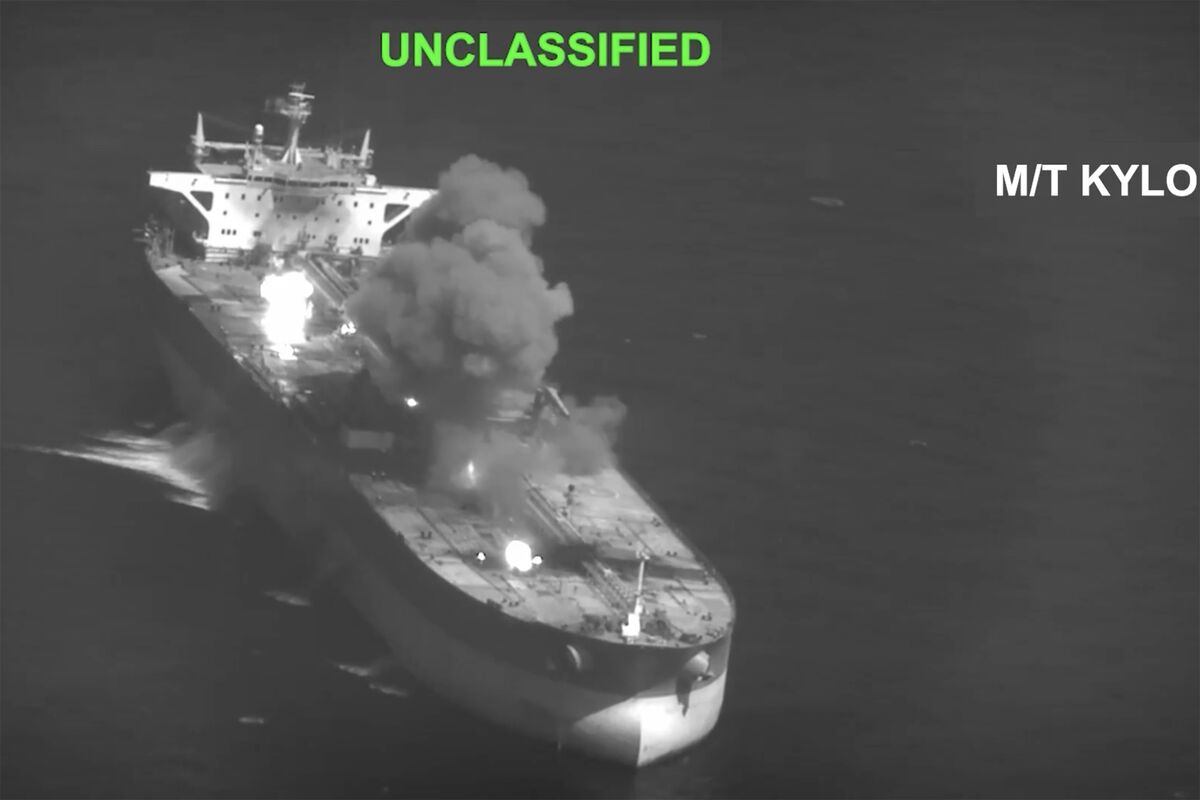
US and Iranian forces are trading attacks on tankers as their conflict enters a sixth month, elevating risks to maritime shipping and potentially global energy supplies. Separately, a deadly Amazon cargo-plane crash near Miami adds logistics disruption risk, while US white-collar workers reportedly face a constrained job market.
Analysis
The investable transmission is not simply higher crude: repeated maritime security incidents can reprice war-risk insurance, vessel routing, and floating inventory faster than underlying oil supply. Product-tanker and crude-tanker operators such as FRO and DHT have the cleanest near-term operating leverage if spot time-charter rates rise, while refiners and transport-intensive consumer businesses face a lagged margin squeeze. Defense primes LMT, NOC, GD and RTX could receive an order/inventory-support tailwind over 6-18 months, but this is less immediate than the freight-rate effect.
AMZN should not be treated as a direct short solely on the aviation incident unless its operational relationship, aircraft type, and resulting capacity restriction are independently confirmed. The more material channel is a sustained rise in jet fuel and diesel costs during the holiday inventory-build and delivery cycle; AMZN can partly offset this through seller fees and shipping economics, but that lag creates risk to retail-margin expectations over the next 1-3 quarters. A broad risk-off move may pressure AMZN's multiple in days, yet an isolated contractor accident is more likely a headline event than an earnings event absent FAA action, litigation disclosure, or a measurable Amazon Air capacity shortfall.
Consensus may overfocus on headline crude moves and underweight freight and insurance friction. Oil can retreat quickly on de-escalation even while tanker day-rates remain elevated because vessels take weeks to reposition and charter markets price reliability; conversely, tankers are a poor trade if incidents do not alter routing, insurance premia, or fixture rates. The key falsifiers are normalized war-risk quotes, no sustained increase in VLCC/Suezmax spot rates, and Brent failing to hold above its pre-event range.
AllMind Terminal
AI-powered research, real-time alerts, and portfolio analytics for institutional investors.
Request TrialMarket Sentiment
Overall Sentiment
strongly negative
Sentiment Score
-0.55
Ticker Sentiment
Key Decisions for Investors
- Initiate a 1-3 month tactical long in FRO or DHT only after confirming a sustained rise in published VLCC/Suezmax spot fixtures and war-risk premia; target 15-25% upside from operating leverage to day-rates, with exit if rates reverse for two consecutive weeks.
- Express the broader margin-dispersion view through long XLE / short XLY for 1-3 months rather than an outright AMZN short. The trade benefits if energy cash-flow expectations rise while discretionary and logistics cost assumptions deteriorate; reduce if Brent returns below its pre-escalation range or conflict-risk indicators normalize.
- Maintain AMZN as an event-driven watch item, not a recommended short. Buy 2-3 month downside protection only if Amazon confirms exposure to the aircraft/operator, the FAA imposes a fleet restriction, or management indicates a capacity, insurance, or delivery-cost impact; absent those triggers, accident-related selling is more likely to be recoverable.
- Add a 6-18 month defense basket tilt in LMT, NOC and RTX on weakness rather than chase an opening gap. The thesis requires evidence of procurement acceleration or replenishment funding; it is falsified by de-escalation without budget action.
More News
- US tech stocks tumble as investors fret over AI spending
- Nasdaq 100 Drops as Oil Rise Fuels Risk-Off Mood
- Markets sell off worldwide as further conflict looms in the Middle East and Elon Musk cuts capex guidance
- Musk's clash with Ukraine accelerates demand for Starlink alternatives. Few exist
- ‘This effectively sets Russia far behind in the AI race’: Ukraine is wiping out data centers across the border
- Google wouldn’t call it a data-center ‘backlash,’ but ‘there are often community questions to be addressed’
From AllMind Research
- Anthropic IPO Preview: Valuation, Timing, and What to Watch
- Shein After the IPO: Venue, Valuation, and What Must Be Proved
- What AI Research Tools Should a Small Hedge Fund Buy First?
- State of M&A and Private Markets, June 2026: A $4.9 Trillion Rebound, Underwritten on Money That Never Got Cheaper
- Run Cost-Controlled Financial Research in AllMind Agent Studio