
Warsh’s Fed rolls out first interest-rate hike in 3 years — with one more increase expected
Source: MarketWatch
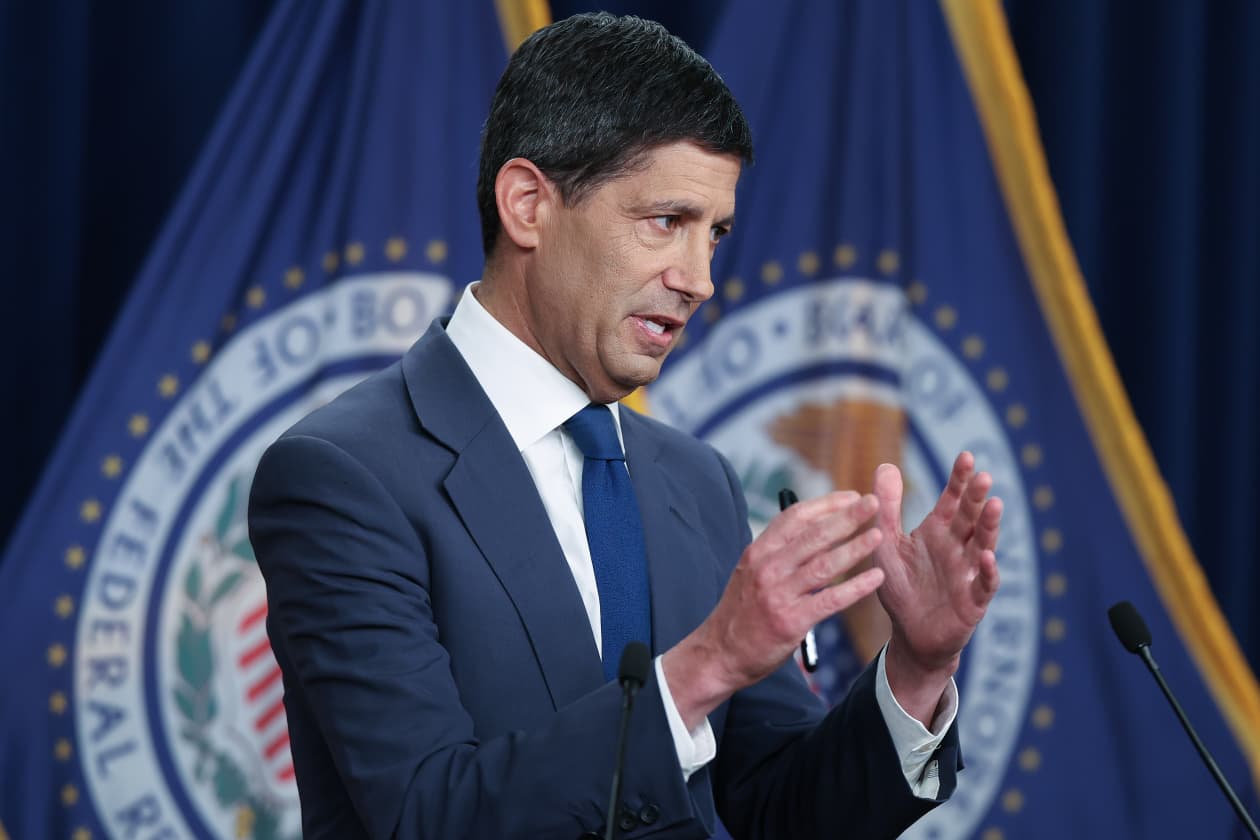
The Federal Reserve raised its benchmark interest rate by 25bps, its first increase in three years, in a unanimous decision that matched market expectations. Policymakers indicated that one additional hike is likely in coming months, though officials were divided on the path ahead. The move signals further monetary tightening and has broad implications for yields, credit conditions and risk assets.
Analysis
The market consequence hinges less on the initial move than on whether the projected terminal rate becomes a ceiling. If fed-funds futures already discount the remaining tightening, the immediate opportunity is not a broad duration short but a relative-value trade: cash-generative, low-refinancing-risk large caps should outperform leveraged small caps and rate-sensitive REITs over the next 1-3 months. Regional banks face an ambiguous setup: asset yields reprice upward, but deposit betas and unrealized securities losses can erase that benefit if the long end remains anchored.
A credible near-term endpoint is potentially supportive for long-duration growth after an initial de-risking, because it reduces the risk of an open-ended hiking cycle. The more vulnerable equity cohort is companies dependent on refinancing or external capital—particularly unprofitable software, private-credit-funded borrowers, and commercial-real-estate exposed lenders—where a modestly higher all-in borrowing cost can materially compress equity value. Watch HY OAS and the 2s10s curve: widening spreads rather than higher Treasury yields would signal that this is becoming a credit event, not merely a discount-rate adjustment.
Contrarian risk is that the guidance proves too dovish if inflation expectations or wage growth reaccelerate; the market would then need to reprice a sequence of additional hikes, pressuring both equities and long bonds. Conversely, a sharp deterioration in payrolls, retail sales, or bank lending would make the final hike unlikely and favor duration quickly. The key falsifier for a defensive relative-value stance is a sustained decline in core inflation accompanied by stable credit spreads, which would support small-cap and REIT multiple expansion.
AllMind Terminal
AI-powered research, real-time alerts, and portfolio analytics for institutional investors.
Request TrialMarket Sentiment
Overall Sentiment
mixed
Sentiment Score
-0.15
Key Decisions for Investors
- Initiate a 1-3 month pair trade: long XLP / short IWM. Staples' earnings and balance sheets are less refinancing-sensitive than small-cap constituents; target 5-8% relative outperformance, with a stop if the 10-year Treasury yield falls 40bp while HY spreads remain contained.
- Buy 3-6 month puts on KRE or maintain an underweight versus XLF. The risk/reward turns favorable if deposit costs remain sticky and commercial-real-estate charge-offs rise; exit if KRE materially outperforms XLF following the next bank earnings cycle on improving net interest margin guidance.
- Favor quality growth selectively via long MSFT or GOOGL versus short ARKK over 3-6 months. A bounded terminal-rate narrative rewards durable free-cash-flow duration while speculative growth remains vulnerable to financing conditions; invalidate if real yields decline below recent post-hike lows and credit spreads tighten materially.
- Use TLT calls or long 10-year Treasury futures only as a data-dependent hedge, not a core directional position: add after a downside surprise in employment or consumption data. The hedge is wrong if inflation expectations rise and the 10-year yield breaks higher despite weakening activity.
More News
- Fed Chairman Warsh Calls Rate Hike a 'Sober' Decision
- Fed delivers its first hike in 3 years. Plus, what's moving Starbucks and GE Vernova
- The Fed unanimously agrees to hike interest rates for the first time since 2023, despite Trump’s call for the ‘lowest rates’ in the world
- Iran war has cost the US $38bn: How will it impact US economy, politics?
- Fed Unanimously Raises Rates by a Quarter Point
- Fed approves interest rate hike, signals one more to come this year
From AllMind Research
- Anthropic IPO Preview: Valuation, Timing, and What to Watch
- Shein After the IPO: Venue, Valuation, and What Must Be Proved
- What AI Research Tools Should a Small Hedge Fund Buy First?
- AI in Asset Management: 2026 Statistics That Hold Up
- What is Broker Research and RMS Systems (And How to Actually Use Them)