
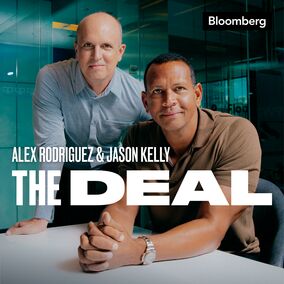
The article is an interview-style piece on Ryan Howard’s post-baseball investing career, including ventures aimed at expanding participation in baseball (e.g., Batter Up) and other sports-related bets. It also discusses potential issues that could influence the MLB players’ union labor fight, but provides no new company financials, policy outcomes, or market-moving figures.
Analysis
The real signal here is capital formation, not celebrity commentary: when ex-athletes keep funding participation-driven concepts, it usually means private money still believes consumers will pay for “sports as an experience” rather than just for equipment. That is constructive for venue operators and food/beverage-heavy leisure concepts, but it is a subtle headwind for pure product companies where brand aura does not translate into durable pricing power.
Second-order, these businesses can pull discretionary dollars away from traditional youth-sports channels and toward admission-based formats, which matters more for unit economics than for headline growth. If that shift broadens, the public-market expression is likely strongest in experiential names such as MODG and PLAY, while DKS and NKE only win if participation growth lifts total category spend rather than merely reallocating wallet share.
The labor-fight angle is the only true catalyst path, but it is a months-long risk unless negotiation rhetoric turns into schedule disruption or a lockout framework. Consensus tends to overread athlete/media narratives; absent a hard change in stoppage probability, sports-media and betting stocks should stay on alert rather than in the book. The thesis is falsified if upcoming bargaining stays routine and no venture funding/consumer traction shows up for the category.
AllMind Terminal
AI-powered research, real-time alerts, and portfolio analytics for institutional investors.
Request TrialMarket Sentiment
Overall Sentiment
neutral
Sentiment Score
0.00
Key Decisions for Investors
- No immediate trade in IUSDF; treat this as a non-actionable private-markets signal until there is disclosed revenue traction, a priced round, or a strategic distribution partnership.
- Watchlist only: MODG and PLAY as public proxies for participation-as-entertainment. Consider a long basket only on confirmed same-store traffic or guidance inflection over the next 1-3 months; otherwise the celebrity-backed concept premium is likely overdone.
- If MLB labor headlines escalate into credible lockout/schedule-risk over the next 3-6 months, buy short-dated puts on FOXA or WBD as an event hedge. Falsify the hedge if talks remain cordial and no date-specific disruption risk appears.
- Monitor DKS and NKE into back-to-school / holiday demand data over the next 1-2 quarters. Add only if youth-sports participation data improve and inventory stays clean; if not, the category is just churn, not growth.
More News
- How U.S. know-how is fracking Australia into a gas boom, from Texas oilmen to Trump’s energy secretary
- Wall Street is pitching data centers as a major real estate bet. The risks are piling up
- ‘Trojan horse’: California’s top 1% pay nearly half the state’s income taxes. Prop 40 opponents warn the billionaire tax could reach everyone else
- OpenAI's $70B Run Rate Meets AI's Infrastructure Challenge
- Ramp Hits $60 Billion Valuation in $1.85 Billion Funding Round
- Sequoia-backed Nuvacore seeks $2.5bn valuation in funding round
From AllMind Research
- Anthropic IPO Preview: Valuation, Timing, and What to Watch
- Shein After the IPO: Venue, Valuation, and What Must Be Proved
- What AI Research Tools Should a Small Hedge Fund Buy First?
- What Exactly Does Post-Training in LLMs and Finance-Focused AI Actually Mean for Asset Managers?
- What Is a Financial Ontology?