
Huawei Digital Power, IDEE 2026'da Şebeke Oluşturma ve Yapay Zeka Özellikli Çok Senaryolu Çözümlerini Sergiliyor
Source: PR Newswire
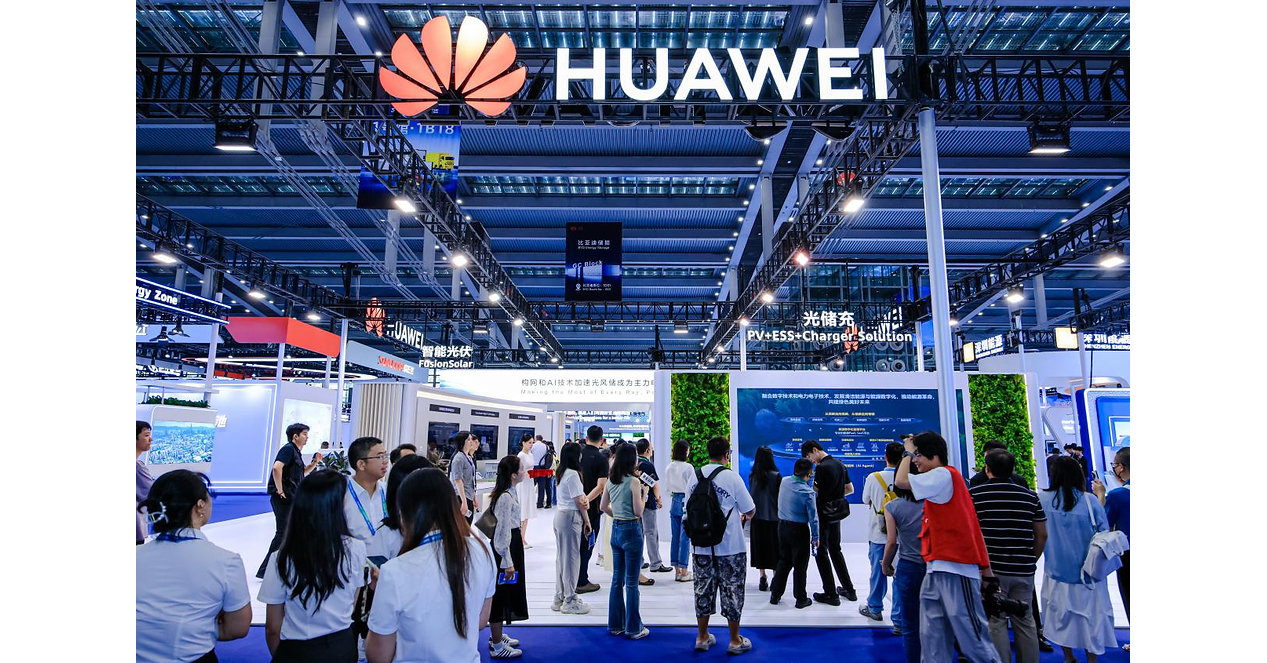
Huawei Digital Power showcased grid-forming renewable-energy, storage, microgrid, ultra-fast EV charging and AI data-center solutions at IDEE 2026. Its new grid-forming ESS supports 1,000 VAC architecture and 12.5 MW/50 MWh configurations, while its C&I hybrid-cooled ESS claims 91.8% round-trip efficiency and 100% depth of discharge. Huawei also said its AI-scheduled FusionCharge platform can raise charging-station revenue by more than 15%, highlighting its push to integrate AI with PV, storage and grid-management infrastructure.
Analysis
Huawei is not a directly investable public equity, so the relevant read-through is competitive rather than a standalone catalyst. The strategic threat is greatest to Chinese solar-inverter and storage peers—particularly Sungrow (300274.SZ) and GoodWe (300763.SZ)—if grid-forming capability becomes a procurement requirement rather than a premium feature; this would raise R&D and warranty costs while accelerating price competition. Conversely, Western power-management vendors including Eaton (ETN), Schneider Electric (SU.PA), and Vertiv (VRT) retain an advantage in regulated markets where bankability, cybersecurity and local serviceability matter more than component specifications.
The near-term equity impact is likely limited: product-showcase claims do not establish orders, project economics, or third-party reliability data. Over the next 1-3 months, the investable catalyst is evidence that grid-forming storage requirements enter utility tenders in China, the Middle East, Australia, or Europe; this would favor suppliers with proven controls software and installed-service networks, but could compress hardware gross margins as grid-forming becomes standardized. The 6-18 month structural effect is higher storage attach rates to renewable projects and greater demand for power-quality equipment, benefiting ETN, SU.PA, GE Vernova (GEV), and Fluence (FLNC) if they convert technical requirements into higher-value system and service revenue.
Contrarian view: consensus may overvalue the hardware novelty and undervalue interconnection queues, utility permitting, and financing costs—the binding constraints on storage deployment. Huawei's restricted access to several developed markets also limits direct global share transfer; its most disruptive effect may instead be forcing lower equipment prices in export-oriented emerging markets, which helps project developers and EPCs but hurts inverter/ESS vendors' margins. The thesis is falsified if grid-forming requirements fail to translate into tender language or if independent field data show no material availability, efficiency, or revenue uplift versus incumbent systems.
AllMind Terminal
AI-powered research, real-time alerts, and portfolio analytics for institutional investors.
Request TrialMarket Sentiment
Overall Sentiment
moderately positive
Sentiment Score
0.48
Key Decisions for Investors
- No immediate directional trade on the announcement; set a 1-3 month tender watch for explicit grid-forming specifications and awarded capacity in China, GCC, Australia, and Europe before underwriting revenue impact.
- Maintain a relative-quality bias: long ETN or SU.PA versus short a basket of lower-margin Chinese inverter exposure such as 300274.SZ and 300763.SZ only after evidence of renewed inverter ASP compression. Target a 10-15% relative move over 6-12 months; exit if Chinese peers demonstrate stable gross margins and order growth despite pricing pressure.
- Watch FLNC for a selective long entry rather than buying on thematic enthusiasm: initiate only after backlog conversion and gross-margin guidance confirm that grid-forming controls/software lift project economics. A guidance miss, further cash burn, or project-delay disclosure invalidates the setup.
- For AI-data-center power exposure, retain VRT/ETN/GEV as preferred listed beneficiaries over unlisted Huawei, but avoid chasing a near-term re-rating absent hyperscaler capex confirmations. The key falsifier is a material reduction in 2027 data-center power or cooling order growth.
More News
- All Iranian airlines to be 'shut down' from Wednesday, Bessent tells CNBC
- Taiwan benchmark Taiex rises to record intraday high as tech stocks advance
- AMD joins the $1 trillion club as chip rally surges - our AI Strategy saw it early
- Jamie Dimon says hyperscaler AI spending could hit $1 trillion next year
- Factbox-Key issues for this week’s Trump-Xi summit in Washington
- Latest Oil Market News and Analysis for Sept. 22