
Starlight Investments Announces Successful Close of UK BTR Fund II
Source: PR Newswire
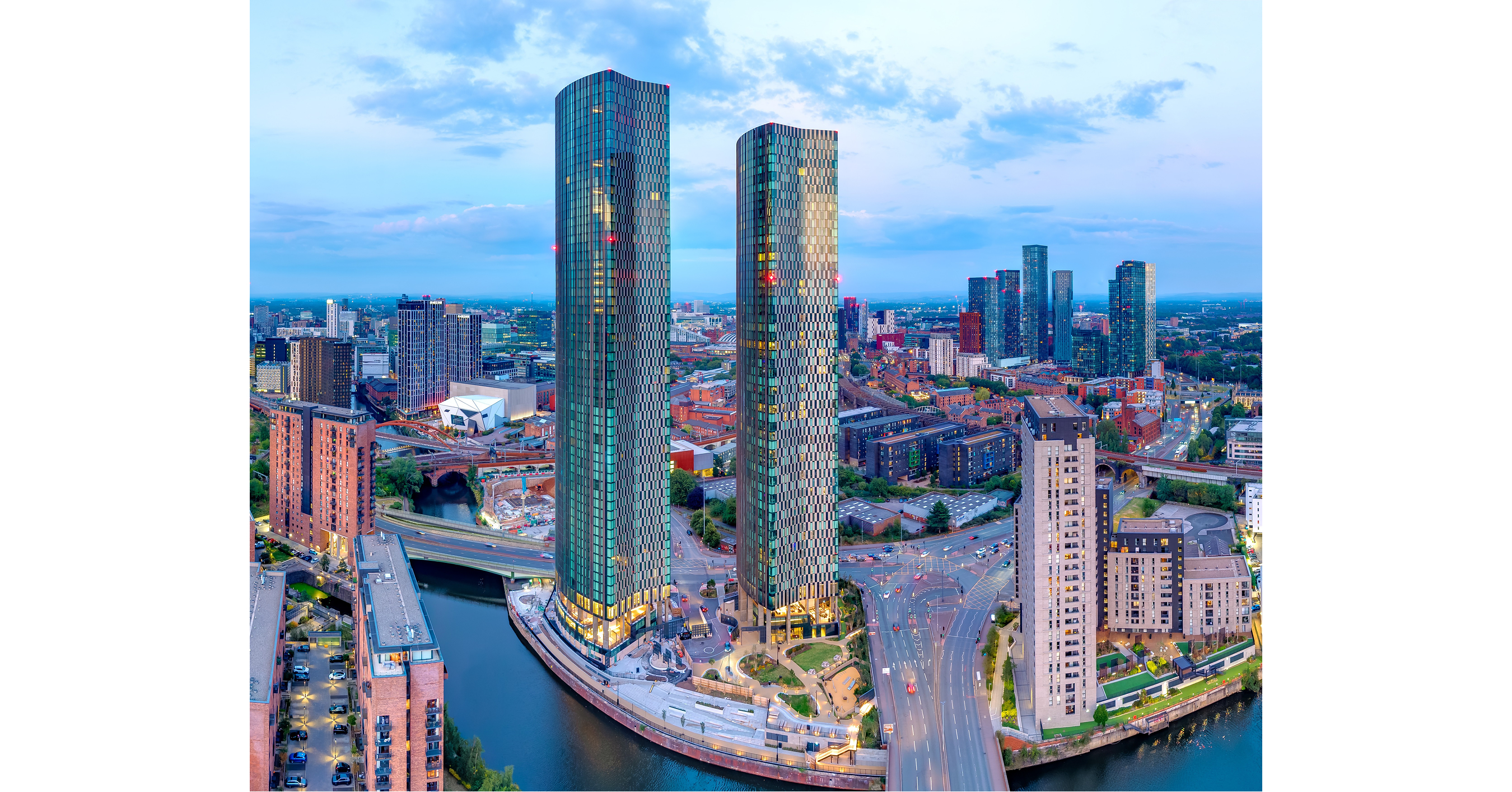
Starlight Investments closed its UK Build-to-Rent Fund II and related vehicles with £680 million of capital commitments to acquire and deliver more than 6,000 rental homes. The partially deployed fund includes three communities under construction in Manchester and Basildon and drew institutional investors from Europe, APAC and Canada, including a major commitment from Homes England's National Housing Bank. Starlight expects its expanding 12-community UK platform to rank among the country’s four largest BTR operators by scale as projects move into lease-up and operations.
Analysis
The investable signal is not the individual portfolio size but the reopening of institutional equity for UK living-sector development. If replicated by other managers, this lowers the marginal cost of capital for BTR land and forward-fund transactions, supporting private asset values and developers with consented urban sites; listed UK residential landlords such as Grainger (GRI.L) may benefit from cap-rate validation before they face meaningful new supply competition. The announcement alone is insufficient to underwrite a NAV re-rating because it does not disclose acquisition yields, construction debt terms, or lease-up assumptions.
The near-term second-order beneficiary is the development supply chain, particularly contractors and building-products exposure with regional capacity, but timing is back-end loaded: construction activity is a 12-36 month effect rather than an earnings catalyst this quarter. In Manchester and the London commuter belt, concentrated completions could eventually moderate market-rent growth and increase lease-up incentives; that is a localized risk to existing BTR owners, not a broad UK rental-market call. The key falsifier is financing: a renewed rise in UK gilt yields or wider real-estate debt spreads would impair development residuals and turn newly funded pipelines into competition for distressed land rather than evidence of sector strength.
Consensus may overread this as proof that UK BTR has cleared its valuation reset. Fundraising can reflect a long investment period and staged deployment rather than conviction in current asset pricing, while public REIT discounts already embed some private-market uncertainty. Watch independent transaction evidence—especially stabilized BTR yields, debt LTVs and achieved rents—over the next 1-3 months; without it, this is a private-capital-flow datapoint rather than a standalone public-equity catalyst.
AllMind Terminal
AI-powered research, real-time alerts, and portfolio analytics for institutional investors.
Request TrialMarket Sentiment
Overall Sentiment
strongly positive
Sentiment Score
0.58
Key Decisions for Investors
- No immediate directional trade: the news has limited direct public-market transmission and no disclosed underwriting metrics to quantify earnings or NAV sensitivity.
- Place GRI.L on a 1-3 month watch for a relative long versus UK commercial-property exposure (for example, short BLND.L) only if comparable BTR transactions clear at yields supportive of GRI.L's reported valuation and UK 10-year gilt yields remain contained. Exit if gilt yields rise materially or GRI.L reports slowing like-for-like rent growth/lease-up.
- Monitor Vistry (VTY.L) and Morgan Sindall (MGNS.L) for disclosed BTR forward-funding, land-sale, or contractor awards tied to institutional capital deployment; treat such contracts as a potential 6-18 month earnings catalyst, not a recommendation until contract value, margin and funding terms are disclosed.
- For localized rental-supply risk, track Manchester completion pipelines and achieved rents through 2027. Consider reducing exposure to highly concentrated private BTR assets if delivery schedules accelerate, while avoiding a broad short of UK residential landlords because national undersupply and wage growth can offset localized new inventory.
More News
- Here’s the ‘core economic flaw’ in the AI bull case as stock and bond trades unravel, according to a top economist
- Braskem creditors, shareholders near deal on $11bn debt restructuring
- Instacart reportedly discussed selling itself with DoorDash and Uber
- Nvidia's role as AI financier faces first big test as neoclouds take market hit
- Trump set to announce plan by Audi to build a U.S. factory in Georgia, source says
- Why popular airplanes are getting scrapped years early