
Merz Faces Down Party Revolt With Far Right Advancing in Germany
Source: Bloomberg
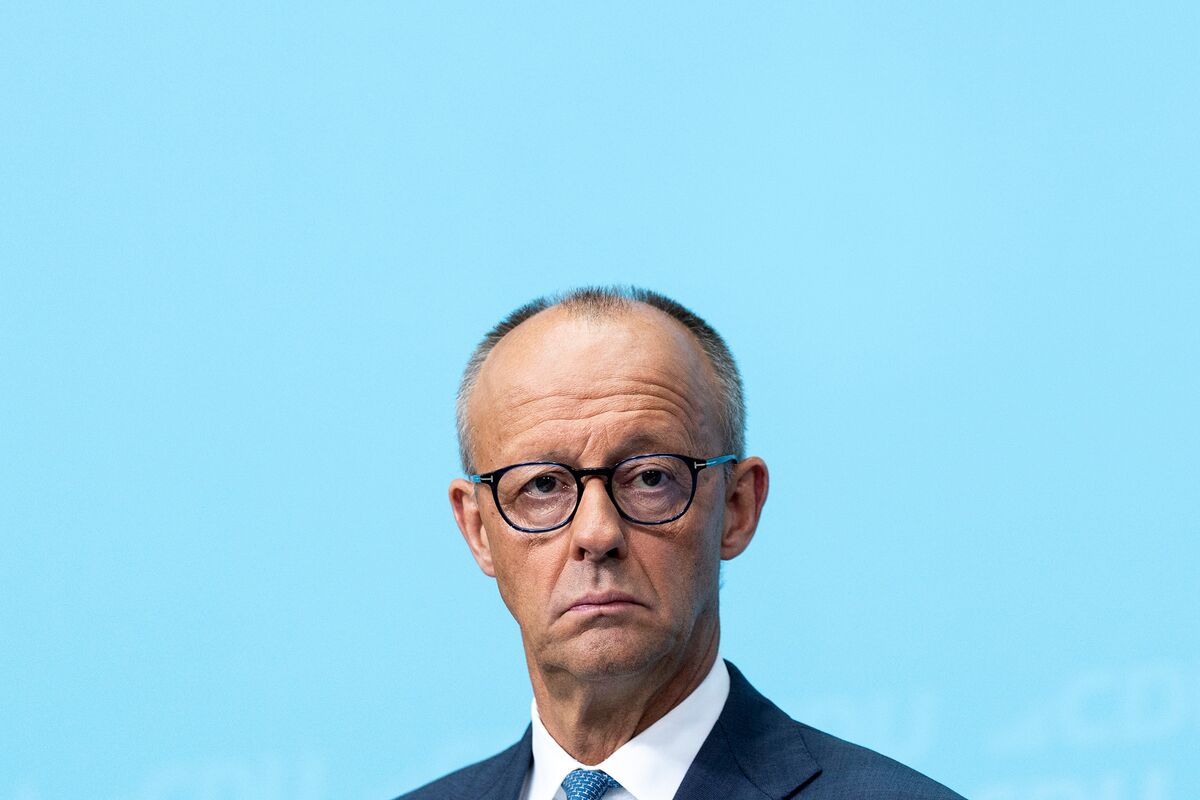
Germany’s far-right Alternative for Germany defeated Chancellor Friedrich Merz’s Christian Democrats in the eastern state of Saxony-Anhalt, undermining Merz’s prior pledge to halve support for the anti-immigration party. The result signals rising political pressure on Merz and further momentum for the AfD ahead of future electoral contests.
Analysis
The market-relevant risk is not an immediate change in federal policy, but a widening gap between national governability and investor assumptions embedded in German cyclicals. A more fragmented political backdrop raises the probability that fiscal, energy, permitting, and defense-spending initiatives are delayed or diluted; this matters most for domestically exposed banks, construction materials, utilities, and infrastructure beneficiaries rather than export-heavy DAX multinationals. EWG could therefore underperform the Eurozone on any confirmation that coalition arithmetic is deteriorating, while the DAX may remain partially insulated by its foreign revenue mix.
Over the next 1-3 months, polling momentum and any public coalition disputes matter more than the state result itself. The transmission channel would be higher uncertainty premia in German assets: weaker EUR sentiment, relatively softer German mid-caps, and a modest widening of Italian-versus-German sovereign spreads if European fiscal coordination appears less reliable. The 6-18 month upside case is counterintuitive: sustained political pressure could force a more credible package on migration enforcement, defense procurement, and investment incentives, ultimately improving policy clarity rather than creating paralysis.
Consensus may overstate the direct equity impact of regional political headlines. Germany's largest listed companies have limited domestic revenue sensitivity, and political concern only becomes tradable if it alters federal legislative capacity, budget execution, or constitutional/fiscal constraints. Treat this as a risk-management signal rather than a directional macro call until national polling, Bund term premium, or guidance from domestic-demand companies confirms deterioration.
AllMind Terminal
AI-powered research, real-time alerts, and portfolio analytics for institutional investors.
Request TrialMarket Sentiment
Overall Sentiment
mildly negative
Sentiment Score
-0.30
Key Decisions for Investors
- Do not initiate a broad Germany short on this signal alone; monitor EWG versus VGK over the next 4-8 weeks. A sustained 3-5% EWG underperformance alongside worsening national coalition polling would validate a tactical underweight.
- Prefer export-oriented German exposure over domestic cyclicals for the next 1-3 months: pair long SAP / short MDAX proxy (MDAX ETF where accessible) or long SAP / short DBK in equal euro risk. The thesis is that policy uncertainty raises domestic credit and investment risk more than global software demand; exit if federal fiscal measures are passed with a clear funding mechanism.
- For existing long Deutsche Bank (DBK) or Commerzbank (CBK) positions, tighten risk limits ahead of national polling and budget milestones. Political fragmentation can delay capital-markets and growth-supportive reforms, while weaker domestic loan demand would pressure 2027 revenue expectations; reassess if German PMI and loan-growth data stabilize rather than weaken.
- Watch the 10-year BTP-Bund spread and German construction/order data as falsification indicators. If the spread remains contained and domestic orders improve over the next two releases, the political-risk premium is unlikely to be large enough to support a Germany underweight.
More News
- Trump signs sweeping Russia sanctions over Ukraine war
- Trump says U.S. to build a 'large Military presence' in Greenland as part of a security deal with it and Denmark
- Analysis-Russia sanctions bill gives Trump sweeping new tariff powers
- As Houthis grab Bab al-Mandeb, US appears willing to watch from sidelines
- Greer to Join Bessent in Talks With Chinese Officials on Sunday
- Carney Pursues EU Partnership, Investment Boom to Reduce US Dependence
From AllMind Research
- Anthropic IPO Preview: Valuation, Timing, and What to Watch
- Shein After the IPO: Venue, Valuation, and What Must Be Proved
- What AI Research Tools Should a Small Hedge Fund Buy First?
- Augmented Intelligence: AllMind, Elevate Human Judgement With an Accessible, Powerful, Data-Driven Financial AI Toolkit
- AI Research Systems for Hedge Funds: A Pilot Design