
US 30-Year Yield Hits Highest Since 2004
Source: Bloomberg
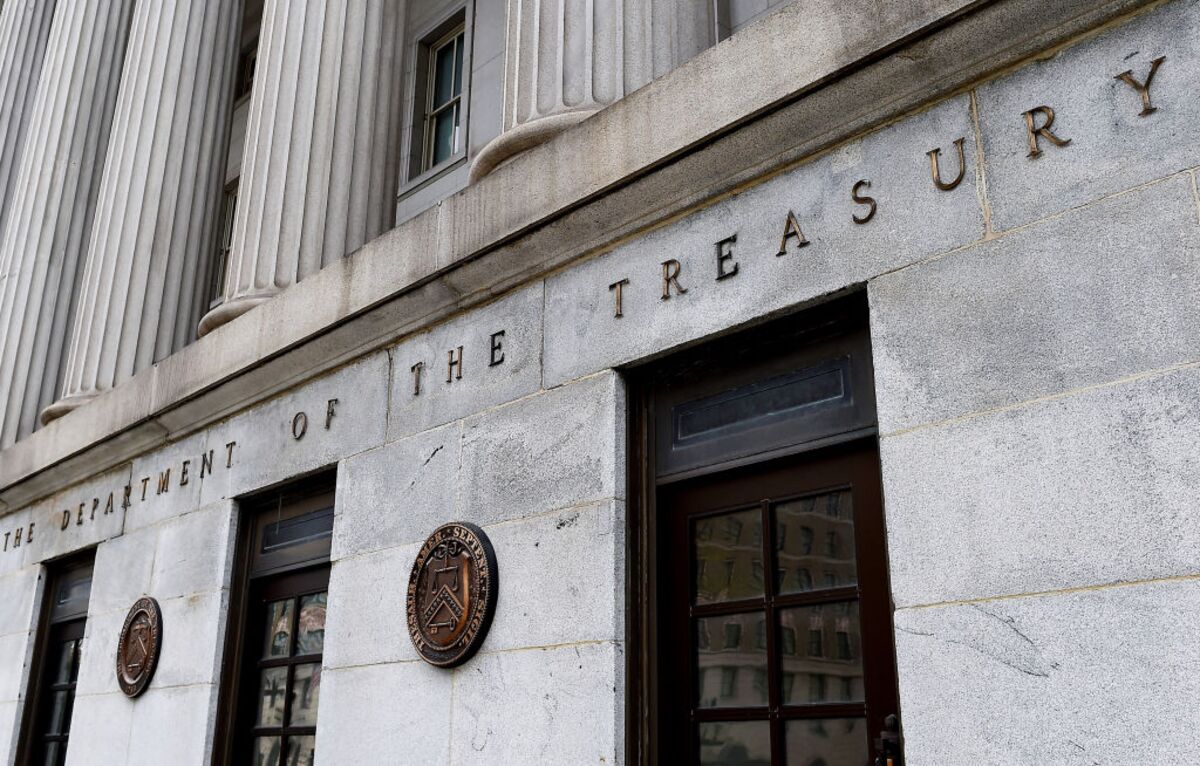
The US 30-year Treasury yield rose as much as 7bps to 5.47%, its highest level since 2004, amid a global bond selloff. Inflation concerns, roughly $40 trillion in US government debt, and war-driven oil-price gains pushed five- to 30-year Treasury yields to multiyear highs. Higher long-term borrowing costs raise risks for rate-sensitive assets, fiscal financing, and broader financial-market conditions.
Analysis
The key transmission channel is term premium rather than a uniform policy-rate repricing: a sustained long-end selloff raises the discount rate on every long-duration asset while leaving near-term earnings largely intact. A 25bp further rise in 30-year yields can imply roughly a 4-5% mark-to-market loss for long-duration Treasury proxies such as TLT/EDV, and it pressures equity multiples most acutely in XLRE, XLU, software and unprofitable growth. Mortgage rates need not rise one-for-one, but wider MBS hedging and convexity demand could amplify a selloff over days to weeks if duration investors reduce exposure simultaneously.
Over the next 1-3 months, the more consequential risk is credit: higher benchmark yields force refinancing costs higher just as commercial real estate, small-cap borrowers and highly levered consumer issuers face maturity walls. KRE and regional-bank preferreds are vulnerable through both securities-book losses and deteriorating CRE collateral values; HYG may initially appear resilient if growth holds, but spread widening is the likely second leg once issuance and refinancing calendars become binding. Energy producers remain a relative hedge because higher realized prices can offset discount-rate pressure, but broad XLE is not a clean duration hedge if a rates shock ultimately becomes a growth shock.
Consensus may be too focused on the level of the 10-year yield and underappreciates curve shape. Persistent 5s30s steepening would signal fiscal-supply absorption and inflation-risk premia, a regime in which buying nominal duration simply because it is "oversold" can fail for months. The thesis is falsified by a material softening in inflation expectations, weak payroll/activity data that pulls real yields down, or a credible reduction in Treasury duration supply; a 20-30bp decline in the 30-year yield accompanied by tighter—not wider—credit spreads would argue the stress is cyclical rather than structural.
AllMind Terminal
AI-powered research, real-time alerts, and portfolio analytics for institutional investors.
Request TrialMarket Sentiment
Overall Sentiment
strongly negative
Sentiment Score
-0.55
Key Decisions for Investors
- Maintain a tactical short-duration bias for the next 1-3 months: buy TLT or EDV put spreads rather than outright shorts, sized for a further 25-40bp long-end yield rise. Use a 20-30bp decline in the 30-year yield as the initial stop/reassessment trigger; put structures cap loss if a risk-off growth shock creates a duration rally.
- Express the structural view through a 5s30s bear-steepener: short 30-year Treasury futures versus a duration-weighted long in 5-year futures. This isolates term-premium/fiscal-risk exposure better than a directional Treasury short; reduce if inflation breakevens and real yields both decline for two consecutive weeks.
- Pair long XLE against short XLU or XLRE over 1-3 months, with modest gross exposure. Regulated utilities and REITs face direct financing-cost and valuation sensitivity, while upstream cash flows have partial inflation linkage; exit if oil rolls over materially or credit spreads widen enough to signal recession risk.
- Avoid adding exposure to KRE, CRE lenders, and low-quality high-yield credit until refinancing assumptions are reset at upcoming earnings. Monitor HYG versus LQD and bank funding spreads: a sustained widening is confirmation to add downside hedges rather than buy the initial equity dip.
More News
- Trump, Xi Address AI, Taiwan During State Visit
- History shows financial calamities occur when rates rise rapidly like this: 'Something always breaks'
- Trump Hosts China’s Xi With Trade, AI, Taiwan in Focus
- Surging Treasury yields are posing a brand new problem for Kevin Warsh and the Fed
- MSCI CEO: Investors Are Putting Money Everywhere
- Iranian-American group sues Trump over war