
NewBold Technologies Announces Acquisition of Spencer Technologies
Source: PR Newswire
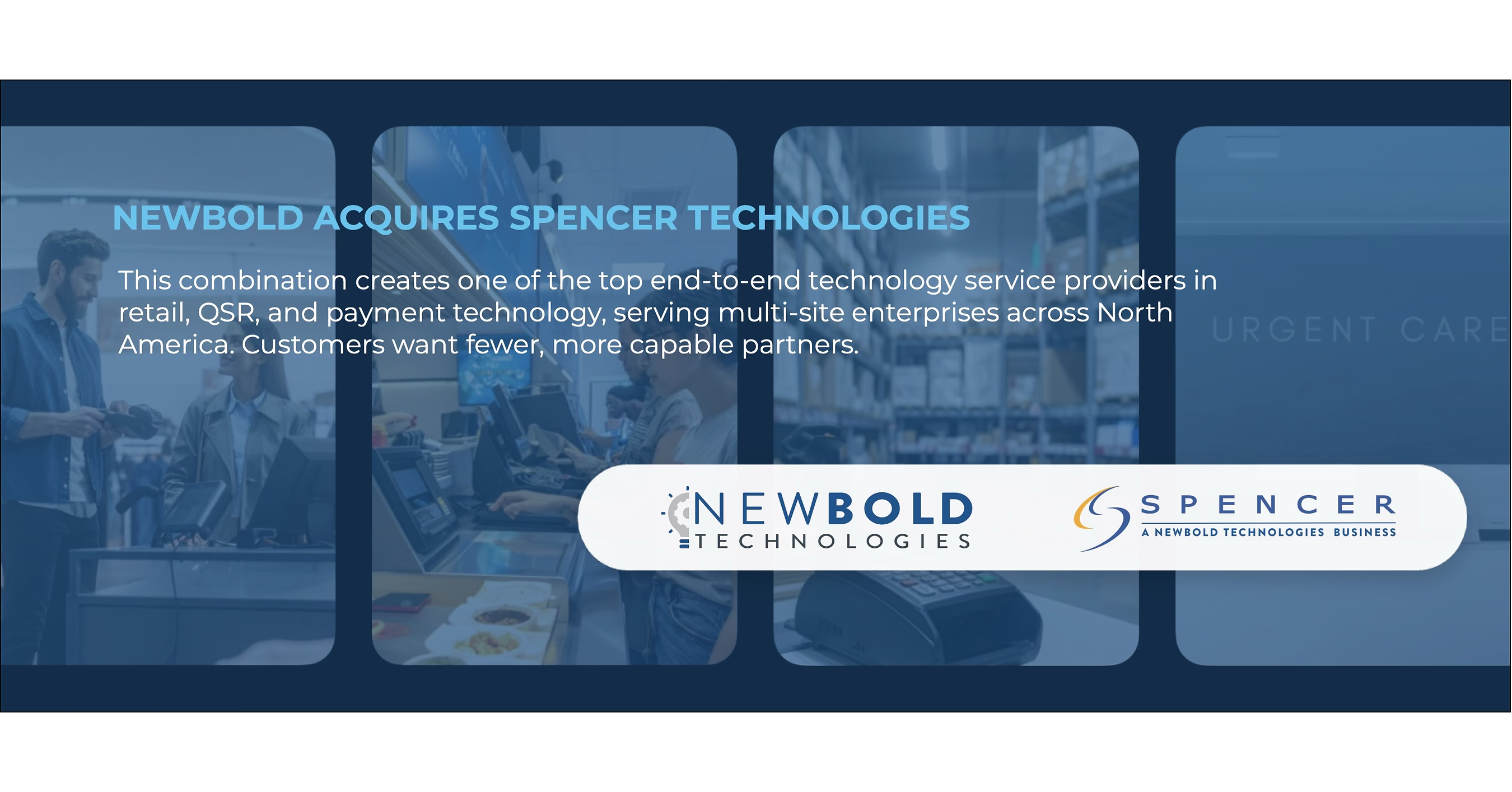
NewBold Technologies completed its acquisition of Spencer Technologies, creating one of the top North American retail technology services providers. The combined platform expands technician coverage nationwide and adds deep expertise across point-of-sale, RFID, audio/visual, networking, and payments. Spencer’s scale includes 1,500+ new store openings per year, 500+ field jobs per day, and a 97% on-time delivery rate, positioning the deal to broaden NewBold’s service and procurement lifecycle offering.
Analysis
This is more a scale-and-density story than a headline M&A catalyst. In technician-heavy service businesses, the real lever is route density and dispatch utilization; if those improve, EBITDA can expand, but if integration disrupts field execution the synergy math evaporates quickly. The likely winners are large multi-site retailers, grocers, and QSR operators that can now push more spend into a single vendor relationship; the losers are smaller regional installers and maintenance shops that compete primarily on response time and local coverage.
Second-order, a bigger bundled provider can squeeze competitors on pricing by combining procurement, deployment, support, and device management into one contract, which can compress margins across the outsourced retail-tech ecosystem over the next 1-3 quarters. But the moat is still operational, not structural: this business is labor-intensive, so any technician turnover, onboarding friction, or underinvested project management shows up fast in service levels and customer renewals. The market should care less about the acquisition close and more about whether the combined platform can sustain on-time delivery while expanding gross margin.
Contrarian view: consensus will assume "scale wins," but the hidden risk is that larger national accounts become harder to serve, not easier. A single failed rollout or support miss can trigger vendor re-bids, and the working-capital burden rises as the platform takes on more deployment-heavy projects. Falsifiers are simple: if margins do not expand within 2 reporting periods, or if DSO/technician turnover worsens, the thesis is probably just sponsor-sponsored roll-up optics rather than a durable advantage.
AllMind Terminal
AI-powered research, real-time alerts, and portfolio analytics for institutional investors.
Request TrialMarket Sentiment
Overall Sentiment
moderately positive
Sentiment Score
0.35
Key Decisions for Investors
- No immediate public-equity trade: this is a private-market consolidation event with weak direct market read-through. Reassess only if financing terms, earn-outs, or pro forma leverage are disclosed.
- If you need a proxy, consider a small 1-3 month pair trade: long FI / short DBD. The thesis is that payment-device lifecycle and merchant infrastructure scale better than hardware-heavy service models; stop if FI margins guide down or DBD wins a material outsourcing contract.
- Set a watchlist on VYX and TOST for 1-2 quarter channel checks. If customer commentary starts emphasizing fewer service vendors and faster deployment cycles, that is a better trade signal than the acquisition itself.
- Alert on WWRL integration metrics if they become available: technician retention, gross margin, and DSO. If there is no margin lift within two quarters, treat the acquisition as dilution risk rather than a moat-building event.
More News
From AllMind Research
- Anthropic IPO Preview: Valuation, Timing, and What to Watch
- Shein After the IPO: Venue, Valuation, and What Must Be Proved
- What AI Research Tools Should a Small Hedge Fund Buy First?
- What a Concept From Nature Tells Us About How C-Suite Executives Actually Think About AI
- How to Track Earnings Call Sentiment Across Companies