
Tesla Roadster Awes, But Shares Lag Into Earnings
Source: seekingalpha.com
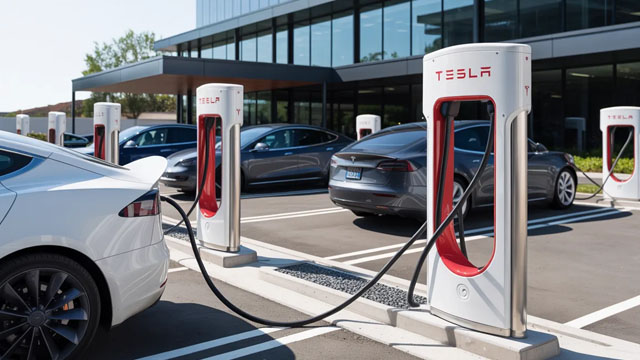
Tesla was downgraded to Hold, with shares viewed as near fair value but exposed to near-term technical downside. Q2 revenue was strong, but operating income fell sharply and free cash flow turned negative amid high capex. The stock projection was reduced to the high-$300s, reflecting softer earnings forecasts, margin pressure, and execution risks.
Analysis
The key issue is not the downgrade itself but a weaker conversion of investment into earnings and cash generation. If incremental capex does not produce higher vehicle volumes, software/energy revenue, or lower unit costs, the market may value TSLA more like a capital-intensive automaker and less like a long-duration technology platform. That would leave the shares exposed to both estimate cuts and multiple compression. Competitive pressure from BYD and established automakers could compound the risk if Tesla uses pricing to defend volume while also funding capacity and product launches; the extent of that exposure needs confirmation in regional pricing and unit economics.
Near term (days to weeks), technical selling could amplify weakness, but the article provides no price levels or positioning data to establish a breakdown. Over 1–3 months, watch delivery trends, automotive gross-margin trajectory, capex versus management plans, and free-cash-flow conversion. Over 6–18 months, the decisive test is whether new investment earns returns sufficient to stabilize margins and cash generation. A durable margin recovery or improving cash conversion would undermine the bearish case; further estimate reductions or rising capex without corresponding output would strengthen it. The downgrade is a caution signal, not independent proof that the shares are overvalued.
AllMind Terminal
AI-powered research, real-time alerts, and portfolio analytics for institutional investors.
Request TrialMarket Sentiment
Overall Sentiment
mildly negative
Sentiment Score
-0.35
Ticker Sentiment
Key Decisions for Investors
- Avoid adding outright long exposure solely on the earnings headline; wait for evidence that investment is translating into improved cash conversion and stable unit economics.
- For tactical downside exposure, consider a defined-risk TSLA put spread only after a confirmed break of a relevant support level; set the trigger and expiry using current price, volatility, and event calendar, which are not provided here. Do not treat the article’s high-$300s projection as a validated target.
- Track quarterly automotive margins, capex, free cash flow, deliveries, and regional pricing. A sustained improvement in cash generation without price-led volume support would falsify the cautious thesis; continued cash deterioration alongside weaker estimates would reinforce it.
- No pair trade is warranted from the supplied evidence alone: verify relative valuation, regional exposure, and margin trends before positioning against BYD or other automakers.
More News
- Wall Street's fear gauge is ripping. Traders see it going even higher
- The Tesla Roadster should go into production in 2028, but don't get your hopes up
- We're downgrading this retail stock after a big comeback. Plus, AI names slide again
- Major earnings reports are due next week, but strong results may not be enough to quell market fears
- Chip Rout Intensifies and Tesla Showcases Flying Roadster
- Tesla Showcases Long-Awaited Roadster With Aerial Tricks
From AllMind Research
- Anthropic IPO Preview: Valuation, Timing, and What to Watch
- Shein After the IPO: Venue, Valuation, and What Must Be Proved
- What AI Research Tools Should a Small Hedge Fund Buy First?
- Run Cost-Controlled Financial Research in AllMind Agent Studio
- State of Public Markets, June 2026: Higher for Longer Meets the AI Supercycle