
HIGEN RNM Targets Humanoid Robotics' Next Bottleneck: The Actuator
Source: PR Newswire
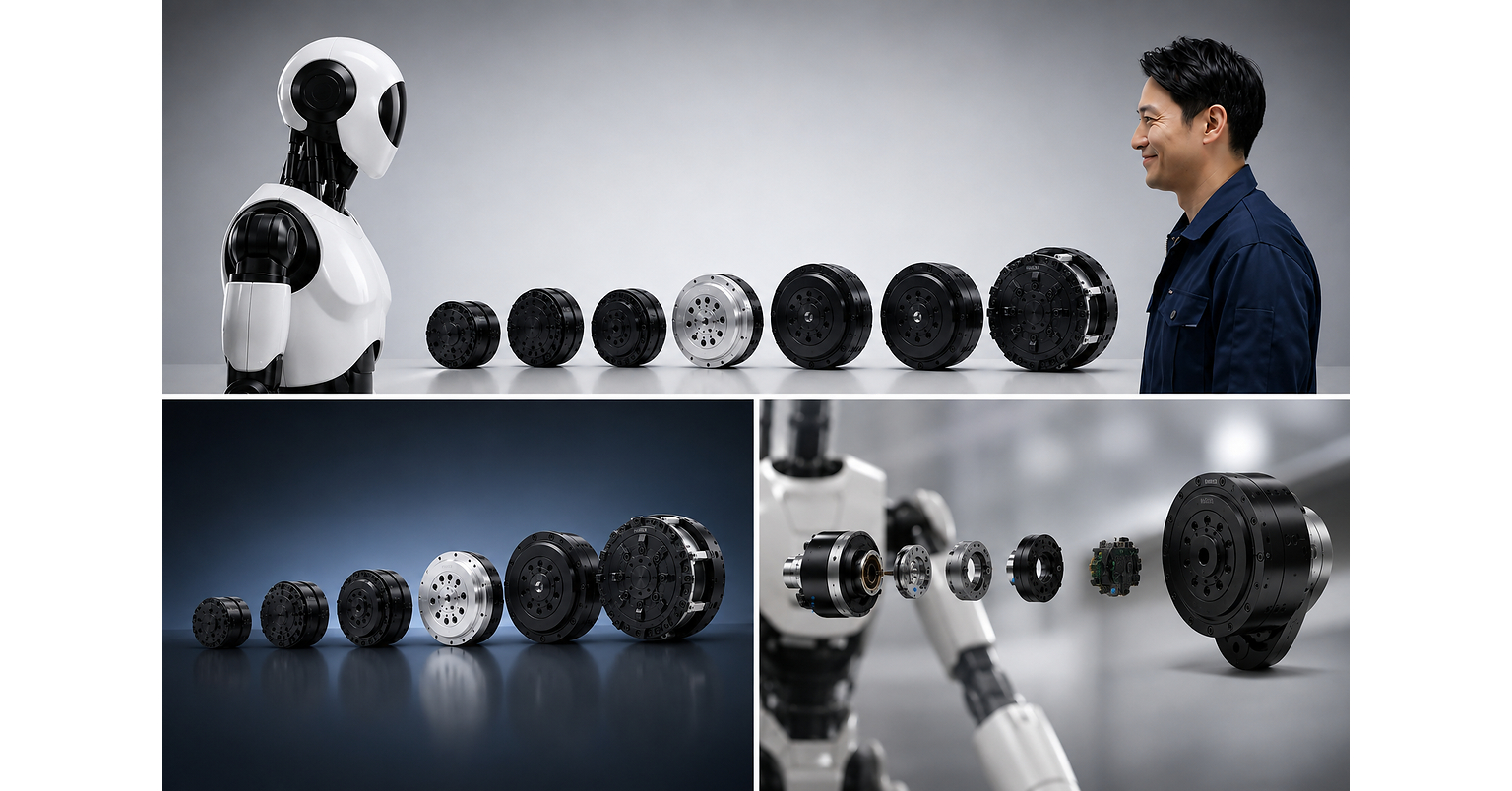
HIGEN RNM launched its “Human-Friendly Actuator Platform” to close the sim-to-real gap in humanoid robotics by embedding joint-local sensing and adaptive force/stiffness control that responds in under 100 ms. The company targets scalable joint designs spanning 60 Nm to 348 Nm and claims a 30% actuator volume reduction and 30% torque density increase under reference conditions, with backdriving torque below 1 Nm. It also filed three Korean patent applications and is pursuing CE/UL certification, with planned demos at CES 2027.
Analysis
This reads less like a near-term product event and more like evidence that the humanoid value chain is shifting from software optionality to industrialization discipline. If the actuator layer can truly absorb latency, heat, and force-control variability, the economic moat moves away from “best demo” toward “best manufacturability,” which is more favorable for component content than for headline robot brands. That tends to help control-silicon, sensing, and power-management suppliers, while compressing margins for bespoke joint builders and torque-sensor-heavy designs.
The first-order tradeable implication is not revenue, it is design-win leverage: standardized torque bands create an easier procurement path for OEMs, but only if reliability, thermal cycling, and safety certifications survive third-party testing. The next 1-3 months are mostly signaling risk; the real catalyst is whether any humanoid OEM publicly adopts a reference architecture and commits to volumes. If certification slips or field test data show latency/thermal failures, the whole narrative can unwind quickly because the market is still pricing humanoids as a software story, not a factory story.
Contrarianly, the consensus may be overestimating how much AI progress alone changes unit economics. The bottleneck is now the body, which means boring suppliers can win the P&L even if flashy robot names keep the attention. But this is still pre-commercial PR, so the right posture is selective exposure, not thematic chasing; absent audited orders or third-party performance validation, the risk is that CES-style hype outruns actual adoption by 6-12 months.
AllMind Terminal
AI-powered research, real-time alerts, and portfolio analytics for institutional investors.
Request TrialMarket Sentiment
Overall Sentiment
mildly positive
Sentiment Score
0.15
Key Decisions for Investors
- No immediate trade in JYNT or LAWR; the release has no identifiable earnings linkage and should be treated as non-actionable PR until there is a disclosed customer or revenue bridge.
- Set a 1-3 month watchlist on ADI and TXN as picks-and-shovels beneficiaries of actuator content growth; if we get third-party validation or OEM design-win disclosures, consider a long ADI/TXN basket versus short BOTZ for a 2:1 relative-value setup.
- Use any broad humanoid/robotics rally to fade overextension rather than chase it; short BOTZ on strength if the tape prices in volume adoption before CE/UL or pilot-order evidence appears. Falsify the short if multiple OEMs announce paid deployments before Q1'27.
- If you want cleaner upside convexity, wait for CES 2027 and buy the first pullback after verified demos rather than pre-positioning now; the risk/reward improves materially only when the market can connect the platform to contracted demand.
More News
- CoreWeave credit default swaps hit distress levels as investors sour on AI debt
- Treasuries Soar as Tech Slump Threatens Growth
- Blackstone President Jon Gray Bets Big on AI Boom
- Suddenly, Wall Street is worried that the U.S. economy is more ‘vulnerable’ than it looks
- Ukraine to resume strikes on Russian refineries, shattering hopes of an 'energy ceasefire'
- AI Selloff Deepens in Asia as Funding Fears Mount
From AllMind Research
- Anthropic IPO Preview: Valuation, Timing, and What to Watch
- Shein After the IPO: Venue, Valuation, and What Must Be Proved
- What AI Research Tools Should a Small Hedge Fund Buy First?
- Document Search Enhancements, AI Enhancements, AI Actions, & Chat Export
- AI Vendor Landscape for Institutional Investment Teams