
SDMC présente ses services d'IA domestique déployables à l'IBC 2026
Source: PR Newswire
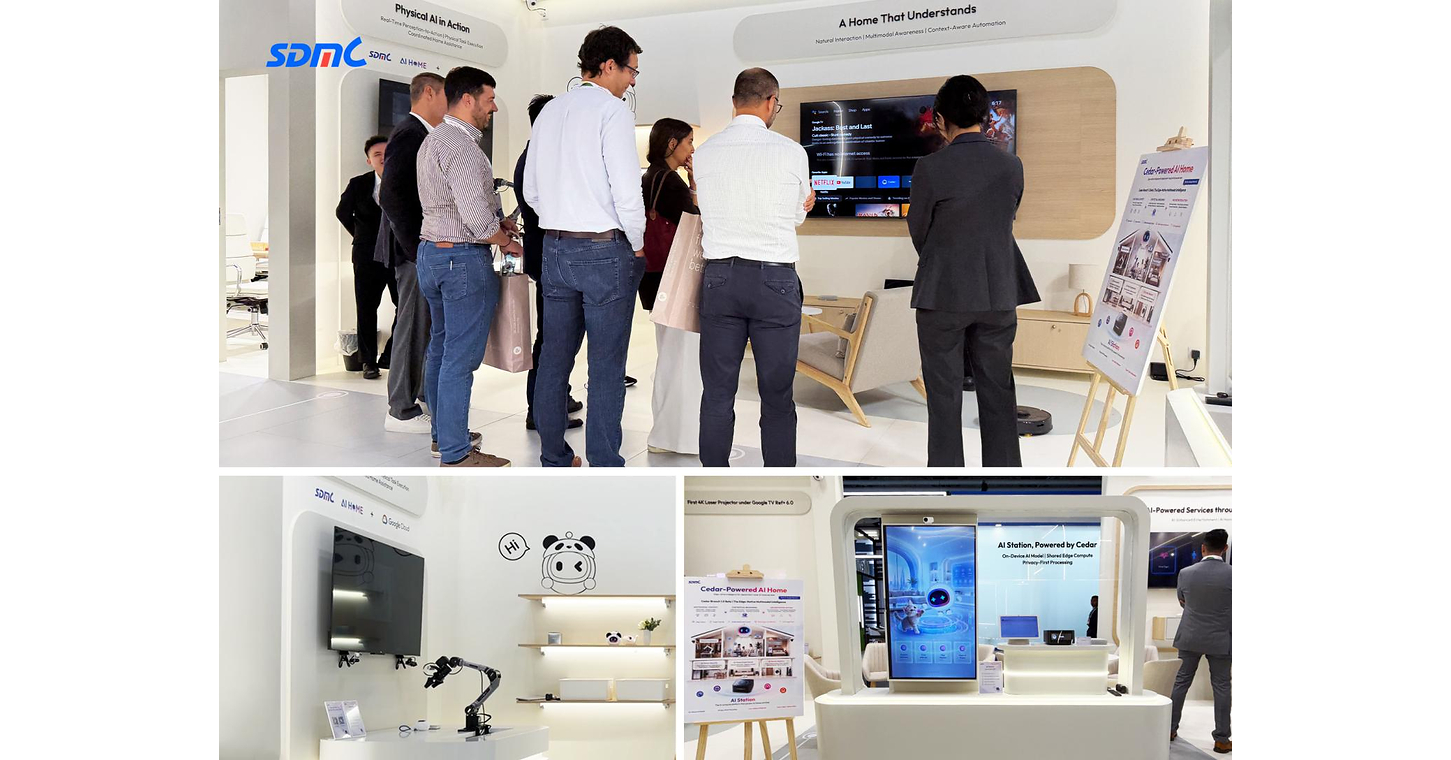
SDMC showcased its deployable home-AI architecture at IBC 2026, built around cloud-edge intelligence, its Cedar multimodal model and AI Station shared edge-computing platform. The company highlighted its selection for Google Cloud's "Proactive Physical AI Acceleration" program and collaborations using Google Gemma/Gemini, NVIDIA Jetson T5000 and Amlogic technologies. The initiative targets scalable home entertainment, security, connectivity and network-operations services, with customer validation and pilot projects as the next steps.
Analysis
The investable read-through is modest: this is an ecosystem-validation signal rather than evidence of material revenue. For GOOG, edge deployment can improve Gemini/Gemma distribution and create future inference demand through operator channels, but home-device economics are unlikely to move Cloud growth or capex absorption over the next 12 months. The more relevant medium-term issue is whether hybrid architectures reduce cloud inference intensity per household, trading lower centralized compute usage for broader model adoption and stronger platform lock-in.
NVDA's exposure is directionally positive but economically immaterial unless shared edge hubs become a repeatable operator procurement category. The architecture favors a centralized household compute node over AI silicon in every endpoint, which could concentrate BOM value in Jetson-class hardware while pressuring low-end smart-TV/set-top-box silicon vendors such as Amlogic; however, consumer willingness to pay, operator subsidies, and installation complexity remain unproven. A successful pilot cycle would likely benefit connectivity and managed-service vendors more than GPU suppliers initially, because reduced truck rolls and proactive network diagnostics are the clearest operator ROI.
Consensus should resist extrapolating a conference demonstration into near-term AI revenue. The key 1-3 month catalyst is disclosed pilot scope, named operator participation, and commercial pricing; the 6-18 month catalyst is conversion into recurring service ARPU or fleet hardware orders. The thesis is falsified if pilots remain marketing-led, require unsustainable hardware subsidies, or privacy/local-processing claims fail to overcome fragmented smart-home standards and support costs.
AllMind Terminal
AI-powered research, real-time alerts, and portfolio analytics for institutional investors.
Request TrialMarket Sentiment
Overall Sentiment
mildly positive
Sentiment Score
0.35
Ticker Sentiment
Key Decisions for Investors
- No standalone GOOG or NVDA trade on this release; treat it as a watch item rather than a revenue catalyst given absent pilot volumes, operator commitments, pricing, or unit economics.
- For existing GOOG longs, retain exposure but do not add on the announcement. Add only if a commercial operator deployment is disclosed with recurring Cloud/Gemini consumption; reassess if management signals edge deployments are cannibalizing higher-margin cloud inference without incremental distribution.
- For existing NVDA longs, view any strength tied to this news as an opportunity to avoid chasing. Upgrade the signal only after disclosed Jetson order volumes or repeatable operator design wins; downside trigger is evidence that operators select lower-cost ASIC/CPU edge designs or defer household hub subsidies.
- Monitor Amlogic (unlisted/OTC access dependent) and listed smart-home/telecom equipment proxies for BOM substitution: a shared AI hub model could cap per-device silicon content, but no short is warranted until bill-of-materials data and commercial volumes are independently verified.
More News
- Jensen Huang says Nvidia will sell twice as many chips next year
- Warsh says AI’s hyperscalers are part of why your borrowing costs are rising: ‘The competition for capital is real’
- Crusoe raises $3.9B to build massive data centers and small modular “AI factories”
- What an Oscar-winning movie can teach us about investing through the AI slowdown debate
- AI coding agents' 0-click RCE flaw could hand attackers keys to the kingdom
- Goldman’s top strategist just added hard numbers to his earnings-bubble warning