
OpenAI CFO Sarah Friar Explores the Value of Experience in the Unprecedented Age of AI
Source: PR Newswire
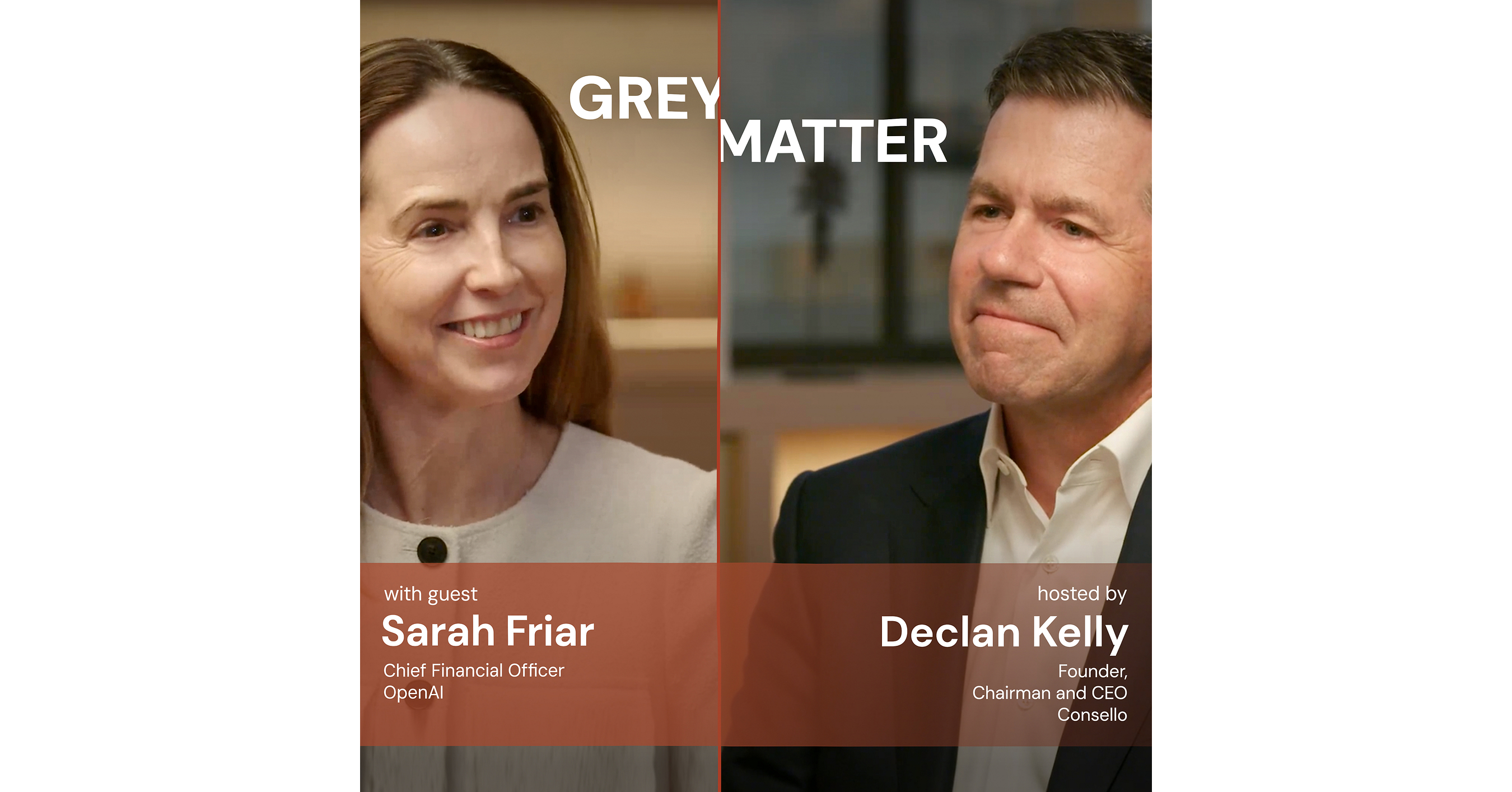
OpenAI CFO Sarah Friar discussed AI-driven changes to software, workplace architecture, cybersecurity risk and the need to build compute capacity years ahead in a Consello podcast episode. The release provides no financial results, operating metrics, capital-spending figures, product announcements, or guidance, making it primarily strategic commentary rather than a material market catalyst.
Analysis
This is non-actionable promotional content rather than a disclosure of OpenAI demand, compute procurement, financing, product economics, or cybersecurity spending. No read-through is warranted for CRM, GS, NXDR, or XYZ: Friar's prior affiliations do not create a commercial linkage, and assigning an AI premium to those names on this basis would be narrative-driven rather than earnings-supported.
The only useful watch item is whether subsequent OpenAI disclosures convert broad references to forward compute planning into identifiable commitments for hyperscalers, GPU vendors, power infrastructure, or data-center operators. That would matter over 6-18 months through accelerated capex and potentially tighter AI-infrastructure capacity, but this interview provides neither volume nor timing. Near-term price action in software and AI infrastructure should remain driven by enterprise AI monetization, cloud capex guidance, inference-cost trends, and regulatory developments—not executive commentary.
AllMind Terminal
AI-powered research, real-time alerts, and portfolio analytics for institutional investors.
Request TrialMarket Sentiment
Overall Sentiment
mildly positive
Sentiment Score
0.15
Key Decisions for Investors
- No new position in CRM, GS, NXDR, or XYZ based on this item; there is no identifiable revenue, margin, balance-sheet, or customer-demand catalyst.
- Maintain an alert for independently reported OpenAI compute contracts, funding rounds, or capacity commitments. Evaluate AI-infrastructure beneficiaries only after counterparties, contract size, deployment timing, and funding source are disclosed.
- For CRM, use upcoming earnings and remaining-performance-obligation guidance as the relevant 1-3 month AI monetization test; a material acceleration in AI-related bookings or margin pressure from inference costs would be more actionable than this commentary.
- Avoid extrapolating OpenAI's compute-planning narrative into a broad software long: the thesis is falsified unless AI adoption produces measurable seat expansion, pricing uplift, or services attach rather than incremental infrastructure expense.
More News
- Goldman says these top tech stocks have plenty of upside ahead of earnings
- Block’s new voice model sounds eerily human
- Flying Cars, Smart Homes, and Cracks in the AI Boom
- Apax, Nordic Capital and Dalmore circling UK supplier JLA Group
- Here’s the ‘core economic flaw’ in the AI bull case as stock and bond trades unravel, according to a top economist
- Biotech stocks are surging. How investors can play the new drug innovation boom
From AllMind Research
- Anthropic IPO Preview: Valuation, Timing, and What to Watch
- Shein After the IPO: Venue, Valuation, and What Must Be Proved
- What AI Research Tools Should a Small Hedge Fund Buy First?
- What Exactly Does Post-Training in LLMs and Finance-Focused AI Actually Mean for Asset Managers?
- What Is a Financial Ontology?