
CRRC präsentiert Windkraft-Portfolio auf der WindEnergy Hamburg, sichert sich wichtige Zertifizierungen und baut globale Partnerschaften aus
Source: PR Newswire
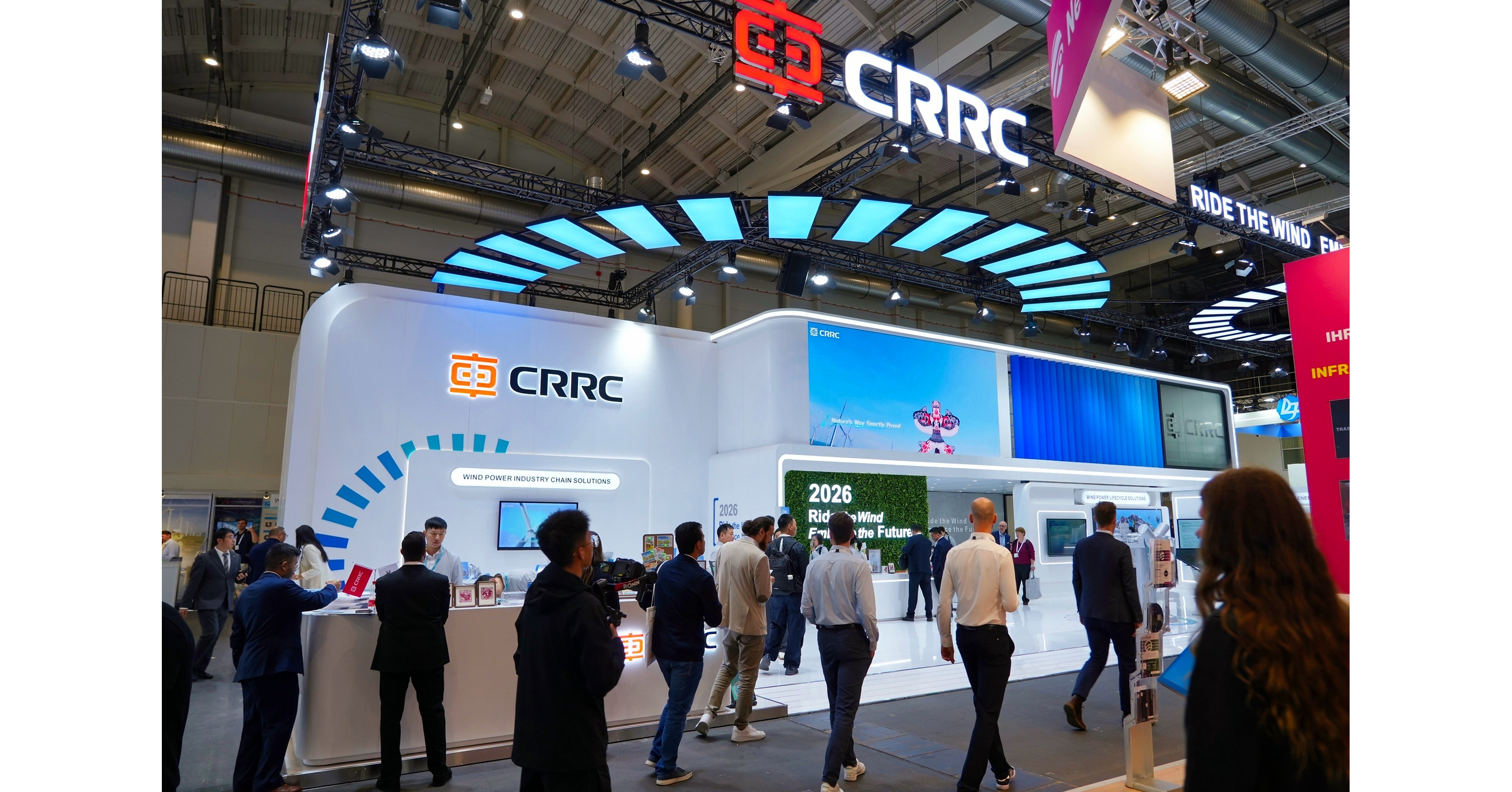
CRRC received TÜV SÜD type certification for its 7.15-MW D195 wind turbine at WindEnergy Hamburg and expanded its technical R&D collaboration with X1 Wind. The company operates more than 20 wind-turbine production sites, serves nearly 400 wind farms globally, and offers onshore turbines from 1.5 MW to 12 MW and offshore models from 8 MW to 20 MW. CRRC is using the event to pursue European market access, localization, and additional global renewable-energy partnerships.
Analysis
The relevant market signal is not near-term revenue for CRRC but the potential arrival of another vertically integrated, lower-cost turbine supplier in Europe. If CRRC converts technical validation into bankable project references, pricing pressure would be most acute in standardized onshore tenders, where Vestas (VWS.CO), Nordex (NDX1.DE), and Siemens Energy's wind business (ENR.DE) already face thin-margin contracts and elevated warranty costs. European OEMs may have to trade price for utilization, delaying the margin recovery embedded in 2027-28 consensus estimates; component suppliers with concentrated European OEM exposure would be a second-order loser.
The key gating item is commercial rather than technical: developers, lenders, insurers, and grid operators require multi-year local operating data, service capacity, spare-parts availability, and credible warranty backing before broad adoption. That makes the immediate equity impact low, but a disclosed European framework agreement, local assembly/JV, or project-financing acceptance within 1-3 months would change the read-through materially. Over 6-18 months, localization requirements and potential EU trade-defense measures could either constrain CRRC's cost advantage or force incumbents into further local-content investment, raising industry capex and limiting free-cash-flow conversion.
Consensus may overstate the threat to offshore incumbents near term: offshore procurement is more qualification-intensive and contractual liability is materially higher than onshore. Conversely, the risk to European onshore pricing is underappreciated if developers use CRRC's presence principally as negotiating leverage even without awarding meaningful volume. This is a press-release-level development; absent order value, project pipeline, and financing counterparties, it is not independently verifiable as an earnings catalyst.
AllMind Terminal
AI-powered research, real-time alerts, and portfolio analytics for institutional investors.
Request TrialMarket Sentiment
Overall Sentiment
moderately positive
Sentiment Score
0.48
Key Decisions for Investors
- No directional position on CRRC (601766.SS) solely on this development; set an alert for a named EU order or framework agreement, local manufacturing commitment, or lender-backed project financing. Those would be the evidence needed to underwrite a 6-18 month international revenue inflection.
- Monitor VWS.CO and NDX1.DE for tender-price commentary and 2027 margin guidance revisions over the next two reporting cycles. A disclosed European CRRC award plus lower pricing or warranty provisions would support a tactical underweight/short basket; invalidate if backlog pricing and EBIT-margin guidance remain intact.
- Prefer GE Vernova (GEV) over European pure-play turbine OEMs as a relative-quality hedge if competitive concerns build: its broader electrification and grid exposure should dilute turbine-price pressure. Express only after evidence of European order conversion; a VWS.CO/GEV relative short has higher risk if EU policy restricts Chinese turbine procurement.
- Watch EU trade-policy announcements and national-security procurement rules over the next 3-6 months. A formal investigation, localization mandate, or exclusion from subsidized auctions would sharply reduce the competitive-risk thesis and argues against maintaining European OEM shorts.
More News
- Wall Street’s Nasdaq hits all-time high as AI frenzy gathers pace
- Oil falls on increased Gulf supply and hopes for US-Iran talks
- Data-Center Bet Makes ESDS One of India’s Best New Listings
- Asia stocks ride tech wave higher, oil stays subdued
- South Korean solar stocks jump as curbs on Chinese sector expected to remain in place
- Latest Oil Market News and Analysis for Sept. 23