
Land id Takes Aim at Real Estate's Demand for Trusted Answers With the Launch of Its Flagship AI Insights Product, The Land id®
Source: PR Newswire
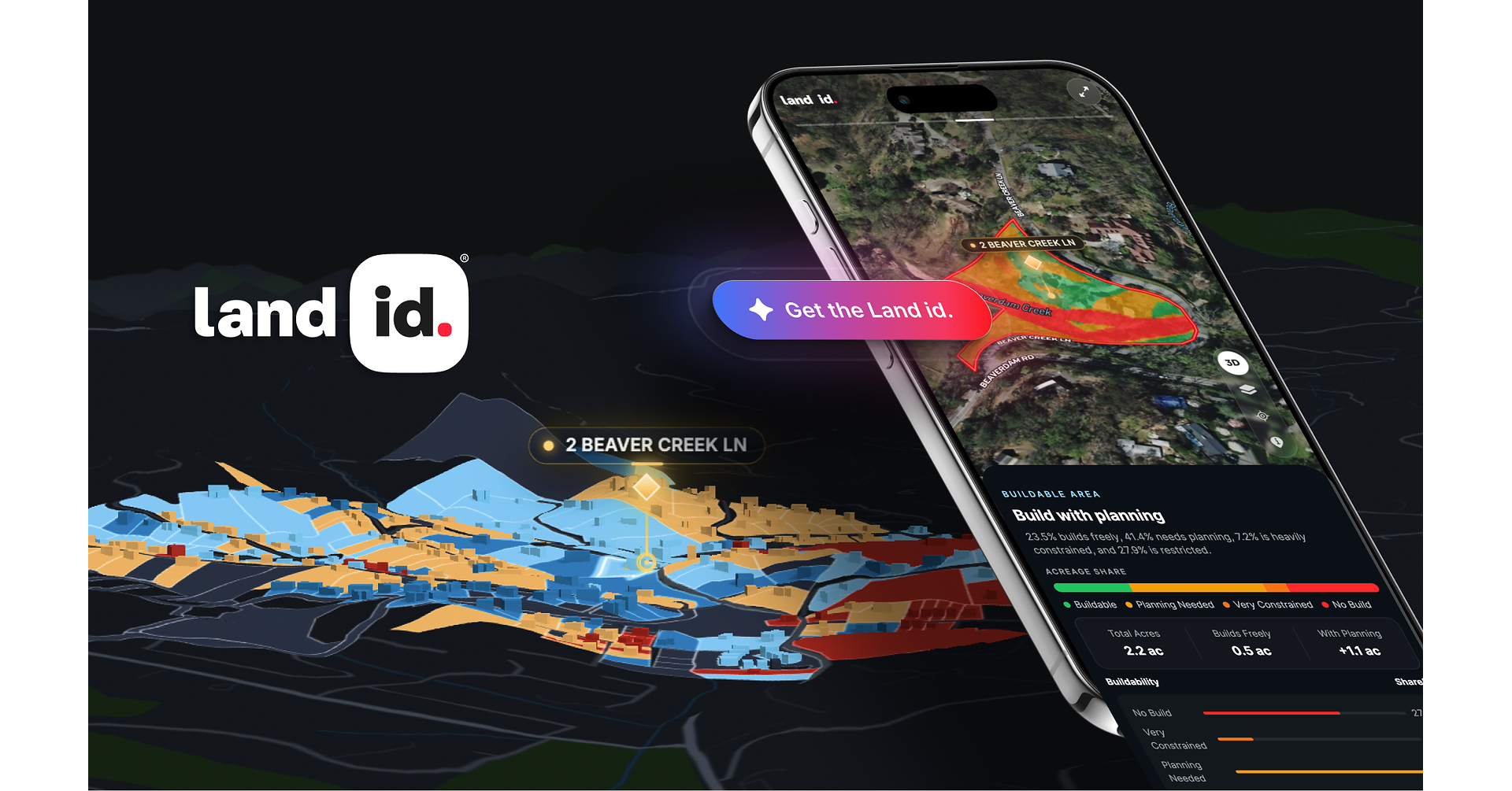
Land id launched The Land id, an AI-powered property-intelligence solution available to its more than 50,000 paid users across real estate categories. Built on its proprietary Land id Intelligence engine, the product combines public, licensed, private, environmental, neighborhood and user-provided data to generate property insights, descriptions and map-based visualizations. The release is available immediately to Pro and Premium subscribers, with temporary access for Basic users, and is intended to reduce time spent compiling property data for agents, investors and developers.
Analysis
This is a private-company product announcement, not yet a direct public-equity catalyst. The relevant mechanism is incremental commoditization of basic property marketing and desktop diligence: brokerages and smaller investors that pay for fragmented mapping, parcel, environmental, and comparable-property tools could see lower labor cost per listing, but the economic value accrues only if the product improves transaction conversion or underwriting accuracy rather than simply producing better collateral.
Public incumbents with proprietary transaction datasets—CoStar (CSGP), Zillow (Z), Redfin (RDFN), and CoreLogic owner Cotality (CLTY)—retain the defensible assets: closed-transaction history, consumer demand funnels, and embedded enterprise workflows. Land id-like tools are more likely to pressure niche point-solution vendors and broker productivity software than these platforms initially; conversely, broader AI-assisted property narratives can increase demand for verified data, benefiting data owners if they can charge for API access and provenance.
The near-term risk is hallucinated zoning, environmental, flood, or valuation interpretation. A visible underwriting error or fair-housing/privacy challenge would make institutional buyers favor auditable, source-linked systems, raising compliance costs for smaller vendors. Over 6-18 months, the more consequential question is whether AI tools reduce the informational advantage of local brokers; if so, commission pressure and lead-generation competition could intensify, creating a modest structural headwind for residential brokerage models rather than a clean software winner.
Consensus is likely to over-credit any AI launch for real-estate transaction recovery. Software can improve agent throughput, but it cannot offset affordability, mortgage-rate sensitivity, or constrained inventory; adoption should be evaluated through paid-seat expansion, net retention, and measurable time-to-listing or underwriting-error reduction—not promotional claims. No standalone trade is warranted on this release.
AllMind Terminal
AI-powered research, real-time alerts, and portfolio analytics for institutional investors.
Request TrialMarket Sentiment
Overall Sentiment
moderately positive
Sentiment Score
0.42
Key Decisions for Investors
- No immediate position: Land id is private and the release lacks pricing, conversion, retention, or enterprise-customer evidence. Reassess only if disclosed adoption demonstrates meaningful substitution of incumbent paid data/workflow products over the next 1-3 quarters.
- Maintain CSGP as the preferred listed data-platform exposure versus Z/RDFN if AI property workflows gain traction: proprietary commercial data and enterprise integration should support pricing power. Falsify if CSGP reports accelerating customer churn, material pricing concessions, or AI-driven competition in renewal commentary.
- Watch CLTY for a second-order beneficiary rather than initiate solely on this news: demand for traceable property, hazard, and valuation data could rise as generative interfaces proliferate. Require evidence of API/data-product growth and margin preservation before adding exposure.
- Avoid treating residential brokerage software adoption as a housing-volume catalyst. For Z and RDFN, wait for mortgage-rate and existing-home-sales confirmation; a productivity narrative without improving lead conversion or transaction volumes is unlikely to expand earnings multiples sustainably.
More News
- Taiwan benchmark Taiex rises to record intraday high as tech stocks advance
- AMD joins the $1 trillion club as chip rally surges - our AI Strategy saw it early
- Jamie Dimon says hyperscaler AI spending could hit $1 trillion next year
- Factbox-Key issues for this week’s Trump-Xi summit in Washington
- Here's who we know is going to the Trump-Xi dinner so far
- +17% in a single session: This AI-picked stock catches a data-center breakout