
VZMORE présente l'architecture thermique à chambre à vapeur V-Cooling™ pour mini-PC
Source: PR Newswire
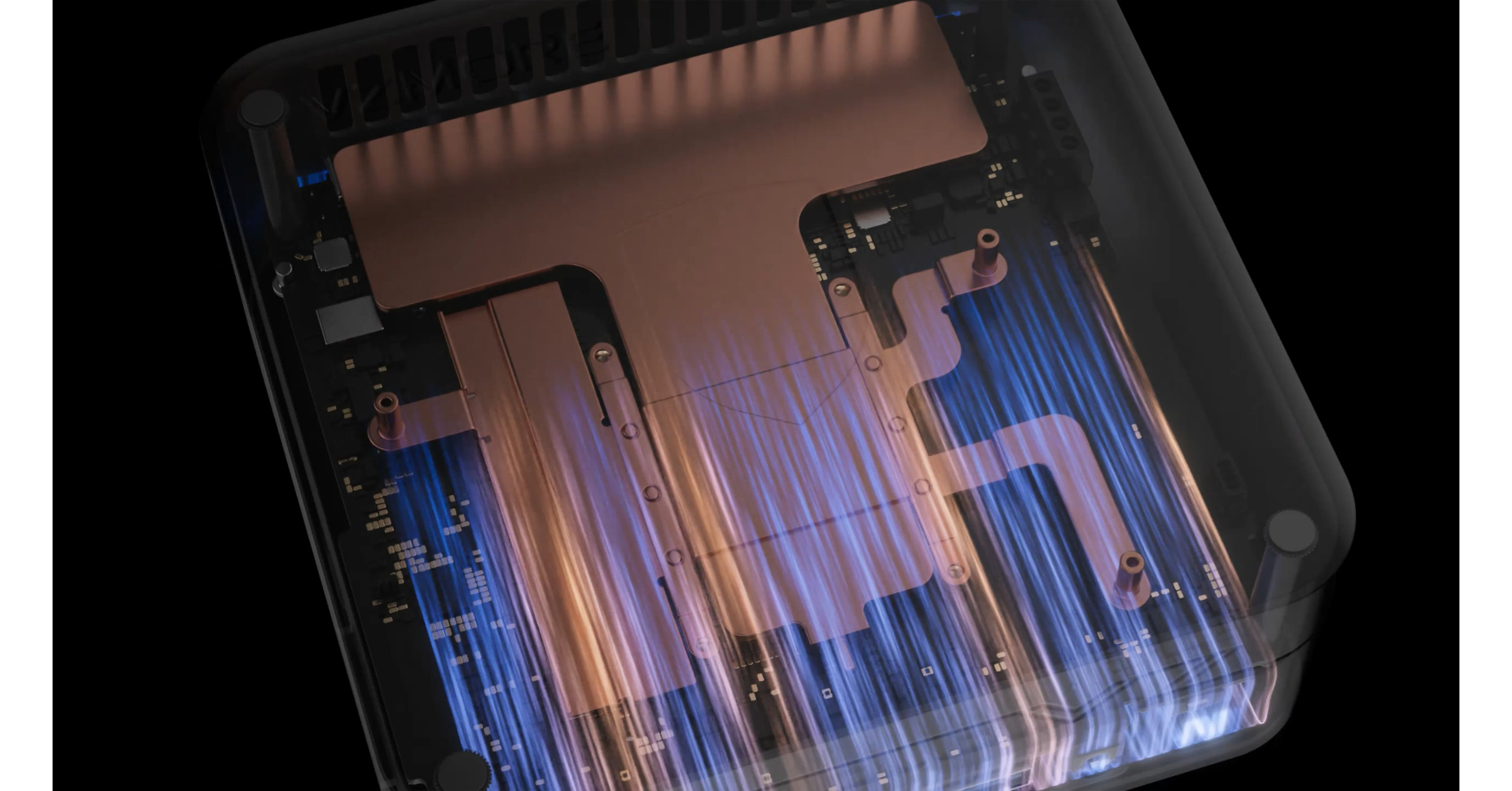
VZMORE introduced its V-Cooling™ vapor-chamber thermal architecture for mini-PCs, claiming roughly 40% more heat-dissipation area and 50% greater thermal conductivity than conventional dual-heat-pipe designs. The company says the system can maintain noise levels near 38 dB under heavy workloads, about 12 dB below certain traditional mini-PCs, while supporting up to 80W output. The premium cooling module costs about three times as much as a standard solution, making this a product-positioning and performance claim rather than a material market-moving event.
Analysis
This is not investable as a standalone catalyst: VZMORE is private/unlisted, and a single vendor’s thermal-design claim has no measurable read-through to AMD, INTC, DELL, or HPQ without shipment volumes, processor mix, pricing, and warranty-return data. The relevant mechanism is that better sustained thermal performance can support higher-end CPU configurations and reduce return/support costs, but the higher cooling bill of materials is likely margin-dilutive unless the company demonstrates a durable price premium. Treat all performance and acoustic claims as vendor assertions until independently benchmarked under sustained 65-80W loads.
The non-obvious structural beneficiary of broader adoption would be vapor-chamber and thermal-interface suppliers rather than x86 vendors: thermal constraints increasingly determine usable edge-AI performance in compact systems. However, mini-PC demand is fragmented and highly price-sensitive; a premium thermal architecture could instead accelerate commoditization if competitors replicate it without consumers paying more. Over the next 6-18 months, the key question is whether local-AI workloads create enough sustained-load usage to shift purchasing criteria from upfront price toward noise, reliability, and performance persistence.
Contrarian view: cooling innovation is more likely to be a defensive requirement than a source of category-level demand. If OEMs use the added thermal headroom merely to run higher power limits, energy use and component stress can rise while the claimed reliability advantage disappears. A broad mini-PC thermal upgrade cycle would require corroboration from channel sell-through, premium ASP expansion, and lower field-failure rates—not product-launch publicity.
AllMind Terminal
AI-powered research, real-time alerts, and portfolio analytics for institutional investors.
Request TrialMarket Sentiment
Overall Sentiment
mildly positive
Sentiment Score
0.32
Key Decisions for Investors
- No directional equity position on this release; the stated market impact is too small and no listed issuer has disclosed material exposure.
- Monitor AMD and INTC quarterly commentary for mini-PC/edge-AI unit growth and attach rates for higher-TDP mobile-class processors over the next 1-3 quarters. Consider a long AMD / short INTC relative trade only if AMD demonstrates sustained share gains in compact AI PCs while both companies maintain gross-margin guidance.
- Create a watchlist for listed thermal-management suppliers, including Auras Technology (3324 TT) and Asia Vital Components (3017 TT), but require evidence of vapor-chamber order growth, utilization improvement, and ASP expansion before entry; consumer-PC thermal content alone is unlikely to move earnings.
- For DELL and HPQ, view broader thermal-content adoption as a modest margin risk rather than a demand catalyst. Reassess only if premium compact-PC ASPs rise faster than component costs or if warranty provisions decline in reported results.
More News
- Taiwan benchmark Taiex rises to record intraday high as tech stocks advance
- AMD joins the $1 trillion club as chip rally surges - our AI Strategy saw it early
- Here's who we know is going to the Trump-Xi dinner so far
- +17% in a single session: This AI-picked stock catches a data-center breakout
- Asia stocks rise tracking U.S. tech rally; Trump-Xi meeting eyed
- Perpetual underdog AMD nips at Nvidia's heels as it joins the $1T club