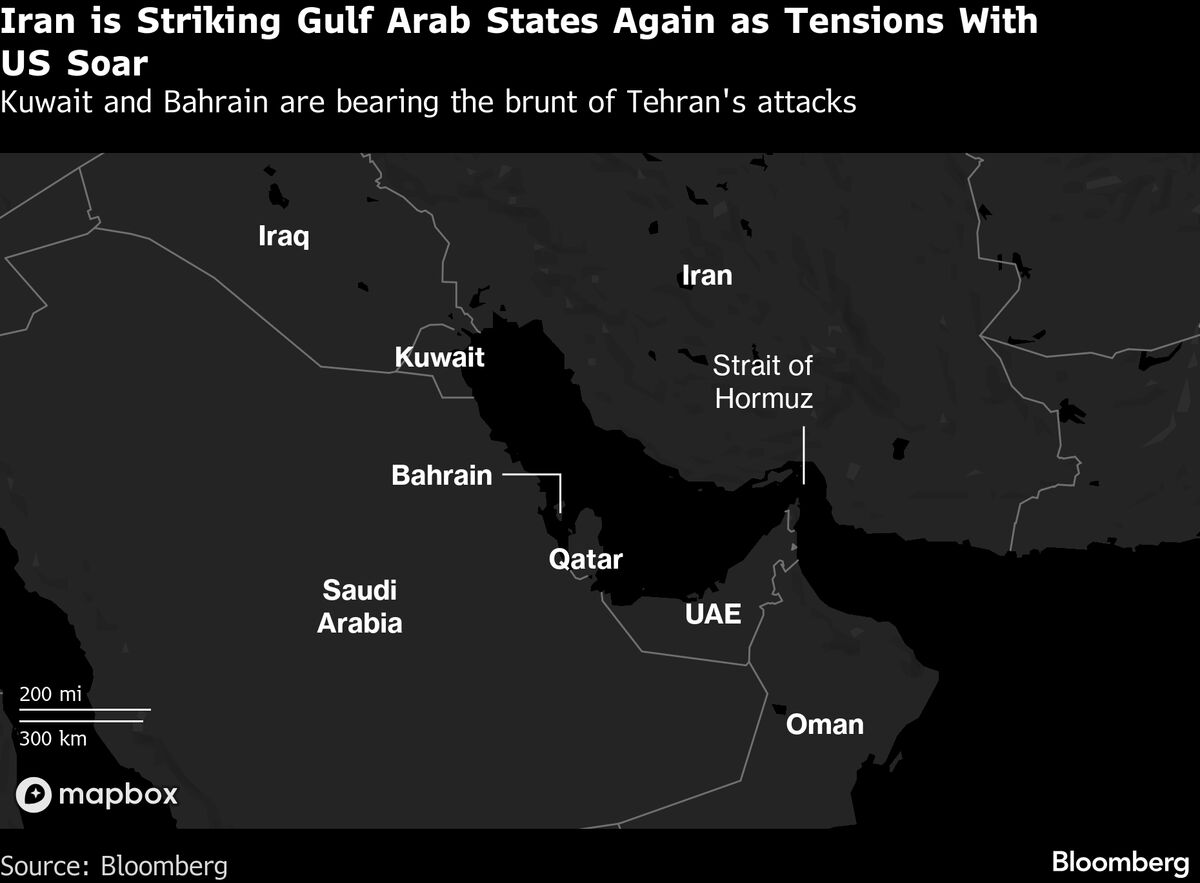
US and Iran intensified attacks for a sixth straight day, raising fears of a return to full-scale war with no agreement yet over the Strait of Hormuz. While the current escalation is smaller than the March/early April peak, the broadening of attacks beyond military targets increases downside risk to regional shipping and energy flows. The development is likely to drive risk-off market repricing via higher geopolitical and supply-chain risk premiums.
The first-order winner is the energy complex, but the cleaner expression is not broad index beta — it is the volatility term structure. A genuine Strait-of-Hormuz disruption would reprice prompt crude, marine insurance, and tanker rates before it fully shows up in equity fundamentals, so the fastest money is likely in crude-linked ETFs and shipping vol rather than in upstream balance sheets alone. Integrateds and large-cap E&Ps should still benefit, but the larger second-order effect is margin compression for airlines, chemicals, logistics, and any importer with just-in-time inventory exposure to Middle East supply chains.
The market may be underestimating how quickly a “limited” conflict becomes a working-capital event: higher spot energy prices force inventory builds, widen bid/ask spreads in physical barrels, and can create a temporary shortage of available cargoes even if total global supply is unchanged. That matters for Europe and Asia first, where delivered-cost inflation and FX sensitivity hit industrial margins within 1-3 months; US consumers feel it later through gasoline, freight, and headline inflation. If crude moves sharply, it also raises the odds that the Fed’s easing path gets pushed out, which would add a second layer of pressure on cyclicals and small caps.
The contrarian risk is that the market is pricing a full choke point shutdown when both sides may have incentives to keep flows intact and use escalation as leverage. In that case, crude gaps up on headlines but mean reverts once traffic data, insurance quotes, and official naval posture show no physical interruption. The key falsifier is any confirmed impairment to tanker transits or export terminals; absent that, the rally is likely a tactical risk premium rather than a durable supply shock.
AI-powered research, real-time alerts, and portfolio analytics for institutional investors.
Overall Sentiment
strongly negative
Sentiment Score
-0.55
