
Can Energy Fuels Build a Strong Rare Earth Growth Platform?
Source: zacks.com
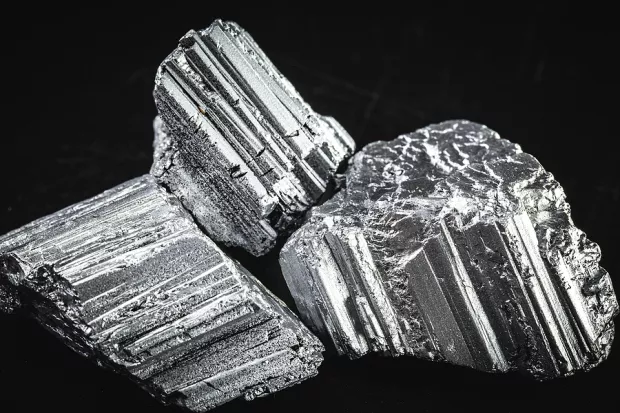
Energy Fuels is investing about $104 million to add heavy rare-earth separation capacity at White Mesa, targeting terbium and dysprosium production by end-2027 and samarium, europium and gadolinium by end-2028; a proposed Phase 2 would require about $410 million and target 6,229 tpa of NdPr capacity by mid-2029. Its August 2026 acquisition of Australian Strategic Materials added 1,300 tpa of NdFeB alloy capacity, with expansion to 3,600 tpa expected as early as end-2026, while a proposed VAC deal could add magnet manufacturing in Q1 2027. Despite the strategic platform buildout, UUUU shares are down 34.4% over one year, trade at 14.89x forward sales versus 4.93x for the industry, and consensus earnings estimates have declined over the past 60 days; Zacks rates the shares Strong Sell.
Analysis
UUUU is attempting to convert a commodity-exposed uranium/REE equity into an integrated strategic-materials platform, but the market should discount this as a capital-intensity and execution story rather than award a downstream multiple today. The critical economic question is not pilot qualification; it is whether heavy-REE separation, alloy conversion and potential magnet manufacturing can achieve acceptable yields, customer qualification and working-capital turns simultaneously. The multi-year buildout creates a likely funding overhang before meaningful consolidated EBITDA, particularly if rare-earth pricing remains weak enough to delay investment decisions.
The acquisition strategy changes competitive dynamics unevenly. VAC is the highest-quality strategic asset in the chain because qualified magnet capacity is scarcer and potentially earns a more defensible margin than upstream separation; a successful close would make UUUU more relevant to Western defense and OEM sourcing programs. Conversely, MP has a clearer route to domestic magnet economics through its existing government/OEM relationships, while Lynas offers the more proven non-China separation benchmark. UUUU's differentiated uranium cash-flow optionality could support the platform, but it also obscures segment-level returns and raises the risk that investors fund unrelated cycles.
Near term, the likely catalyst is acquisition-close and financing detail rather than operating results. Over 1-3 months, monitor consideration structure, pro-forma leverage, equity issuance, offtake commitments and government support; absent these, the premium revenue multiple remains vulnerable to further estimate cuts. Over 6-18 months, Korean alloy-plant ramp, independently disclosed production yields, and binding magnet-customer contracts determine whether the narrative becomes bankable. The contrarian view is that Western supply-chain policy may subsidize capacity before commercial returns justify it, but subsidy headlines alone should not be treated as evidence of durable profitability.
AllMind Terminal
AI-powered research, real-time alerts, and portfolio analytics for institutional investors.
Request TrialMarket Sentiment
Overall Sentiment
mixed
Sentiment Score
-0.18
Ticker Sentiment
Key Decisions for Investors
- Avoid adding UUUU ahead of disclosed VAC financing and pro-forma cash-flow guidance; maintain a tactical underweight/short bias versus MP over the next 1-3 months. Thesis fails if UUUU secures predominantly non-dilutive funding plus binding long-term offtakes that support project-level returns.
- Pair trade: long MP / short UUUU, sized beta-neutral, through the next two earnings cycles. MP offers a comparatively more de-risked domestic magnet pathway, while UUUU carries acquisition integration, capex and estimate-revision risk; reassess if UUUU reports commercial heavy-REE yields and customer contracts ahead of schedule.
- Put VAC on event watch rather than initiating exposure: evaluate merger-arbitrage only after definitive terms, regulatory conditions and financing are public. A cash-heavy bid with a clean Q1 2027 closing path could create a spread opportunity; a stock-funded structure would amplify UUUU dilution risk.
- Monitor USAR as a higher-beta policy beneficiary, but do not use it as a UUUU substitute until feedstock, processing economics and customer qualification are independently documented. A defense procurement award or funded domestic-magnet contract is the required catalyst for a long.
More News
- The Tiny Magnet Maker That Attracted $1.6 Billion From Lutnick
- Can Freeport-McMoRan's Growth Projects Drive the Next Expansion Wave?
- Rigetti, D-Wave, or IonQ: Which Quantum Stock Has the Best Shot at Survival?
- Bloomberg Businessweek Daily: The Tiny Magnet Maker (Podcast)
- RCL's $3B Sandals Bet Sparks Market Buzz: Is the Stock a Buy?
- Micron vs. NVIDIA: 1 AI Stock to Buy Now and 1 to Watch